News
US Grants Philips Up to $33.7 Million for AI Stroke Robots
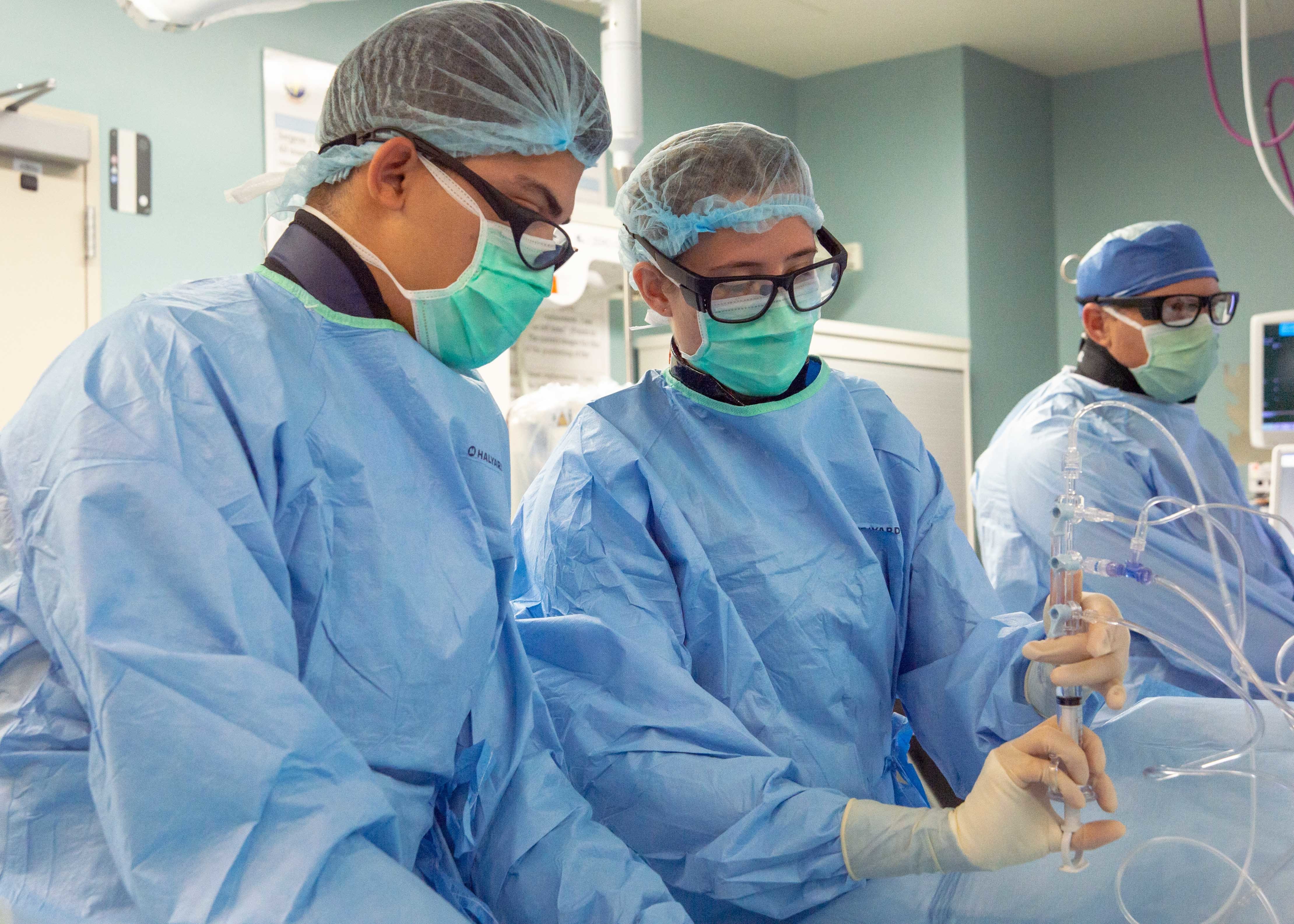
The US government agency ARPA-H will fund Philips, a brand Poles know mainly for TVs, in developing AI-controlled robots designed to perform life-saving stroke procedures with almost no surgeon present at the patient's side.
Contents
Philips, a brand Polish consumers associate mainly with TVs, light bulbs and home appliances, will receive up to $33.7 million from the US government agency ARPA-H to build AI-controlled robots. Their job will be to perform clot-removal procedures in the brain during ischemic stroke with almost no physical presence of a specialist at the patient's side.
Thrombectomy Without a Surgeon Onsite
This concerns mechanical thrombectomy, an endovascular procedure that involves threading a catheter into a blood vessel and physically removing the clot blocking blood flow to the brain. Today such a procedure requires the presence of a trained neurointerventionalist and a specialized angiography suite, which in many regions simply aren't available within an hour's drive of the patient.
Philips wants to combine its Azurion imaging platform with steerable catheters and imitation-learning algorithms, AI models trained on recordings of real procedures performed by doctors. The system is meant to navigate the brain's blood vessels on its own and carry out the key steps of the procedure, with a remote doctor supervising or assisting the robot instead of operating directly.
Where the Money Comes From
The grant comes from the AIR program, short for Autonomous Intervention Robotics, run by ARPA-H, the US government agency that funds breakthrough healthcare research, modeled on the military's DARPA. The entire program has a $175.3 million budget spread over five years and includes several independent teams working on different pieces of the same problem, from navigation to test simulations.
Philips's work involves Johns Hopkins University, responsible for the device's autonomous navigation, Boston University, developing the steerable catheters, and Weill Cornell Medicine, which provides clinical expertise. Kitware separately received up to $17.5 million to build a virtual environment for simulating and validating the technology before it reaches real hospitals.
A TV Brand Bets on Medicine
For many Polish readers, Philips is still mainly known as a maker of TVs and small home appliances, even though the TV division has operated under license from TPV Technology since 2011, and the group itself has for years been steadily shifting its business toward medical technology. The ARPA-H grant is another step in that transformation and one of the largest public funding injections the company has received in the US for an AI-in-medicine project.
At the same time, ARPA-H is also funding Magnendo, an MIT spinout, with up to $32 million for magnetic robotic navigation, as well as Siemens Healthineers under a separate track of the same program. The agency is deliberately backing several competing players at once, betting that one of the approaches will reach clinical use faster.
The goal isn't to replace expert knowledge, but to make it scalable and accessible - Bert van Meurs, Chief Business Leader Image-Guided Therapy at Philips
Van Meurs stresses that the system isn't meant to replace doctors, but to let a single experienced specialist supervise or support procedures in multiple locations at once, instead of physically traveling to each patient individually.
Why Access to Treatment Matters
Ischemic stroke is a race against time, every minute of delay in removing the clot increases the risk of permanent brain damage. According to data cited within the AIR program, more than half of US residents live more than an hour's drive from a facility with a team capable of performing thrombectomy, meaning many patients who qualify for the procedure simply don't get it in time.
Robotics can improve precision and accuracy in endovascular stroke treatment while expanding access to specialist expertise through remote procedures - J. Mocco, head of neurosurgery at Weill Cornell Medicine
A similar geographic problem affects Poland and other Central European countries, where centers capable of performing mechanical thrombectomy are concentrated in the biggest cities, and patients from smaller towns lose precious time in transport. Azurion, the platform underlying Philips's project, is already used in Polish hospitals, so any fruits of the ARPA-H program could reach Europe faster than a typical new medical technology built from scratch.
The program has a five-year horizon, so the first clinical trials of autonomous procedures are still at least a few years away, and before that the technology will go through a simulation phase built by Kitware. For now this is an investment in research, not a finished product, but the scale of the grant and the number of universities involved show that autonomous endovascular robotics has become one of the priorities of US health policy.