News
AI System Retina4IRD Accurately Identifies Genes Behind Rare Retinal Diseases
An international team including Polish researchers published results in Nature Medicine showing that the AI system Retina4IRD raised the accuracy of identifying the correct gene from 67.3 to 88.5 percent.
Contents
Doctors assisted by the Retina4IRD artificial intelligence system correctly identified the gene responsible for an inherited retinal disease among the five most likely diagnoses with 88.5 percent accuracy. Without AI support, the same team of specialists achieved 67.3 percent. The results of the international study, which included Polish researchers, were published in Nature Medicine.
The Problem of Thousands of Rare Mutations
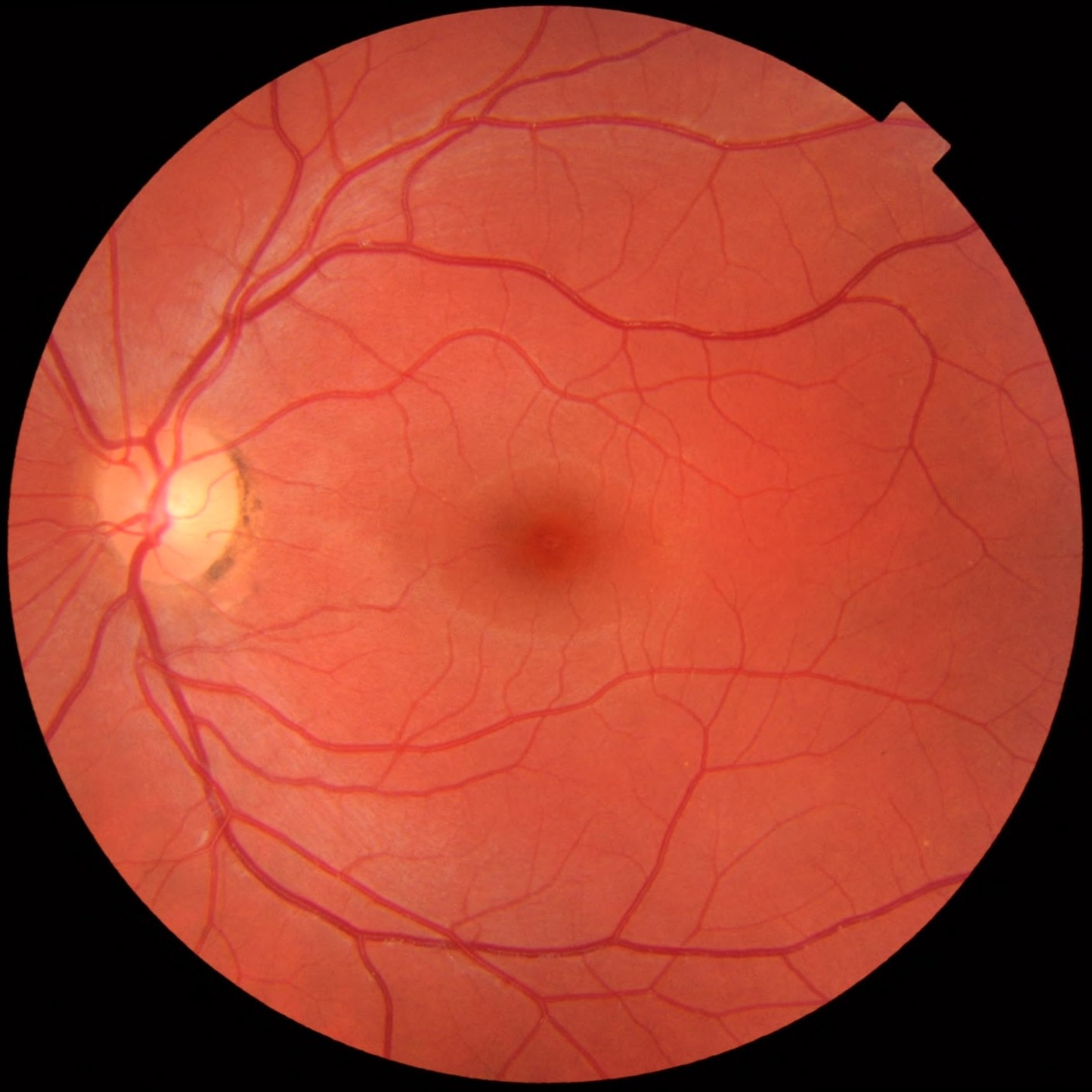
Inherited retinal diseases are one of the leading causes of vision loss in children and young people. More than 300 different genes can be responsible for their development, and mutations in entirely different genes can produce nearly identical clinical presentations. A doctor looking only at the fundus of the eye or an OCT scan often cannot determine upfront which genetic test to order first.
The traditional diagnostic path requires a full ophthalmological exam, multimodal imaging, a detailed family history, and costly genetic tests that aren't always readily available. Misdirected diagnostics mean months of waiting and unnecessary costs before a patient is put on the right track.
How Retina4IRD Works
The Retina4IRD system analyzes fundus photographs, optical coherence tomography (OCT) scans, and basic patient clinical data. Based on this, it identifies the most likely genetic cause of the disease before a doctor decides which specific genetic test to order. The tool is meant to serve as decision support, not to replace laboratory diagnostics.
In prospective tests covering nearly 300 patients suspected of having an inherited retinal disease, the system maintained high accuracy regardless of patient age, the type of imaging used, and the population the data came from. The authors reported no adverse effects associated with using the tool.
Poland's Contribution to the International Project
The study, whose results appeared in Nature Medicine, involved researchers from Poland alongside scientists from China and South Korea. Prof. Andrzej Grzybowski of the University of Warmia and Mazury in Olsztyn, who also heads the Institute for Research in Ophthalmology in Poznan, along with Dr. Adrian Smedowski and Dr. Marta Swierczynska of the Medical University of Silesia in Katowice, helped build the dataset and took part in validating the system on Polish patients.
The involvement of Polish centers means the system's training data isn't limited solely to Asian populations, which improves the odds of its future use in European genetic and ophthalmology clinics as well.
Limitations of the Tool
The study's authors are explicit about the system's current limitations. Retina4IRD currently covers 17 major genotype categories, not all of the more than 300 genes responsible for inherited retinal diseases. The training dataset relies heavily on patients from Asia, and the analysis uses only fundus photographs and OCT scans, leaving out additional methods such as autofluorescence or electroretinography that could improve accuracy in some cases.
The research team says it plans to keep expanding the genotype database and bringing in more clinical centers, so the system can cover a larger share of rare mutations and more diverse patient populations.
What It Means for Patients
For patients suspected of having an inherited retinal disease, the difference between 67.3 and 88.5 percent accuracy in the first genetic guess translates directly into the time and cost of reaching the right diagnosis. More accurate initial targeting means fewer unnecessary genetic tests and faster initiation of treatment or monitoring, before the disease causes irreversible vision loss.
Publication in Nature Medicine, one of the most prestigious medical journals, lends the results additional weight among ophthalmologists and clinical geneticists, though rolling the tool out into everyday clinical practice in Poland will require further validation and integration with existing diagnostic systems.