News
Samsung Bets on Foldables and AI Instead of Separate Gadgets in Galaxy Ecosystem
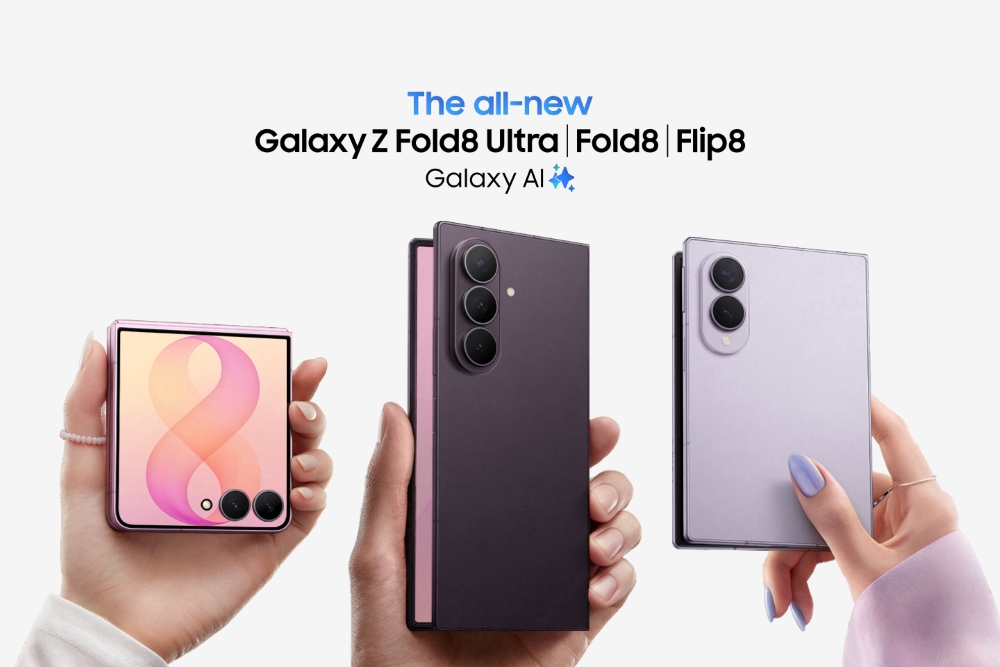
At Galaxy Unpacked in London, Samsung unveiled the Z Fold8 series, including its first foldable to carry the Ultra label, and tied it together with watches and glasses into a single ecosystem run by Galaxy AI. The head of Samsung Europe points to twenty percent growth in the foldable market this year.
Contents
Samsung unveiled its new generation of foldable smartphones in London and used the occasion to clearly set out its direction for the coming years: instead of separate devices, there is to be one ecosystem in which the phone, watch, glasses and earbuds share data and jointly run Galaxy AI. The Galaxy Unpacked event on July 22, 2026 brought three new foldables and a declaration that this category of hardware is meant to be the main proving ground for AI running in the background, not just on demand.
Three Foldables, One Priority
The star of the event was the Galaxy Z Fold8 Ultra, Samsung's first foldable smartphone to carry the Ultra name. The maker built it around a new Flex Titanium construction and a redesigned Armor FlexHinge, which brings the unfolded device down to just 4.1 mm thick at a weight of 214-215 grams. It also gets an 8-inch main display at QXGA+ resolution with 1-120 Hz refresh, plus a 6.5-inch cover screen, both Dynamic AMOLED 2X panels reaching up to 3000 nits of brightness.
The standard Galaxy Z Fold8 takes a different tack: it's the lightest Fold in the brand's history at 201 grams, with a 7.6-inch main display in a 4:3 aspect ratio and a 5.5-inch cover screen. Both Fold models run on the Snapdragon 8 Elite Gen 5 for Galaxy with 12 or 16 GB of RAM and up to 1 TB of storage. The cheapest model in the lineup, the Galaxy Z Flip8, weighs 180 grams, making it the lightest and thinnest device in this year's range, powered by Samsung's own Exynos 2600 chip.
Pricing in Poland
Polish pricing spans from 5,699 zł for the base Galaxy Z Flip8 with 12 GB of RAM and 256 GB of storage, through 8,749 zł for the entry-level Galaxy Z Fold8, up to 12,199 zł for the top Galaxy Z Fold8 Ultra variant with 16 GB of RAM and 1 TB of storage. That holds prices at the same level as the previous generation, despite noticeably stronger specs and a new hinge design.
AI Meant to Link Devices, Not Just the Phone
The key message of Unpacked, though, wasn't the specs themselves but how the new devices are meant to work together. Samsung stressed that its smart glasses, developed jointly with Google and Qualcomm, are meant to extend the mobile ecosystem rather than stand as a separate gadget. The Galaxy Watch can act as a controller, for taking photos for instance, audio is meant to switch seamlessly between the glasses and earbuds, and Google and Samsung apps such as Maps, Gmail and Notes are meant to work consistently across the whole environment. The new Galaxy Watch, meanwhile, is meant to continuously monitor the user's health in the background without demanding their attention.
Customers use AI more often than they realize, because it's present throughout the whole system - Menno van den Berg, head of Samsung Europe
Van den Berg also noted that seamless connectivity between devices combined with Galaxy AI gives users a noticeable jump in usefulness, and among the main reasons people upgrade their hardware he cited thinner builds, better displays, a less visible crease on the Fold models' screens, and the growth of agentic AI, meaning AI that carries out tasks on its own rather than waiting for commands.
This year we're seeing twenty percent growth in the foldable device market - Menno van den Berg, head of Samsung Europe
What It Means for the Polish Market
The foldable segment is growing faster than the smartphone market as a whole, and by launching three models across different price brackets, Samsung is targeting both premium buyers and those just considering their first foldable phone. For Polish retailers and carriers that means a broader round of launch promotions, and for users of Galaxy AI features such as Now Nudge, My FanCam or Photo Assistant, the key question is how much of the promised integration between phone, watch and glasses will actually reach Poland at launch, and how much will arrive later through updates.
Samsung makes no secret that it's playing a long game: foldable phones are meant to be not so much a novelty as the central hub of an ecosystem built around watches, glasses and earbuds tied together by a single layer of AI. The next test of that strategy will be how quickly the smart glasses and the new generation of Galaxy Watch actually reach European shelves, and how users judge the everyday usefulness of features advertised as working in the background.