News
Shanghai Electric Shows Robot Fleet and AI-Run Factory at WAIC 2026
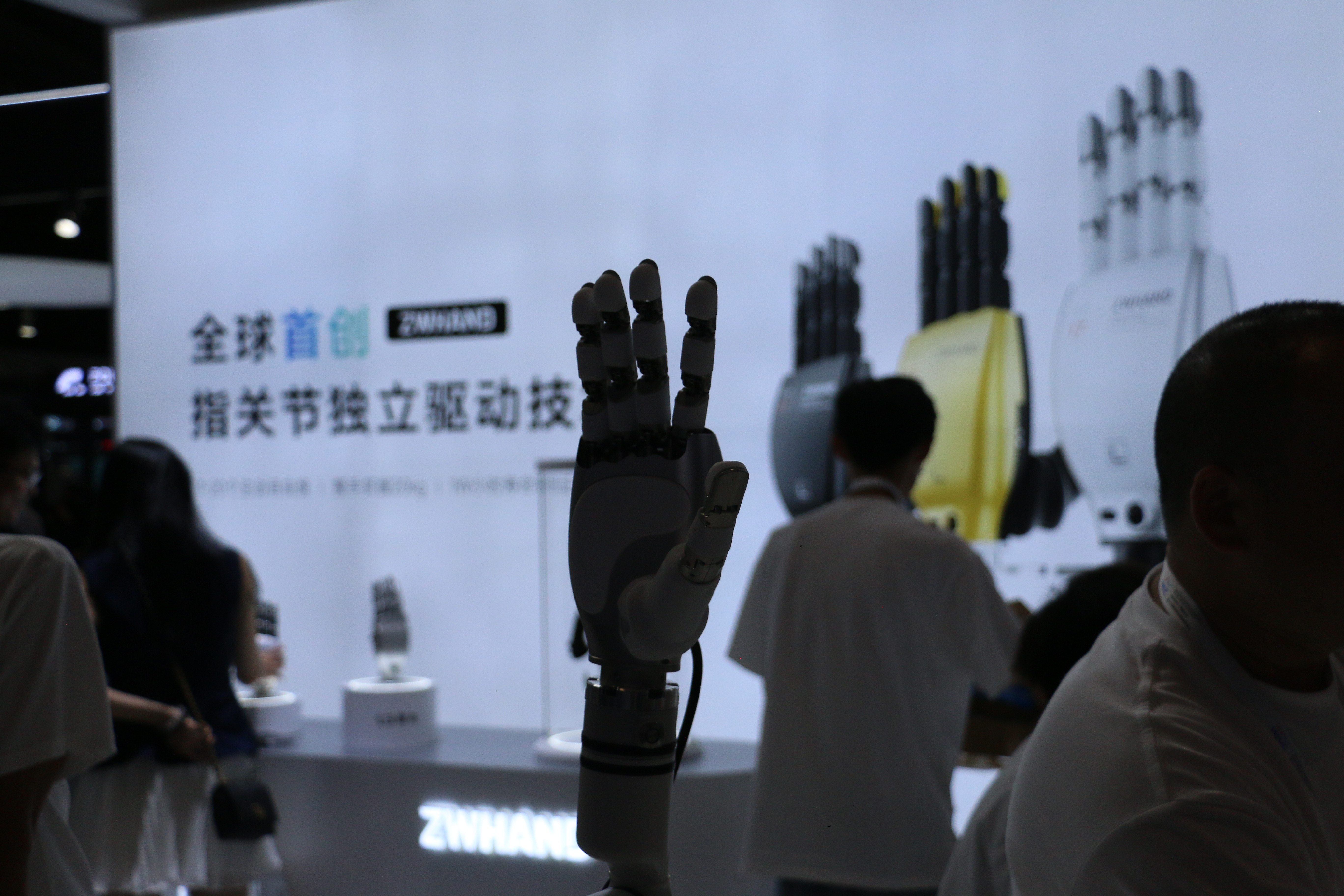
Chinese industrial group Shanghai Electric unveiled five embodied-AI robots in Shanghai along with a factory architecture where production is managed by a network of AI agents.
Contents
Shanghai Electric, one of China's largest industrial conglomerates, showed off its latest lineup of embodied-AI robots at the World Artificial Intelligence Conference (WAIC) 2026 in Shanghai, along with a factory concept in which production processes are overseen by a network of AI agents.
Four Robots on One Stand
Shanghai Electric's booth featured four robotic designs built for different purposes. The bipedal SUYUAN humanoid, which debuted at WAIC a year earlier with 38 degrees of freedom, returned in an upgraded version with 41 degrees of freedom, a multimodal sensor system, and a battery-swap mechanism that lets it keep working without downtime for charging.
Alongside it was TUOYUAN, a wheeled humanoid powered by a foundation model and built for fitting connectors and sorting materials on the production line. A third robot, named Mermaid, is a bionic design capable of independently recognizing buttons and control devices in an industrial setting. The fourth is a specialized robot for processing pipe interiors, which holds precision of about one millimeter while drilling thousands of holes, a task that's difficult to perform by hand with the same consistency.
A Brain, an Execution Network and a Digital Twin
Alongside the robots, the company unveiled its AI-Native Smart Factory concept, laid out in a white paper published during the conference. The architecture rests on three layers: a factory brain acting as the control center, a network of executing agents and robots, and a digital twin that mirrors the physical production line in real time.
According to Shanghai Electric, this setup is meant to give a factory the ability to sense the state of production, make decisions, and carry out corrections on its own, without human involvement, in a closed feedback loop built on real-time floor data. The company says the architecture is also designed to break down traditional production management hierarchies and unify data that has so far been scattered across separate systems.
The real value of embodied intelligence lies in understanding actual industrial tasks - Wang Chunlei, deputy general manager of Shanghai Electric's Robotics business unit
51 Agents Instead of One Model
Beyond the robots themselves, Shanghai Electric launched its StarCloud Intelligent Manufacturing series, comprising 51 AI models and agents split across three areas: product design, production itself, and maintenance of the machine fleet. That number of specialized agents, rather than a single general-purpose model, reflects the direction industrial automation is currently taking in China, where individual tasks on the factory floor are handed to separate, narrowly trained systems working together.
The Context of China's Robotics Race
Shanghai Electric's presentation fits into a broader trend WAIC has shown for several editions running, with Chinese manufacturers such as AgiBot and Unitree competing to display the most advanced industrial humanoids. This year's conference ran under the theme "Intelligent Partners, Co-Creating the Future," and its exhibition footprint topped 100,000 square meters for the first time, with delegations from more than a hundred countries, including UN Secretary-General Antonio Guterres.
For Polish industrial firms and automation integrators, showcases like this signal how quickly China's humanoid robot offerings for assembly and inspection tasks are getting cheaper and more scalable. The growing number of such platforms on the market could, in the coming years, lower the barrier to automation for smaller manufacturing plants that couldn't previously afford classic industrial robots locked inside safety cages.
Shanghai Electric has not yet given a timeline for commercial deployment of the showcased robots outside China, nor pricing for the individual platforms. The next test for the company's offering will be whether the AI-Native Smart Factory architecture described in its white paper makes it into real deployments at industrial clients, rather than remaining just a trade-show demonstration.