News
Singapore, France and China Take Different Approaches to Regulating Students' AI Access
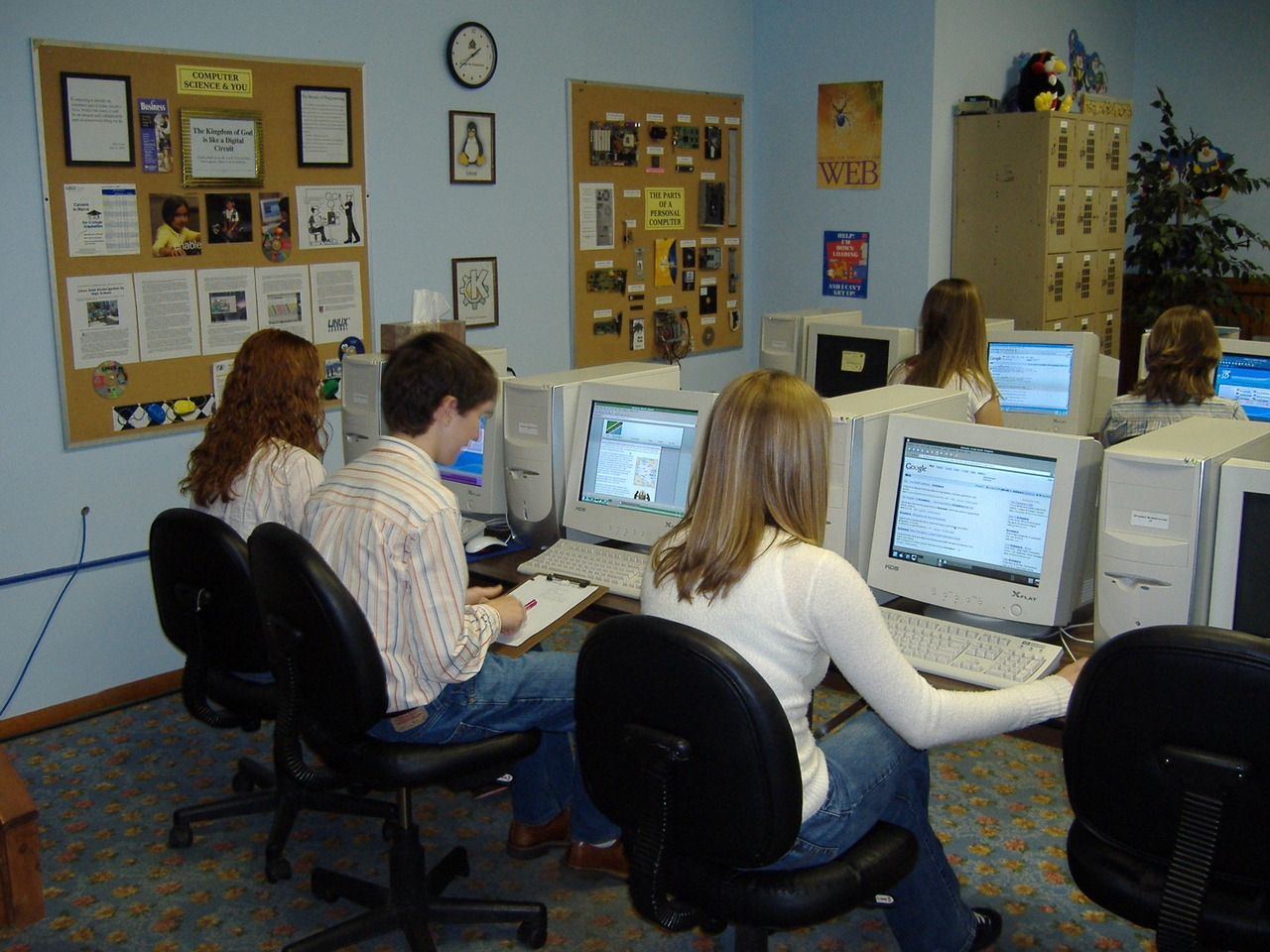
A comparison of national regulations shows there is no single global standard for age limits or scope when it comes to students using generative AI, ranging from an outright ban in primary schools to supervised learning starting in first grade.
Contents
While Poland's Ministry of National Education is only just preparing its first nationwide guidelines on artificial intelligence in schools, other countries have already gone through several years of trial and error. A comparison of the approaches taken by Singapore, France and China shows that no common standard has emerged - each country defines differently the age at which a student can independently use generative AI, and draws the line between help and cheating in its own way.
Three different philosophies
France's model is based on restricting access and drawing a clear line between when using AI counts as academic help and when it counts as cheating. A student's work that lacks the student's own intellectual contribution can be deemed dishonest, and schools cannot force children to create personal accounts on public AI services. This approach casts the teacher as gatekeeper, allowing controlled experimentation only from lower-secondary school age onward.
The Chinese model differs in that the youngest students encounter AI much earlier, but in a closed and controlled form, through applications such as voice or image recognition rather than open text-generation tools. The Ministry of Education's guidelines from May 2025, drawn up by the Ministry's Committee on Primary Education, explicitly forbid primary school students from independently using generative AI to complete assignments. Only in lower-secondary school does instruction in assessing the reliability of AI-generated content appear, and in upper-secondary school students begin using such tools for research and deeper exploration of topics.
Singapore favors a gradual approach
Singapore's Ministry of Education has long promoted the formula of "learning about AI, learning to use AI, learning with AI, and learning beyond AI", adapted to a student's developmental stage. In grades 1-2, children learn only the concepts behind how artificial intelligence works, without hands-on use of the tools. Practical, supervised use begins in grade 4. The government has already announced it will expand the existing Code for Fun program to include AI-related skills starting in 2027, with an emphasis on digital safety and recognizing deepfake content.
Other countries, other approaches
Japan has no uniform national age criteria; the decision on whether a given student may use a particular AI tool is left to the school's judgment, based on the child's developmental level, their ability to critically evaluate information, and the risks posed by the tool in question. Australia has moved toward task transparency: every assignment must clearly state to what extent AI use is permitted, so that teachers can assess a student's actual skills rather than the output of a language model.
New York, where a one-year ban on generative AI for students in grades 2-8 took effect at the start of September 2026, shows in turn that even within the United States there is no consensus on the right approach; the city walked back its earlier openness to experimenting with AI in classrooms, citing concern for the cognitive development of its youngest students as the reason for the decision.
Poland is still setting the rules
Against this backdrop, the discussion in Poland is still at an early stage. The Ministry of National Education is placing artificial intelligence at the center of education policy for the first time, and Cyfrowa Polska (a Polish digital industry association) has proposed national rules for AI use in schools to the ministry. Neither document yet carries the force of binding law, unlike the French or Chinese guidelines, which have been in place within their systems for some time.
For Polish teachers and parents, the biggest question remains the one other countries have been settling in different ways for years: at what age should a child be allowed to independently turn to a chatbot for homework help, and when does that kind of assistance start to undermine the development of independent thinking. Research cited previously has shown that AI can raise homework grades while at the same time lowering exam results by as much as a dozen or so percent, an argument that bolsters the case for age restrictions.
The absence of a single global template means Polish policymakers can, in practice, pick and choose elements from different systems: the strictness of France's distinction between academic help and cheating, the age-based staging familiar from Singapore, or the task transparency used in Australia. What will matter most, however, is whether the national rules actually reach schools in the form of binding guidelines, rather than yet another recommendation with no power of enforcement.