News
South Korea Picks Three Consortia to Build Free AI for Citizens
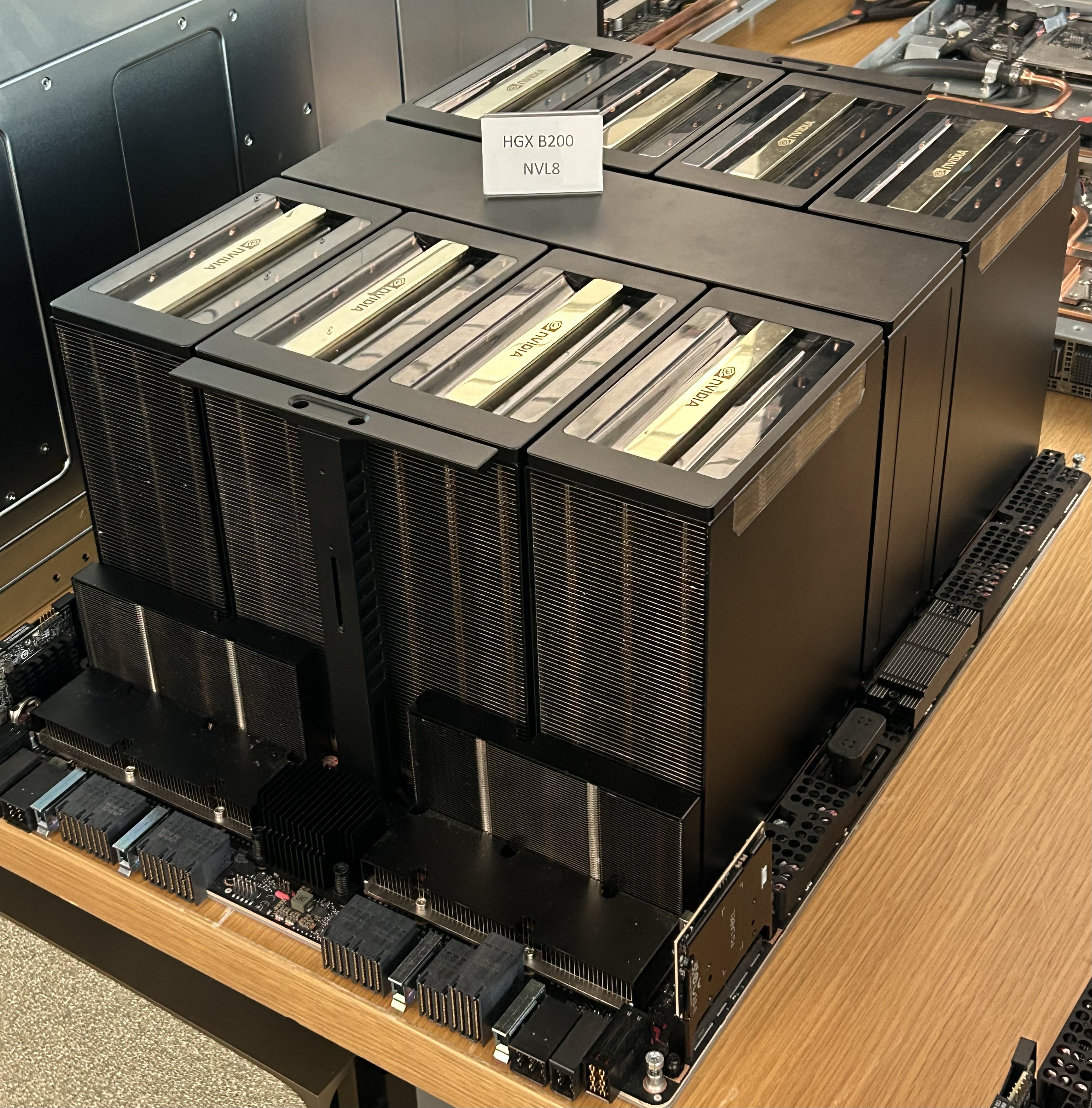
South Korea's science ministry has chosen three consortia, led by SK Telecom, KT, and Kakao, to build a free AI system for all citizens, backing the project with 512 Nvidia B200 GPUs.
Contents
South Korea's Ministry of Science and ICT announced on August 28, 2026, which companies would build the country's national free artificial intelligence system for all citizens. Of six candidates, three consortia were selected, led by SK Telecom, KT, and Kakao.
The program is called AI for All and assumes that access to generative artificial intelligence will become a public service, available regardless of income, age, or digital skills. If the timeline holds, South Korea will become the first G20 country to treat AI as public infrastructure, similar to the internet or electricity.
Three Consortia, Three Approaches
The SK Telecom consortium, the largest of the three, comprises 31 organizations - 20 direct partners and 11 entities linked through agreements. The main engine is expected to be the A.X K2 model with 688 billion parameters, supported by solutions from Upstage AI, Motif Technologies, and LG AI Research. Partners also include Liner, Shinhan Card, Hana Card, and Tmap Mobility.
KT is relying on its own Mi:dm K Pro 2.5 model, with Rebellions, Upstage AI, and BC Card among the consortium's members. The company plans to build AI assistant access points into the Daum portal and partner apps. Kakao, meanwhile, will base its service on its own Kanana model and LG AI Research's EXAONE, with the Kakao Messenger app, used by virtually the entire population, serving as the main access channel.
Kakao's partners also include Seoul National University Hospital and Shinhan Bank, suggesting the service is meant to extend beyond simple chatbot conversations into health and finance. SK Telecom is heading in a similar direction, announcing a feature for ordering dozens of types of official government certificates directly through the app, by phone call, or by text message.
Hardware and Model Requirements
The government will provide the three operators with a total of 512 Nvidia B200 graphics processors, among the most powerful chips currently used for training and running large language models. Additional funding for operating costs is set to come from the state budget starting in 2027, when the service enters full operation.
The ministry set a strict technological sovereignty condition: at least half of each system must run on certified Korean models, with another 30 percent on models from other domestic providers. In practice, this means foreign models, including American ones, can make up only a small fraction of the overall system.
Naver's Absence
Naver, South Korea's largest search engine and creator of the HyperCLOVA X model, was absent among the selected companies. The company withdrew from the tender, citing a limited return on investment relative to the required outlays, and announced it would focus on developing its own existing AI services instead.
Naver's decision shows that not every tech company sees a free, state-subsidized business model as worthwhile, even with access to free computing resources. The government, however, wanted to ensure competition: six consortia entered the tender, and the selection process concluded in mid-August.
Significance for the Global AI Race
The program fits into Seoul's broader strategy, which has for months emphasized technological sovereignty and reducing dependence on American platforms such as ChatGPT. Data cited alongside the program's July announcement shows that around 23 million Koreans regularly use generative AI, including ChatGPT, and about two-thirds of the population uses AI tools in some form.
For a Polish reader, this is a precedent worth watching: no European Union country has yet announced a comparable program in which the state funds free, unlimited AI access for the entire population while also mandating a set share of domestic models. In Europe, the discussion focuses more on regulation through the AI Act than on building a state-subsidized AI infrastructure of its own.
The program's ultimate success depends on whether Korean models such as A.X K2, Mi:dm K Pro 2.5, and Kanana can compete in quality with leading Western models under free, mass-scale use. The government plans to move, in a later phase starting in 2027, from a shared chatbot to personalized AI agents available to each citizen individually.