News
Tesla Burns Cash for First Time Since 2024 as AI and Optimus Spending Surges
Tesla reported record Q2 2026 revenue but posted negative free cash flow of $1.09 billion, its first cash-burning quarter since early 2024. The shortfall stems from sharply rising spending on AI infrastructure, the Optimus robot, and the robotaxi program.
Contents
Tesla closed the second quarter of 2026 with negative free cash flow of $1.09 billion. It's the first quarter since early 2024 in which the company has burned cash, even as revenue rose 26 percent year over year to a record $28.24 billion. The reason is a sharp jump in capital spending on artificial intelligence, the Optimus humanoid robot, and the robotaxi program.
Record sales, weaker profit
Tesla delivered 480,126 vehicles in the second quarter, up 25 percent from a year earlier, marking the best second quarter in the company's history. It produced 451,758 cars. Even so, operating profit fell 57 percent to $398 million, and operating margin shrank from 4.1 to 1.4 percent. GAAP net income came in at $1.11 billion, down 5 percent from a year earlier.
The results were also hit by a sharp drop in revenue from regulatory credits, which Tesla sells to other gas-car manufacturers, falling from $439 million a year earlier to $146 million, a 67 percent decline. That revenue source, which had previously eased pressure on margins, is now nearly drying up.
Where the cash is going
Tesla's operating expenses rose 47 percent in the quarter to $4.35 billion. The company said directly that the main driver is spending on artificial intelligence, the Optimus robot, and the robotaxi program, on top of costs tied to Elon Musk's stock compensation package. Capital expenditure for the quarter alone reached $5.8 billion, more than double the year-earlier figure.
Tesla's chief financial officer, Vaibhav Taneja, confirmed that capital expenditure for all of 2026 will top $25 billion, more than double the sub-$10 billion the company spent in 2025. The money is earmarked for expanding factories, building computing infrastructure to train AI models, ramping Optimus production, and scaling the Cybercab fleet.
This will be the hardest product to scale production on that we've ever done at Tesla, because everything about this robot is new - Elon Musk, CEO of Tesla
Optimus and a mystery fab
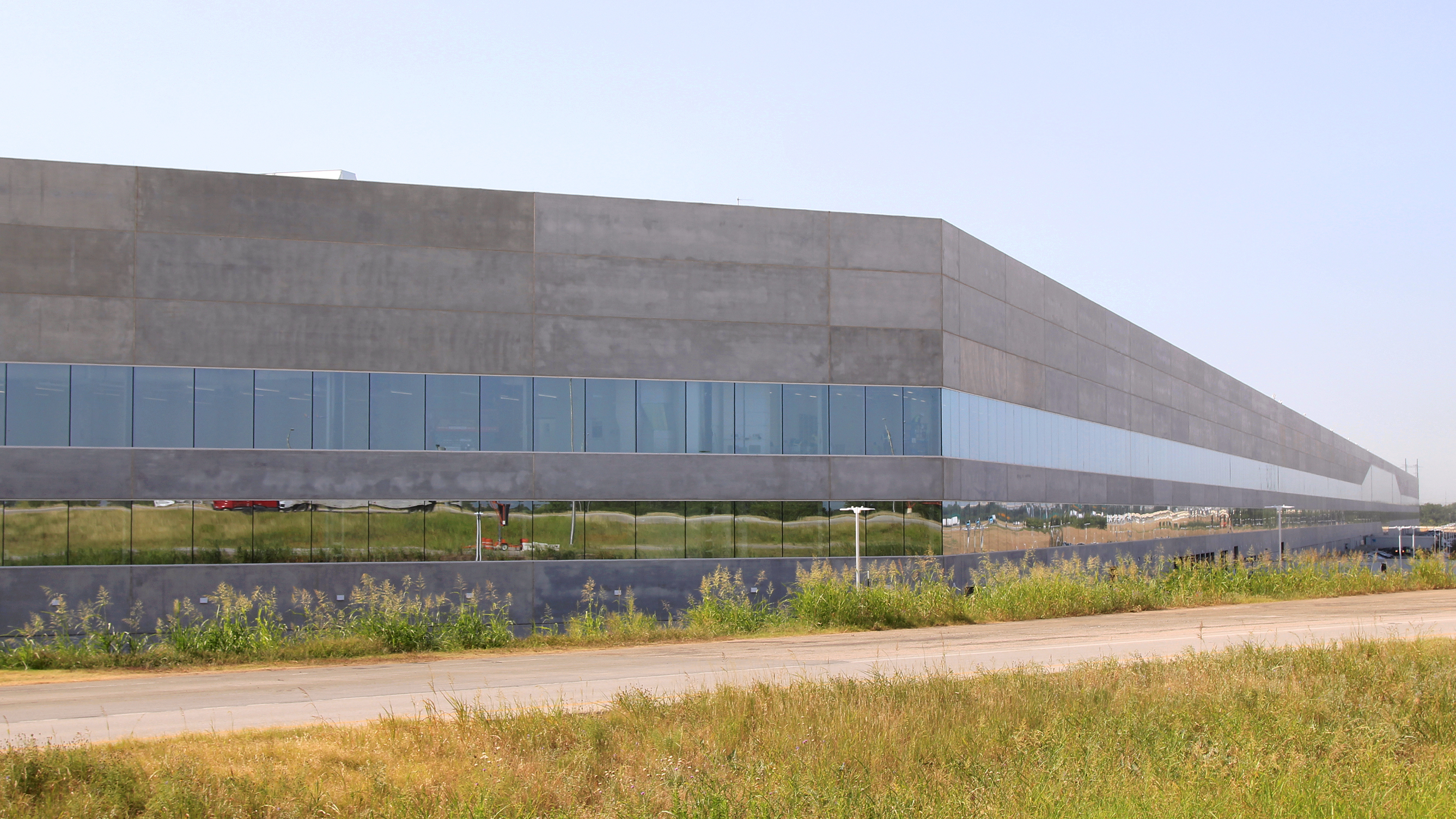
The first Optimus production lines are being installed at Gigafactory Texas, and Tesla says production will start this year, though it has yet to give any figure for units built. Musk said on the earnings call that the company has already ordered equipment for what he called a development fab, a facility for developing AI chips, but declined to give details, calling it high risk with high potential payoff.
This is going to be a massive year for capital expenditures, but I'm confident that everything we're investing in will generate great returns - Elon Musk, CEO of Tesla
Investors responded to the results by sending the stock down 4.18 percent, to around $358.39, shaving roughly $61.28 billion off the company's market value. The reaction was nonetheless moderate, since the negative cash flow came in well below what analysts had expected, with some forecasting a shortfall as deep as $3.64 billion.
What it means for investors
Tesla's results fit a broader pattern already visible at other tech giants, which have been steadily raising their spending forecasts for AI infrastructure this year at the expense of near-term profitability. Tesla is compounding that race with its own humanoid robotics and autonomous taxi programs, making its investment math even riskier than that of companies focused solely on language models or data centers.
For Polish investors and funds with exposure to Tesla stock, this likely means further quarters of negative cash flow ahead, before the bets on Optimus, robotaxis, and in-house AI chips start to pay off, if they pay off at all at the scale Musk has promised. Management has not given a concrete timeline for when this spending will translate into revenue from these new business lines.
The next test for the company will be the third quarter, when the market will be watching whether Optimus actually moves into serial production and whether capital expenditure holds within the promised $25 billion range or climbs even further.