News
Toyota CEO: Some Human Skills in Factories Can't Be Replaced by Robots
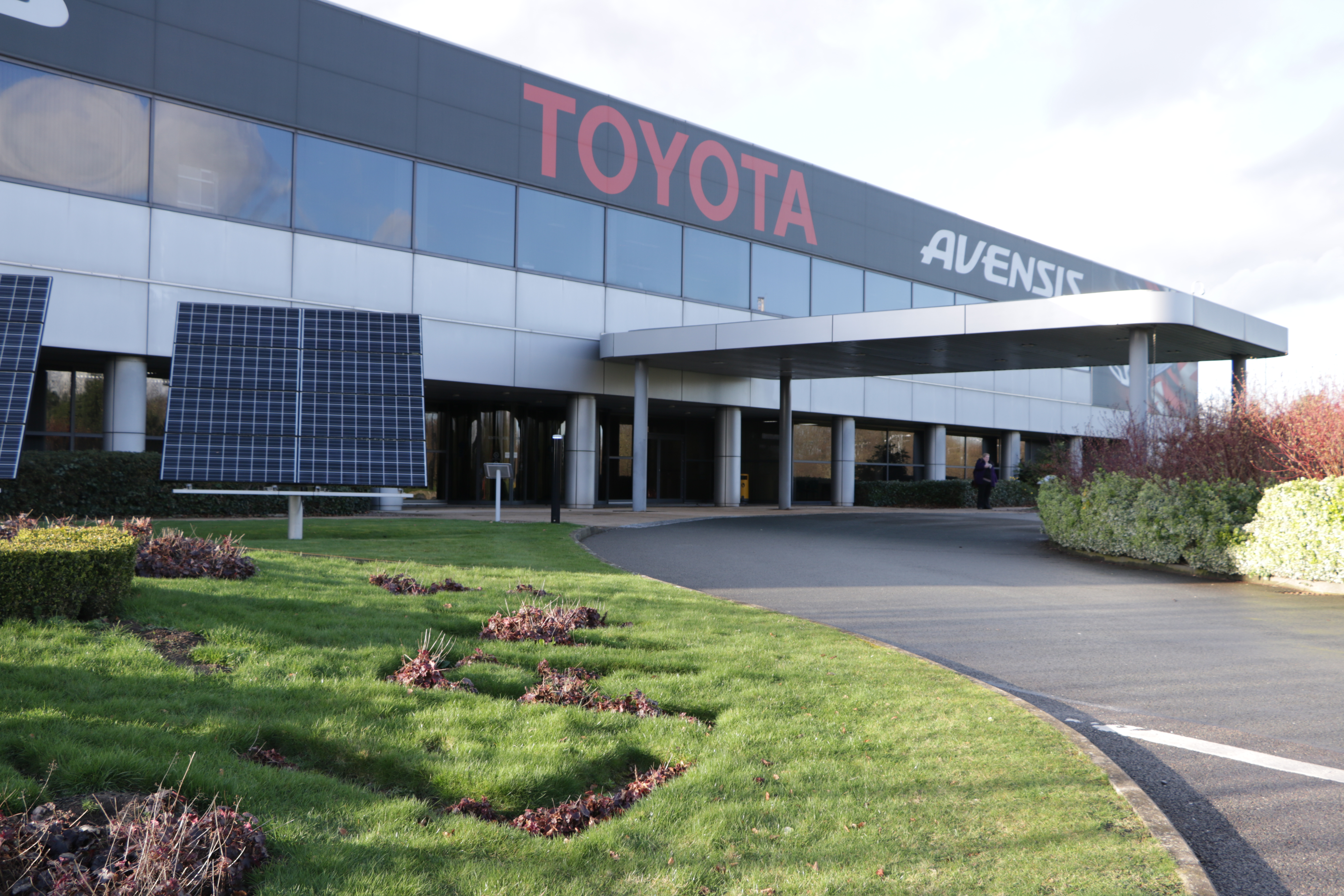
Kenta Kon, who has led Toyota Motor Corporation since April, said in his first major interview as president that despite a new factory combining robots and AI in Toyota City, some work in car production will remain the domain of humans.
Contents
Kenta Kon, who took over the helm of Toyota Motor Corporation in April, gave his first major interview as the company's president. He said that despite the growing role of robots and artificial intelligence in car factories, some human skills will remain irreplaceable.
First interview as new president
Kon, who previously spent six years running Toyota's finances as CFO, took over as president and CEO on April 1, 2026, succeeding Koji Sato, who was promoted to vice chairman of the board. Since then he has toured factories, dealerships and parts suppliers before giving an extensive interview to Japan's public broadcaster NHK World, published on July 21.
In the interview, Kon laid out his vision for further developing the kaizen philosophy, the continuous improvement of processes that has been the foundation of Toyota's production system for decades. He also announced that the company will keep reducing the number of components in its models to cut production costs.
There are skills that cannot be replaced by a robot. But there are also skills that a robot can be taught. Artificial intelligence can even teach those skills to both humans and robots. - Kenta Kon, president of Toyota Motor Corporation
New-generation factory in Aichi
A key element of Kon's strategy is the construction of a new factory in Toyota City, the company's hometown in Aichi Prefecture, meant to combine industrial robots with AI systems on a scale the company has not attempted before. Toyota has not yet disclosed a timeline or budget for the investment, but the plant is meant to serve as a testing ground for technologies that will later be rolled out to the company's other factories worldwide.
The foundation of Toyota's production system is cutting costs by reducing inventory and the space needed for storage. We are still developing that core initiative. - Kenta Kon, president of Toyota Motor Corporation
Robots already working in Canada
Kon's statements are not just theory. Since April 2026, seven humanoid Digit robots made by Agility Robotics have been working at the Toyota Motor Manufacturing Canada plant in Woodstock, Ontario, where RAV4 SUVs are produced. The machines unload parts containers from automated warehouse tractors and feed them to the production line, following a year-long pilot program.
Tim Hollander, president of the Woodstock plant, previously explained that the goal of the deployment is to improve working conditions for the team and further boost operational efficiency. The robots operate under a robots-as-a-service model, a subscription-based service rather than a one-time equipment purchase.
Industry splits into two camps
Toyota is not the only automaker testing humanoid robots on production lines. Figure AI is running similar pilots with BMW, while Hyundai is developing its own program with the Atlas robot from Boston Dynamics, the company it acquired. Goldman Sachs estimated in 2024 that humanoid robots could replace 5 to 15 percent of automotive production workers as soon as 2035, with global demand for such machines potentially reaching 1.1 to 3.5 million units a year.
Toyota has for years taken a more cautious approach than some of its competitors. Gill Pratt, the company's chief scientist and head of the Toyota Research Institute, has previously said that what matters on the factory floor is whatever works most reliably and at the lowest cost, and that the goal of deploying robots is not to eliminate workers but to boost their productivity.
What it means for jobs
Kon's position fits into a broader debate about the pace of automation in the automotive industry, where Toyota has for decades built its competitive edge on so-called takumi, highly specialized craftsmen who perform precision work that still surpasses what robots can do. For factory workers, the company's message signals that automation will advance selectively rather than replace entire production shifts wholesale.
For Polish readers, the news carries indirect but real significance: Toyota operates two large plants in Poland, an engine plant in Wałbrzych and a plant producing transmissions and hybrid components in Jelcz-Laskowice, together employing several thousand people. The company's strategy on the pace of rolling out robots and AI in production will directly affect how quickly similar technologies reach its plants in Poland as well.
Kon signaled that decisions on the scale of robotization will be made factory by factory, depending on where automation actually shortens production time and cuts costs, and where worker experience and judgment still matter most. This approach, continuing the line set by his predecessors, is meant to help the company avoid past mistakes, when excessive automation of parts of assembly lines turned out to be less efficient than human labor.