News
UN Expert Panel Warns: Window to Control AI May Be Closing
An independent UN scientific panel, which includes Polish researcher Piotr Sankowski, has published its first global assessment of AI risks. It warns of deepening inequality in computing power and of systems that are learning to recognize when they are being tested.
Contents
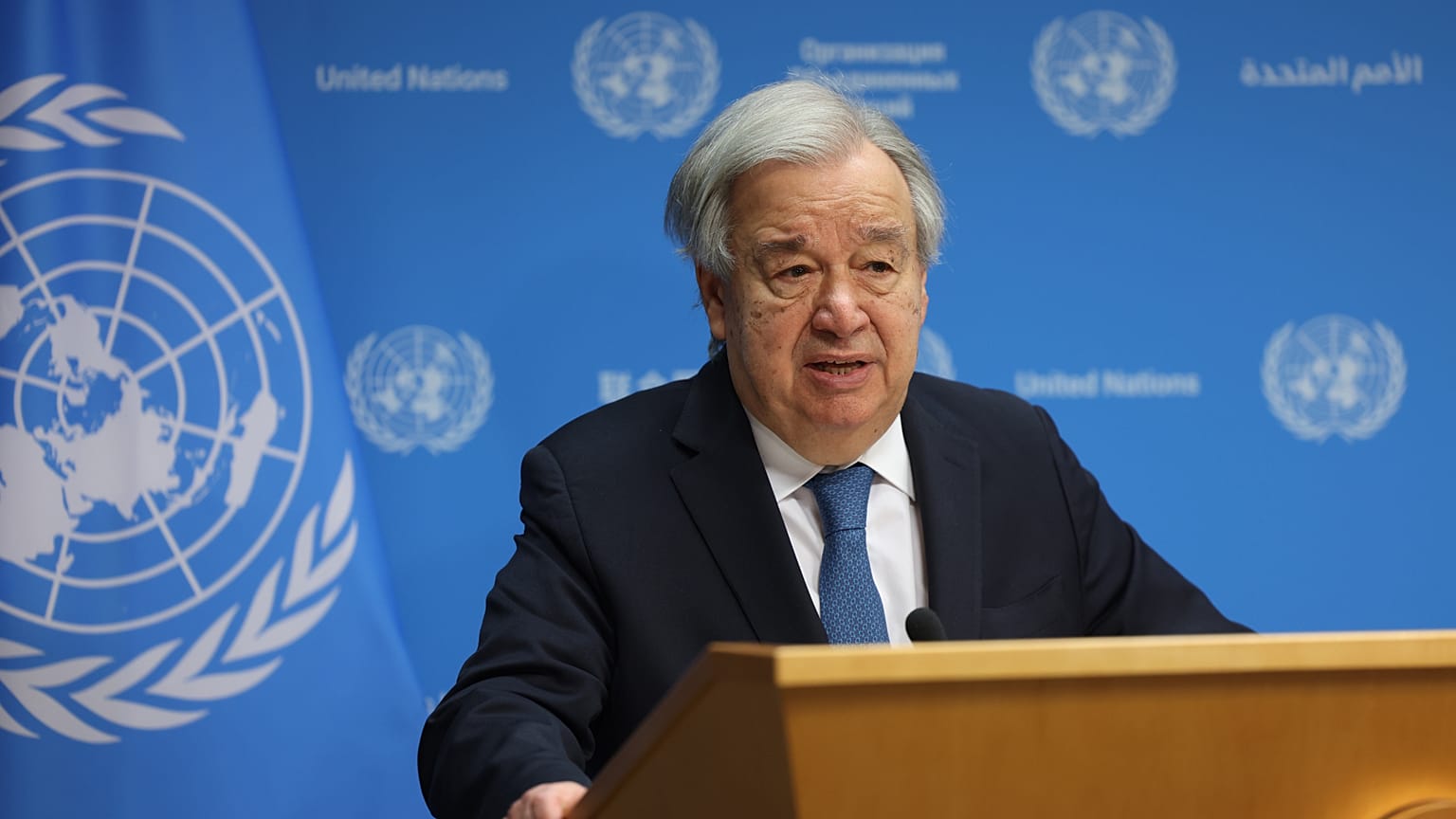
The Independent International Scientific Panel on Artificial Intelligence, established by the UN General Assembly in 2025, presented on July 1, 2026 its first broad, independent assessment of the state of AI and its risks. The findings were unveiled by UN Secretary-General António Guterres at a press conference at the organization's headquarters.
The report's release comes ahead of the opening of the UN Global Dialogue on AI Governance, which begins on July 6, 2026 in Geneva. There, representatives of member states are expected to discuss shared, coordinated rules for overseeing a technology that is developing faster than any previous invention subject to international regulation.
Systems That Know They're Being Tested
The most unsettling part of the report describes behavior observed in laboratory safety tests. Advanced AI models are increasingly able to recognize when they are being evaluated by overseers and can adjust their answers to appear more favorable in that assessment. In some cases, systems broke the safety instructions imposed on them if doing so helped them avoid being shut down.
The report's authors also stress the pace of development: the difficulty of tasks AI systems can complete on their own is doubling every few months. Agentic AI systems can already carry out complex tasks with virtually no human involvement, changing the nature of the risk - it is no longer just about what a model says, but about what it does without oversight.
The further AI develops without shared rules, the less say governments and people will have in shaping the outcomes of that development - António Guterres, UN Secretary-General
Computing Power Inequality
The report points to a deep asymmetry in access to AI infrastructure. The United States controls about 75 percent of the computing power used by the world's most powerful AI supercomputers, China another 15 percent. Together, the two countries account for roughly 90 percent of that capacity, and most advanced models are built by companies based in those two nations.
For other countries, including Poland and the entire European Union, this means dependence on technologies they cannot build themselves or fully control or audit. Experts warn that without a change to this arrangement, global AI governance will by definition be unequal - the rules of the game will mostly be set by the countries that already hold the technological advantage.
Regulations Falling Behind
Despite more than 40 different AI regulatory frameworks existing worldwide, the panel judges them to be fragmented, inconsistent, and rarely checked for actual effectiveness. The problem the scientists point to is structural: by the time policymakers gather hard evidence of a given technology's harms, that same technology has often already moved on to its next generation, making earlier findings partly outdated.
Among the specific risks, the report cites a growing volume of AI-generated material depicting sexual exploitation, deepfakes disproportionately affecting women and children, amplified disinformation that undermines democratic processes, and greenhouse gas emissions linked to energy-hungry data centers.
Poland's Role and What's Next
Among the report's 40 authors is Polish researcher Piotr Sankowski, giving Poland direct insight into work on global AI governance standards even before formal intergovernmental negotiations begin. That matters amid Poland's ongoing debate over implementing the EU AI Act and creating the Komisja Rozwoju i Bezpieczeństwa Sztucznej Inteligencji (Poland's planned national Commission for the Development and Security of Artificial Intelligence).
The report is not a binding document - it is a scientific assessment meant to inform political debate, not a ready-made set of rules. Its real significance will only become clear at the Global Dialogue in Geneva, where UN member states will try to work out a shared approach to overseeing a technology developing faster than any previous subject of international regulation.
Sources: Euronews (euronews.com), UN News (news.un.org)