News
US Lifts AI Chip Export Restrictions for United Arab Emirates
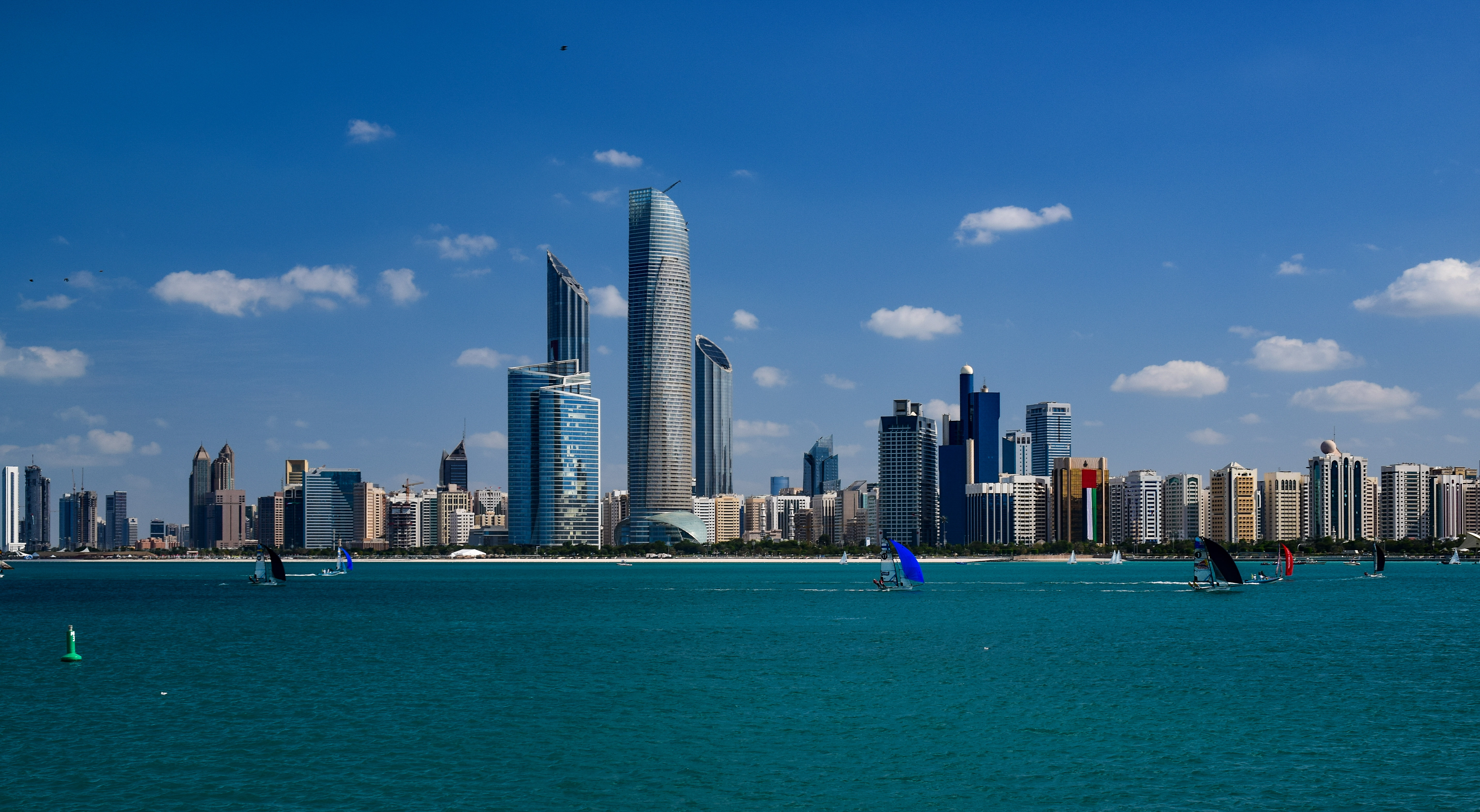
The U.S. Commerce Department reclassified the United Arab Emirates into its top export tier, opening license-free access to advanced AI chips, a move that has drawn accusations of ties to the Trump family.
The U.S. Department of Commerce announced on July 10, 2026, that the United Arab Emirates will be moved into the most favorable export classification tier, giving companies there license-free access to advanced AI chips. The decision immediately triggered a political dispute in Washington, since one beneficiary of the eased rules is an investment fund tied to a stablecoin backed by President Trump's family.
A new export tier
Previously, the UAE sat in country groups D:3 and D:4, which limited support for the country's drone programs and required individual licenses for many dual-use goods. The move to group A:5 removes that requirement for a broad range of products, from commercial satellites to water desalination equipment and civilian nuclear power technology, and above all for the advanced computing systems used to train AI models.
The Commerce Department justified the decision by citing the UAE's status as a major U.S. defense partner and the support the country provided during Operation Epic Fury, the joint U.S.-Israeli strikes on Iran that began in February 2026.
Who benefits
UAE government institutions and approved commercial firms, including G42 and Core42, will be able to receive advanced chips and servers without securing a license for every transaction. The same relief extends to U.S. companies operating locally in the Emirates, explicitly named by the Commerce Department: Google, Meta, Microsoft, OpenAI, Oracle, as well as Amazon, Apple and xAI.
The change is formally an extension of the AI cooperation framework the two countries signed in May 2025, and is meant to ease the construction of hyperscale data centers in the Gulf region, where the UAE has spent several years pouring billions of dollars into computing infrastructure meant to rival that of the U.S. and China.
The MGX controversy
Alongside the export relief, the Commerce Department said it would look favorably on licensing applications from MGX, an investment fund tied to the UAE government. MGX had previously used the USD1 stablecoin, issued by World Liberty Financial, a company linked to the Trump family, to finance a $2 billion investment in the Binance cryptocurrency exchange.
A member of the UAE royal family behind G42 and MGX secretly bought a 49 percent stake in Trump's crypto company, World Liberty Financial - Elizabeth Warren, United States senator
Warren noted that Trump was estimated to have personally earned around $263 million from related transactions, part of a broader $1.4 billion in gains from cryptocurrency ventures over the past year, and called on Commerce Secretary Howard Lutnick to explain to Congress whether the decision risks leaking sensitive technology to China.
Geopolitical backdrop
The dispute feeds into a wider debate over how quickly the United States should open access to top-tier AI chips for Gulf countries that also maintain close economic ties with China. Supporters of loosening the rules argue that without American chips, the Emirates would simply build their data centers on Chinese technology instead, costing Washington influence over global AI infrastructure.
Critics, including some Democratic senators, note that earlier deals with G42 already raised concerns at the Pentagon about possible technology transfers to China, and that the pace of deregulation is outrunning the mechanisms meant to police how the hardware is actually used.
For the global AI market, the decision marks another country outside China and the U.S. with real, large-scale access to the latest Nvidia and AMD chips, intensifying competition for compute capacity and potentially affecting global chip prices in the coming quarters.

