News
US Seeks to Push Minimal AI Regulation Rule at G20
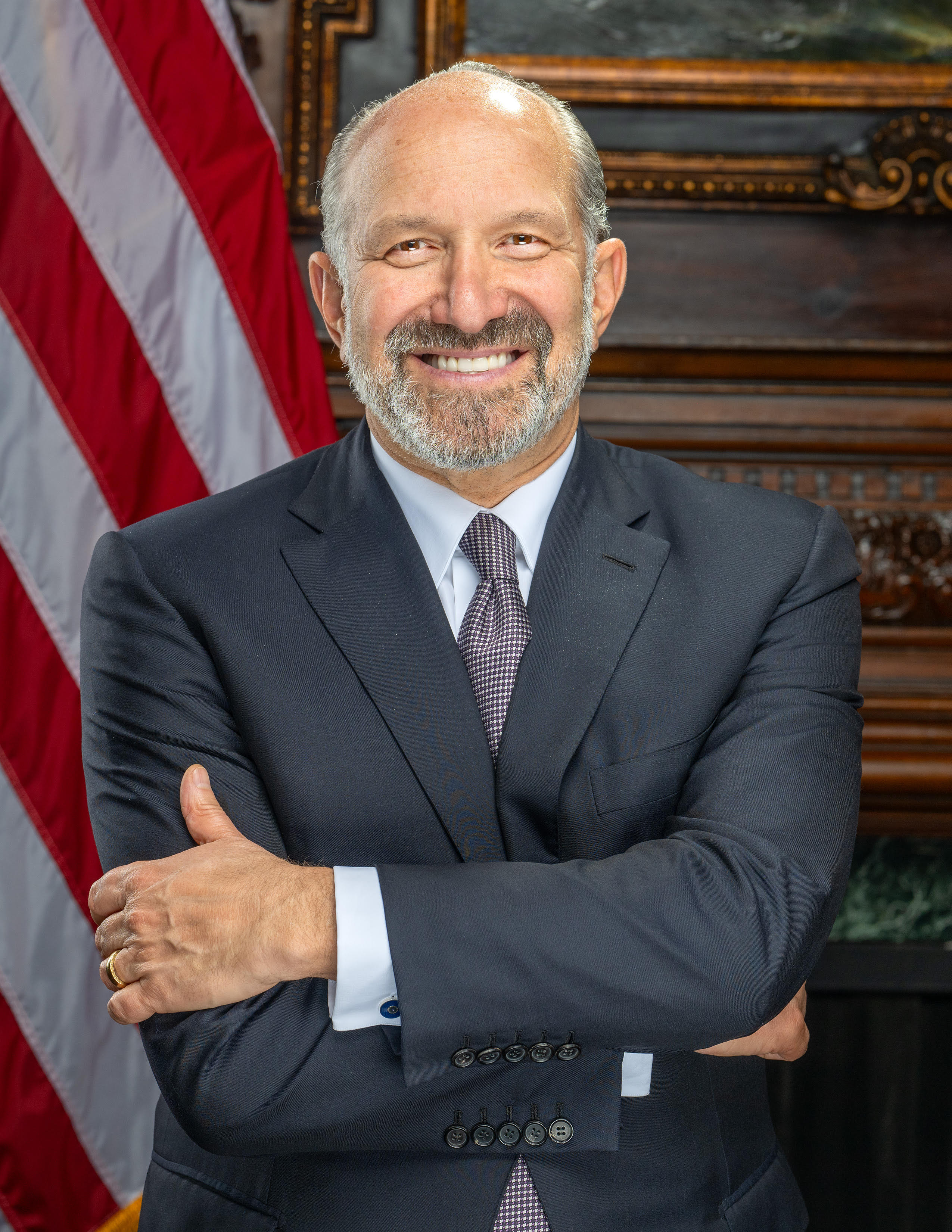
The Trump administration presented G20 ministers in Chapel Hill with the so-called Carolina Principles, a pact calling for governments to forgo creating new AI oversight agencies. The proposal is meant to become a joint statement at December's G20 summit in Miami.
Contents
White House technology adviser Michael Kratsios presented G20 economic ministers on Tuesday in Chapel Hill, North Carolina, with a set of proposed principles meant to discourage governments from creating new institutions to regulate artificial intelligence. The document, named the Carolina Principles, is the centerpiece of the United States' G20 presidency this year.
The Carolina Principles call for signatories to commit to investing in basic research that accelerates AI development, strengthening the technology's commercial use, and reserving new regulation solely for "novel circumstances." In practice, this means forgoing the creation of separate AI oversight agencies in favor of adapting existing industry-specific rules.
Who is behind the proposal
The initiative is led by Kratsios and Lutnick, who organized the meeting as part of the US G20 presidency. Heads of the largest AI companies joined the talks with delegates, some remotely and some in person. Musk joined by video conference on Tuesday, while Huang and Altman attended in person on Wednesday for talks with Lutnick.
Ministers from Japan, Germany, France, India and South Korea attended the meeting. According to prepared remarks, Kratsios argued that policymakers should not treat every new technology as a first-of-its-kind regulatory problem requiring its own institution.
Policymakers don't need to approach every innovation in isolation - Michael Kratsios, director of the White House Office of Science and Technology Policy
Rivalry with China in the background
According to analysts cited by media outlets, the Trump administration fears that premature or fragmented regulation could slow down American companies, raise costs and give Chinese competitors room to gain an edge. One analyst said Washington's goal is to keep the rest of the world anchored in the American technology ecosystem, so other countries don't go looking for alternatives, implicitly Chinese ones.
That explains why the proposal emphasizes commercial AI development and public-private cooperation in testing new systems, rather than the creation of independent oversight bodies of the kind that already exist, in part, in the European Union.
Not everyone agrees
Opinions are divided even within the AI industry itself. Demis Hassabis of Google DeepMind has previously advocated for creating an organization modeled on FINRA, the US financial markets regulator, that would test the most powerful AI systems before they are made publicly available, an approach at odds with the spirit of the Carolina Principles. The Canadian delegation, meanwhile, said it would emphasize the balance between innovation and public trust and safety at the meeting, distancing itself from the purely deregulatory tone of the US proposal.
UN Secretary-General Antonio Guterres has previously warned that the development of artificial intelligence is outpacing governments' ability to keep up with it through regulation, while the Financial Stability Board has warned of financial and cybersecurity risks tied to frontier models.
What it means for Europe and Poland
The US proposal runs counter to the EU's AI Act, which has imposed obligations on the makers of the most powerful models since August and introduced new oversight mechanisms, including Poland's newly forming AI commission. If the Carolina Principles win support from a majority of G20 states, pressure to soften or slow regulation could grow in Europe too, though Brussels has so far not signaled any change of course.
The final shape of the document, and whether a consensus can be built around it, will only be settled at December's G20 leaders' summit in Miami, which President Trump is expected to chair.