News
Xi Jinping Makes First WAIC Appearance as China Launches New AI Body for 29 Nations
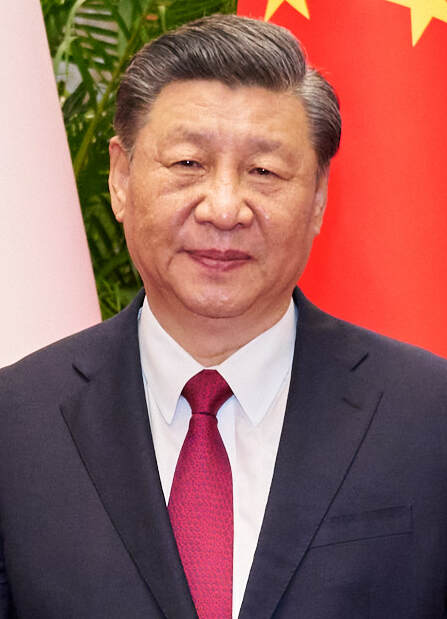
China's leader personally opened the World AI Conference in Shanghai for the first time, a day after 29 countries signed an agreement to create a new international AI organization headquartered in the city.
Contents
Xi Jinping, for the first time since the World Artificial Intelligence Conference launched in 2018, personally opened the event, delivering a speech in Shanghai on Friday in which he called for building a global cooperation system for artificial intelligence instead of the rivalry of a single power. A day earlier, 29 countries, including Russia, Kazakhstan, Pakistan, Indonesia and Laos, signed an agreement establishing a new intergovernmental AI organization headquartered in Shanghai.
The WAIC conference has been held annually since 2018, but until now Xi Jinping had never appeared in person, leaving the opening remarks to the premier or other officials. His presence this year, accompanied by Foreign Minister Wang Yi, is meant to signal that Beijing treats artificial intelligence as a central pillar of its economic and geopolitical strategy for the coming decade, not merely another tech sector.
A Symphony, Not a Solo
In his speech, Xi addressed American dominance in AI model development directly, saying that the development of artificial intelligence should not be a game played by a single country. He also stressed that AI must remain under human control and spoke out against overly broadening the concept of national security, a remark widely read as criticism of US export restrictions on Chinese chips and models.
The development of artificial intelligence should not be a solo performance by one country, but a symphony of international cooperation - Xi Jinping, President of China
A New Organization Headquartered in Shanghai
A day before the conference opened, on July 16, Foreign Minister Wang Yi and representatives of 29 countries formally signed the agreement establishing the World AI Cooperation Organization, or WAICO. The organization is meant to operate as an independent international body guided by the principles of the UN Charter, with its stated goal being to promote beneficial, safe and fair AI development, particularly for countries of the Global South.
Founding members include Russia, Kazakhstan, Pakistan, Indonesia and Laos. The structure and rationale behind WAICO echo the earlier model of the Shanghai Cooperation Organisation, a multilateral body that China helped create and effectively leads, this time applied to technology governance rather than security.
The West's Absence
Representatives of the largest American tech companies were missing from the Shanghai summit, which commentators point to as evidence of a deepening split in global AI governance. While the US administration and companies such as OpenAI and Anthropic build their own oversight frameworks together with allies, Beijing is proposing a parallel track aimed primarily at developing countries that, as Chinese officials emphasize, have not been given a real seat at the table by existing Western initiatives.
China is positioning itself as a supplier of cheap, open AI models available to countries that cannot afford costly infrastructure or licenses from Western vendors. This approach reflects the growing strength of Chinese AI labs, which in recent months have released several high-profile open models competing with offerings from American companies.
The Scale of China's Market
Data accompanying the speech illustrates the pace of the sector's growth in China. The domestic AI market reached a value of 1.2 trillion yuan, or about $177 billion, in 2025, and is expected to grow by more than 30 percent in 2026. Chinese entities also account for more than 43,000 patent filings related to generative AI submitted in 2024-2025, more than any other country. The conference showcased around 3,000 products, from semiconductor systems to autonomous smartphone applications, prepared by more than a thousand companies and research institutions.
Despite this scale, the United States still holds the lead in the most advanced chips and computing infrastructure. Analysts cited by foreign media nonetheless describe China as the closest and most comprehensive competitor to the US in the AI race, not just at the level of models but across the entire deployment ecosystem.
Implications for Global AI Governance
The creation of WAICO establishes a real institutional alternative to forums dominated by the United States and the European Union, including the EU's AI Act and American initiatives to oversee models. For undecided countries that have so far lacked a strong voice in international talks on AI regulation, the Chinese proposal could prove attractive, especially if it comes with cheaper access to the technology.
For Poland and the European Union, the split between two parallel AI governance systems means, in practice, that companies and institutions will need to decide clearly which regulatory camp they want to operate in, particularly as the EU's AI Act begins covering additional categories of high-risk systems starting in August. The rivalry between the two AI governance models could, in the coming years, shape which models and infrastructure countries outside the technological front rank end up using.