News
AGIBOT A2 Ultra Humanoid Robot Joins Polish University to Study Workers' Fear of AI
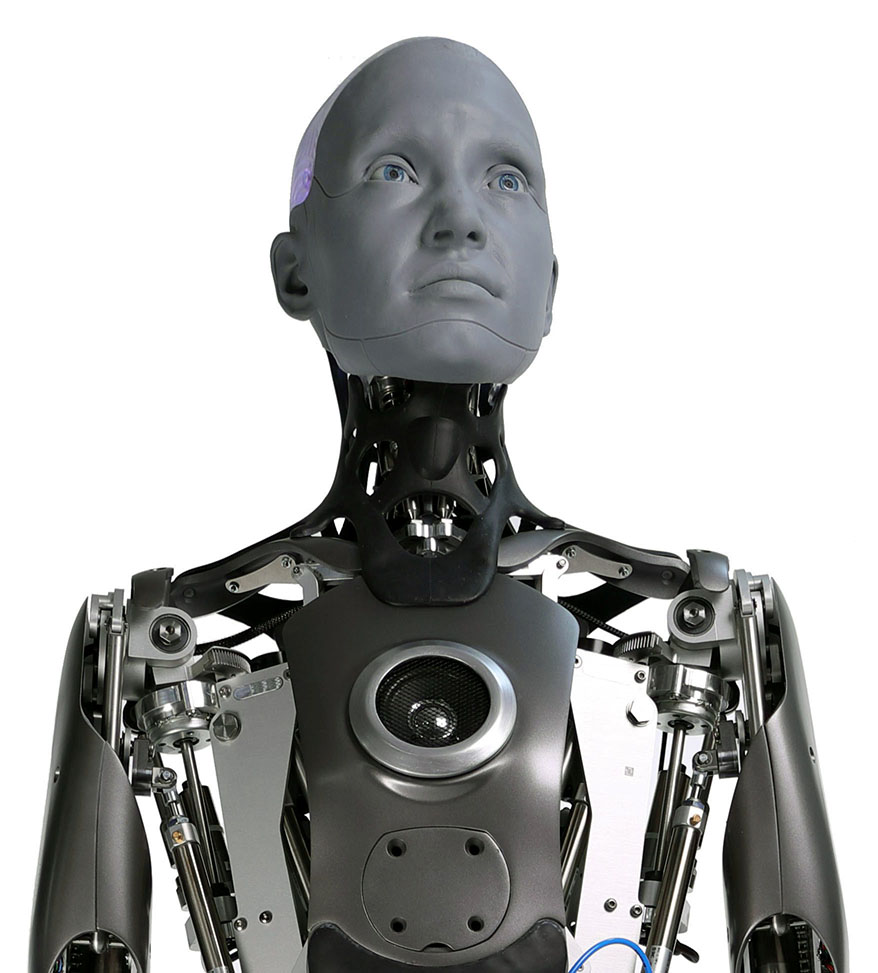
The Faculty of Psychology and Cognitive Science at Adam Mickiewicz University in Poznań has installed the humanoid robot AGIBOT A2 Ultra to study how automation and artificial intelligence affect employee well-being and anxiety.
Contents
Adam Mickiewicz University in Poznań (UAM) has launched a research program involving one of the most advanced humanoid robots available on the market. The machine has been placed in the Tech & Work Psychology Lab at the Faculty of Psychology and Cognitive Science, where work psychologists will observe how people react to the presence of a humanoid machine in the workplace.
What the psychologists will study
The team from UAM's Department of Work and Organizational Psychology wants to examine how automation and artificial intelligence affect feelings of job insecurity and the psychological well-being of people who work alongside machines capable of performing tasks once reserved for humans. The research will focus on fear of being replaced by technology, a phenomenon increasingly discussed in labor market studies amid growing automation.
The researchers will not limit themselves to laboratory conditions. Experiments conducted at the university are meant to be supplemented with observations in real workplace settings, allowing the team to capture authentic reactions to the presence of a humanoid robot rather than purely declarative responses.
Thanks to the new robot, we can observe people's real behavior when they come into contact with a humanoid machine - Dr. Jarosław Grobelny, UAM Department of Work and Organizational Psychology
Why AGIBOT specifically
The AGIBOT A2 Ultra ranks among the most advanced commercially available humanoid robots. It stands roughly as tall as an average adult, has 40 degrees of freedom, including seven per arm and six per leg, and its hands offer six degrees of freedom, enabling precise object grasping. The model also set a Guinness World Record for the longest distance walked by a humanoid robot, exceeding 106 kilometers.
For work psychology researchers, this human resemblance is precisely what matters. The more a robot resembles a human in appearance and movement, the stronger the emotional reactions it can trigger in the people who encounter it, ranging from curiosity to discomfort. Psychologists have studied this phenomenon for years under the name of the uncanny valley effect, but they rarely have access to a machine as technically advanced as the AGIBOT A2 Ultra.
Part of a wider debate on work and AI
The UAM project fits into a broader discussion underway in Poland about the impact of artificial intelligence on employment. The Institute for Structural Research (Instytut Badań Strukturalnych) and the International Monetary Fund have recently estimated that automation and AI could threaten as many as several million jobs in Poland over the next decade, while other analyses have shown that Polish workers are learning to use new tools faster than companies are investing in the technology.
Until now, most available data on worker concerns has come from surveys and self-reported statements rather than direct observation of behavior under controlled conditions. Bringing a physical humanoid robot, not just a chatbot or software, into the lab is meant to give researchers a way to record reactions that are hard to capture in a questionnaire, such as body language, avoidance, or changes in work pace in the presence of the machine.
International cooperation and next steps
The UAM team's work is being carried out in cooperation with foreign partners, though the university has not yet disclosed details of that cooperation or a timeline for the various stages of the research. It has also not said exactly when the first experimental sessions with participants will begin.
Still, for Polish science this is a rare opportunity to conduct human-robot interaction research using top-tier hardware, rather than relying solely on simulations or promotional videos showcasing a machine's capabilities. The results could have practical significance for companies already deploying robotics and AI systems in warehouses, manufacturing, or customer service as they consider how to prepare their workforces.