News
AI Cuts MRI Scan Times Nearly in Half
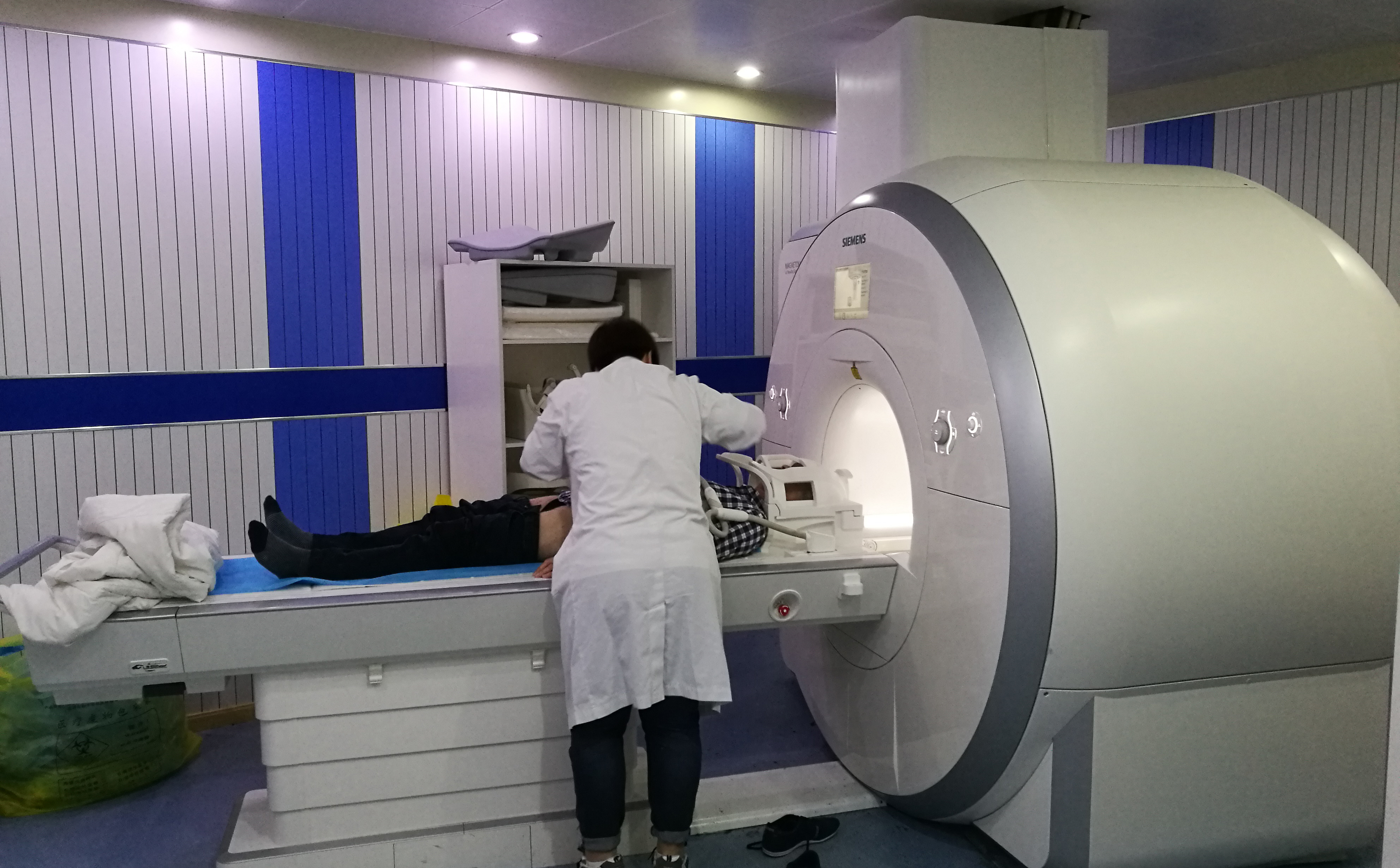
TK MEDICA imaging center in Starogard Gdański has become the first facility in Poland to adopt Deep Resolve, a neural-network-based technology that has cut MRI scan times by as much as 45 percent without compromising image quality.
Contents
The TK MEDICA magnetic resonance imaging center in Starogard Gdański has become the first facility in Poland to adopt Deep Resolve, an AI-based image reconstruction technology from Siemens Healthineers. The result: scan times cut by as much as 45 percent, while radiologists say diagnostic image quality has been preserved, and in some cases even improved.
Deep Resolve is a Siemens Healthineers technology that, instead of the classic, time-consuming approach of collecting a full set of data from the MR machine, lets a neural network reconstruct a detailed image from a limited number of measurements. In practice, this means patients spend far less time inside the scanner tunnel, and a facility can see more patients within the same time window.
How it works in practice
At TK MEDICA, knee scans were shortened from 25 to 10 minutes, spine scans from 15 to 5 minutes, and brain scans from 25 to 13 minutes. Altogether, the average scan time for these three body regions fell by 45 percent. The technology was first installed on the MAGNETOM Altea scanner, purchased in 2021 and upgraded with Deep Resolve in 2023, and since December 2023 the facility has also been using the newer MAGNETOM Sola, which comes with the feature built in from the factory.
In the same amount of time, we were able to examine significantly more patients - Agnieszka Gabig, manager at TK MEDICA
A faster scan clearly improves patient comfort, especially for those who experience anxiety or claustrophobia - Łukasz Gabig, director at TK MEDICA
More patients, less energy
A shorter scan time isn't just more comfortable for a patient lying still in a cramped scanner tunnel, it also has a real organizational impact for the facility. The same machine can serve more people per day, which translates into shorter waiting lists and a faster return on costly equipment. According to the company's own estimates, shortening the device's operating time could cut its annual energy consumption by as much as a dozen percent or so, which is not a trivial sum given electricity prices and the running costs of MR equipment in Poland.
More than just speed
According to radiologists, the benefit of deploying AI in MRI isn't just speed, it's also the quality of the image itself. Dr. Wojciech Szewczyk, head of the Sports Medicine Diagnostics Section at the Polskie Lekarskie Towarzystwo Radiologiczne (the Polish Medical Society of Radiology), notes that the algorithms can reconstruct a detailed image from a relatively low signal, which in turn increases resolution and reveals structures that were previously hard to detect, such as individual ligament bundles separated by connective tissue.
The algorithms can also optimize scanning parameters based on data specific to each patient, such as sex, height, age or heart rate, tailoring the entire scan protocol individually. In some cases, the system can itself flag that it's worth expanding the diagnostic workup, for instance suggesting an additional osteoporosis screening for a patient referred for an MRI due to disc disease.
Diagnostics under pressure from waiting lists
In Polish public and private facilities, patients still wait weeks or months for an MRI scan, and MR scanners themselves are among the most expensive pieces of diagnostic equipment, with purchase and upkeep costs weighing heavily on hospital and private practice budgets. Cutting even a dozen or so minutes off a single scan while preserving image quality directly increases a facility's throughput without having to buy another multimillion-zloty scanner.
TK MEDICA remains the exception rather than the rule for now. Rolling out this kind of technology requires either a new or upgraded machine as well as a license for the manufacturer's software, which means an added investment cost. Still, now that the first Polish facility has shown measurable results in concrete minutes and percentages, other private and public centers are likely to consider similar investments the next time they replace their equipment.
For patients, the biggest change, though the least dramatic one, will simply be less time spent lying still in a noisy scanner tunnel, which matters especially for people with claustrophobia, children, or patients in pain who struggle to stay motionless through a longer scan.