News
AI Helps Fuel Insurance Fraud as Detected Value in Poland Jumps 49 Percent
The value of detected insurance fraud in Poland reached 675 million zloty in 2024, up 49 percent year over year. The industry says generative AI is increasingly being used by fraudsters to fake documents and damage photos, even as insurers deploy their own AI tools to catch them.
Contents
The Polska Izba Ubezpieczeń (Polish Chamber of Insurance) has published its 2024 insurance crime report, showing that the value of detected fraud climbed to 675 million zloty even as the number of cases fell. The reason is simple: fraudsters are turning to increasingly sophisticated tools, including generative AI, to fabricate documents, damage photos and false claims, making each individual attempt more costly for insurers when it succeeds.
What the Report Shows
Data from the Polish Chamber of Insurance shows that despite a smaller number of detected cases, their combined value is rising at a pace the industry has never recorded before. The report's authors attribute this to two parallel trends: insurers are catching fraud more effectively thanks to data analytics and AI-based tools, but at the same time the fraud attempts themselves are becoming more sophisticated and more costly when they succeed.
The life insurance segment saw fraud value rise 23 percent year over year, with nearly half of detected cases tied to claims linked to the death of the policyholder or a close relative. In property insurance, the increase reached 54 percent, with motor insurance, meaning third-party liability (OC) and comprehensive cover (autocasco), accounting for about 65 percent of the number and value of all detected crimes in that segment.
Fake Photos and Forged Documents
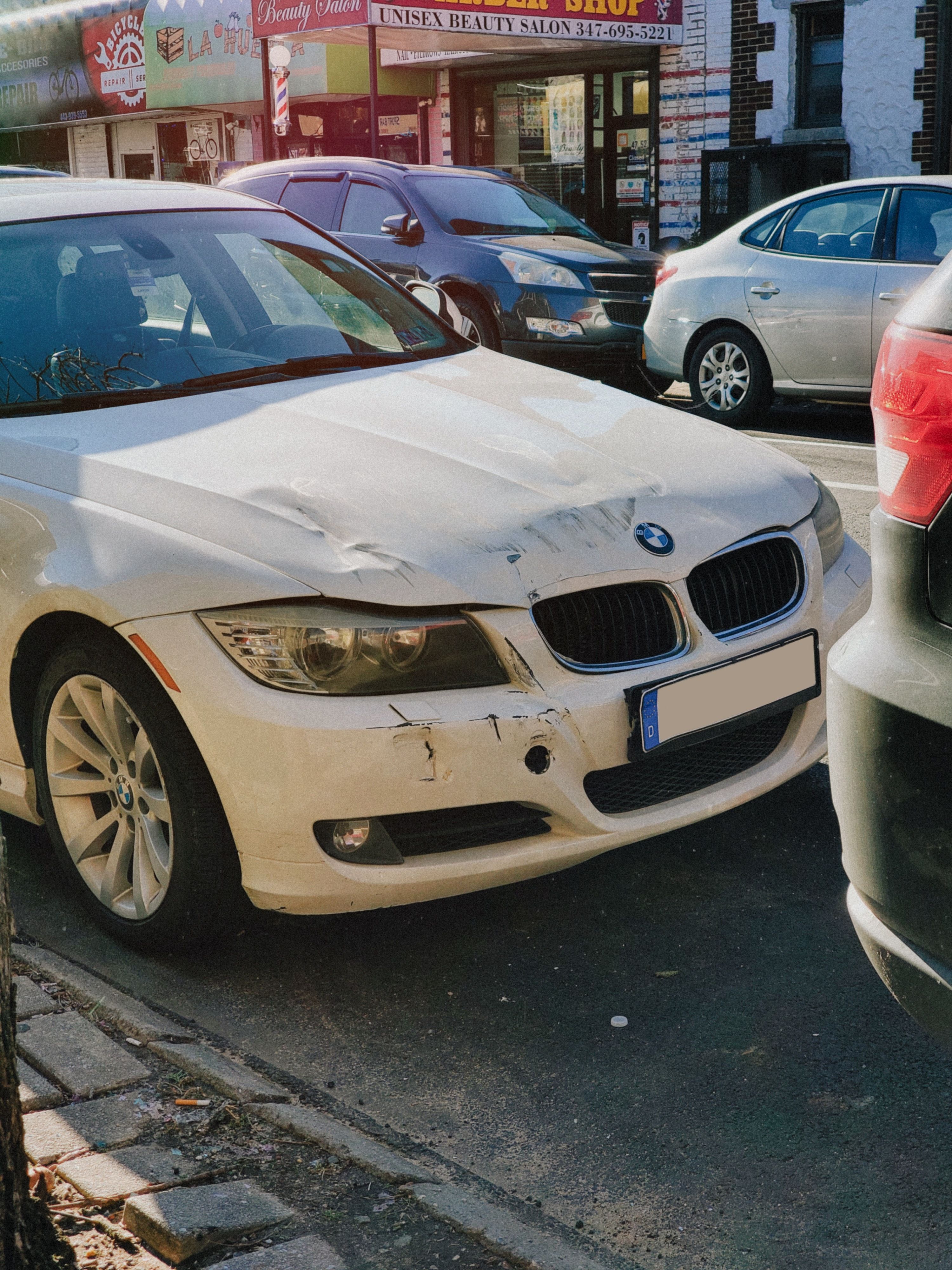
According to media reports describing the scale of the phenomenon, criminals are already using AI at the stage of preparing documentation needed to sign an insurance contract, as well as when filing the claim itself. Among the cited examples are photos of vehicle damage that were manipulated or entirely generated by AI, aimed at inflating the value of a claim or fabricating damage that never actually occurred.
Among the more complex cases is one involving a claim filed over the death of a client's partner in the Democratic Republic of Congo. Handwriting analysis of the documentation showed that both the accident and the death itself had been staged using forged documents. In another reported case, a couple filed as many as 13 claims under a group policy, including a broken femur, a broken wrist, a concussion and a child's death, all based on falsified medical records.
Organized Car Schemes
The report and accompanying media coverage also describe organized cross-border schemes. In what is described as the French scheme, perpetrators buy expensive sports cars in Poland and then lease them out in France to avoid that country's high emissions taxes. The vehicles are later stripped for parts or used in illegal races, and the fraudsters remain untraceable while lessees bear the financial responsibility.
A similar mechanism, described as the Italian scheme, involves registering vehicles in Poland and leasing them to Italian customers who file claims, some real, some fictitious, that are hard to verify and costly for insurers on the other side of the border.
AI as a Double-Edged Sword
Insurers are responding with their own tools built on the same technology. In late 2024, the FOTO UFG system went into use, employing AI and automatic image recognition to analyze photos of vehicle damage and the parts used in repairs. The system detects identical or artificially inflated damage to individual components that has been reported separately to different insurance companies.
We are especially pleased that companies are investing in new technologies, for example artificial intelligence and image analysis tools - Piotr Raubo, chairman of the Committee for Counteracting Insurance Crime at the Polish Chamber of Insurance
The industry stresses that the rising detected value of fraud does not necessarily mean insurance crime is surging, but rather that analytical tools and AI on the insurers' side are better at catching cases that might previously have gone unnoticed. At the same time, the same technology in the hands of fraudsters raises the bar: fake photos and documents generated by AI can be harder to tell apart from genuine ones than earlier, hand-crafted forgeries.
What This Means for Polish Customers
For ordinary customers, the growing scale of fraud indirectly translates into policy costs, since insurance companies factor the risk of fraud into their premium calculations. Industry experts also note that increasingly advanced claim verification, including automatic AI analysis of photos and documents, can in some cases lengthen the claims process for honest customers whose claims get flagged for extra review.
The Polish Chamber of Insurance says it plans to further develop AI-based detection tools, including expanding the FOTO UFG system to cover more types of claims, as well as closer cooperation with law enforcement on cross-border cases such as the French and Italian schemes described above.