News
Alphabet Tests Frozen v2 Chip to Bake Gemini Into Silicon
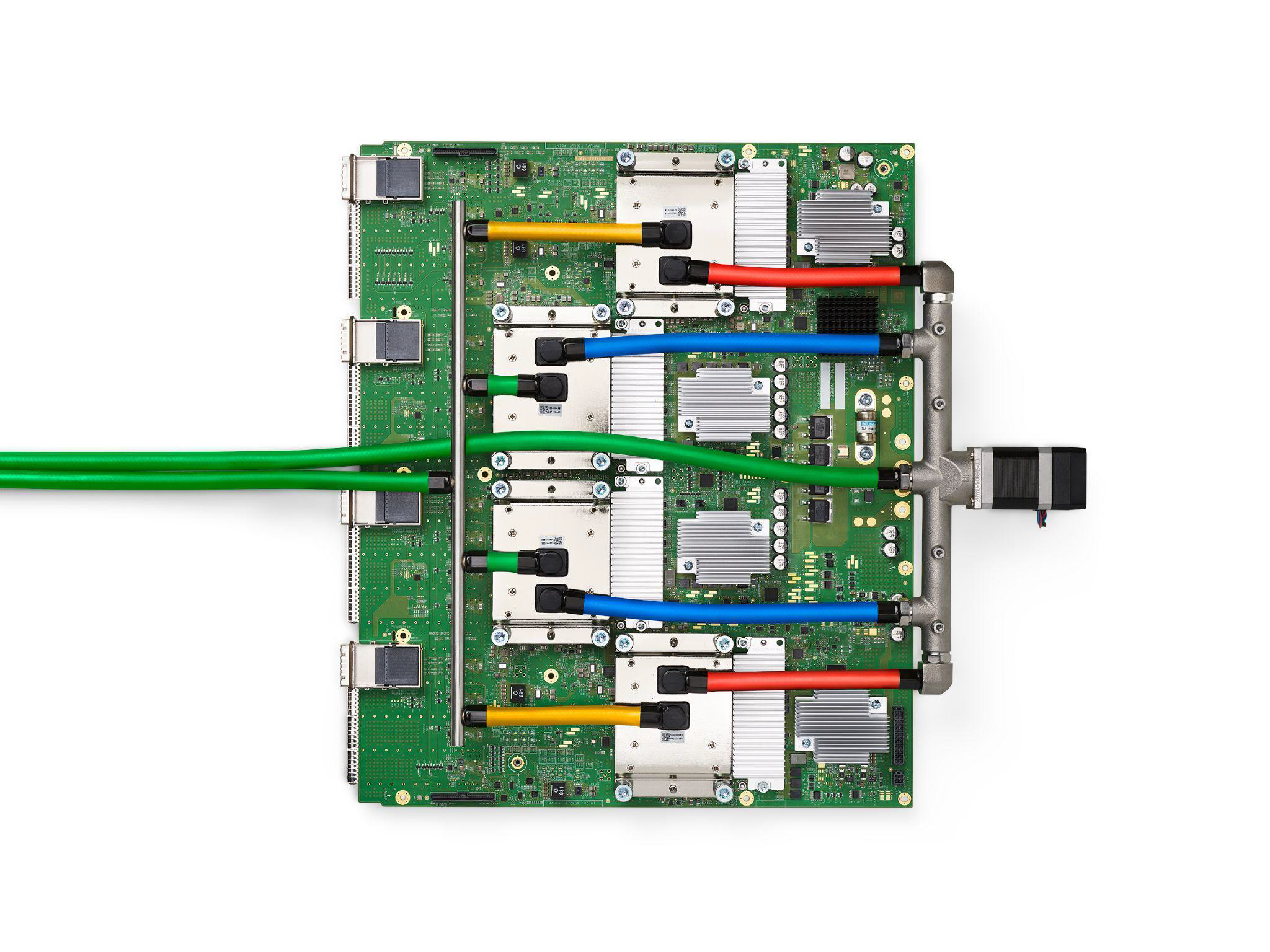
Alphabet shares rose after The Information reported on an experimental chip called Frozen v2, designed to embed the Gemini architecture directly into silicon and handle up to ten times more tokens per unit of power than Google's current TPUs.
Contents
Alphabet shares gained ground on Monday after The Information reported that the company is working on a new type of AI server chip. The project, known internally as Frozen v2, aims to permanently embed portions of the Gemini model architecture directly into silicon, a move Google engineers reportedly estimate could dramatically improve computational energy efficiency.
What the report revealed
According to The Information's reporting, cited by CNBC, Frozen v2 is an experimental project aimed at eliminating much of the computational overhead typical of conventional GPUs and TPUs. Rather than running the Gemini model as software on a general-purpose accelerator, part of its architecture would be permanently hardwired into the silicon structure, cutting down on the number of computational steps and data transfers between memory and processing units.
This approach marks a departure from Google's usual strategy of building increasingly fast but still general-purpose TPUs capable of supporting multiple model generations. A chip built around one specific model architecture is faster and more energy-efficient, but it loses flexibility and ages quickly once that model architecture changes.
The compute power bill
For months, Google has signaled that demand for compute power to train and run Gemini models outstrips available resources. Earlier reports indicated that competition for access to internal TPU clusters had grown intense enough that Google Cloud had to turn away some external customers in order to reserve capacity for its own research teams.
Frozen v2 fits that logic. If the estimated six- to tenfold improvement in energy efficiency per token holds up, Google could serve significantly more Gemini queries within the same data center energy budget, directly affecting costs and the company's ability to take on new cloud customers.
Google's response and caution
A Google spokesperson confirmed the work is underway, while cautioning that not every experimental project ultimately becomes a commercial product.
Our teams are constantly researching and experimenting with new approaches to deliver maximum performance and efficiency for our users and customers. By designing hardware and software together from the ground up, we ensure our systems are integrated and highly optimized for real-world workloads - Alphabet spokesperson, quoted by CNBC
Such guarded language is typical of Google's early-stage hardware efforts, where successive generations of experimental chips are often shelved before reaching production. Still, the mere disclosure of the project and its performance estimates was enough to draw a positive reaction from investors.
Market context and competition with Nvidia
The stock reaction fits a broader trend in which investors reward tech companies building their own AI hardware, viewing it as a way to reduce dependence on Nvidia chips and lower the per-unit cost of compute. Alphabet has spent years developing its own TPU line, and the latest, eighth-generation chips, TPU 8t for model training and TPU 8i for inference, launched in April with claimed performance-per-watt gains of up to twice that of the previous Ironwood generation.
Frozen v2 goes a step further than general-purpose TPUs by tailoring the silicon to a single specific model family. If the approach proves successful, it could become a template for other AI labs building their own chips around specific model architectures instead of relying solely on general-purpose GPUs.
What this means for Polish businesses and investors
For companies using Google Cloud services in Poland, a potential improvement in Google's computational efficiency could eventually translate into lower prices for accessing Gemini models and greater availability of the compute capacity that cloud customers worldwide are currently competing for. Actual deployment, however, remains a long way off, and the 2028 target date, assuming the project even survives the experimental phase, means any real-world impact is still years away.
For investors tracking companies tied to AI infrastructure, the news underscores that markets continue to reward signs of progress on data center energy efficiency, still one of the main constraints on further scaling of artificial intelligence by big tech companies.