News
Bessent Threatens China with Sanctions Over Theft of US AI Models
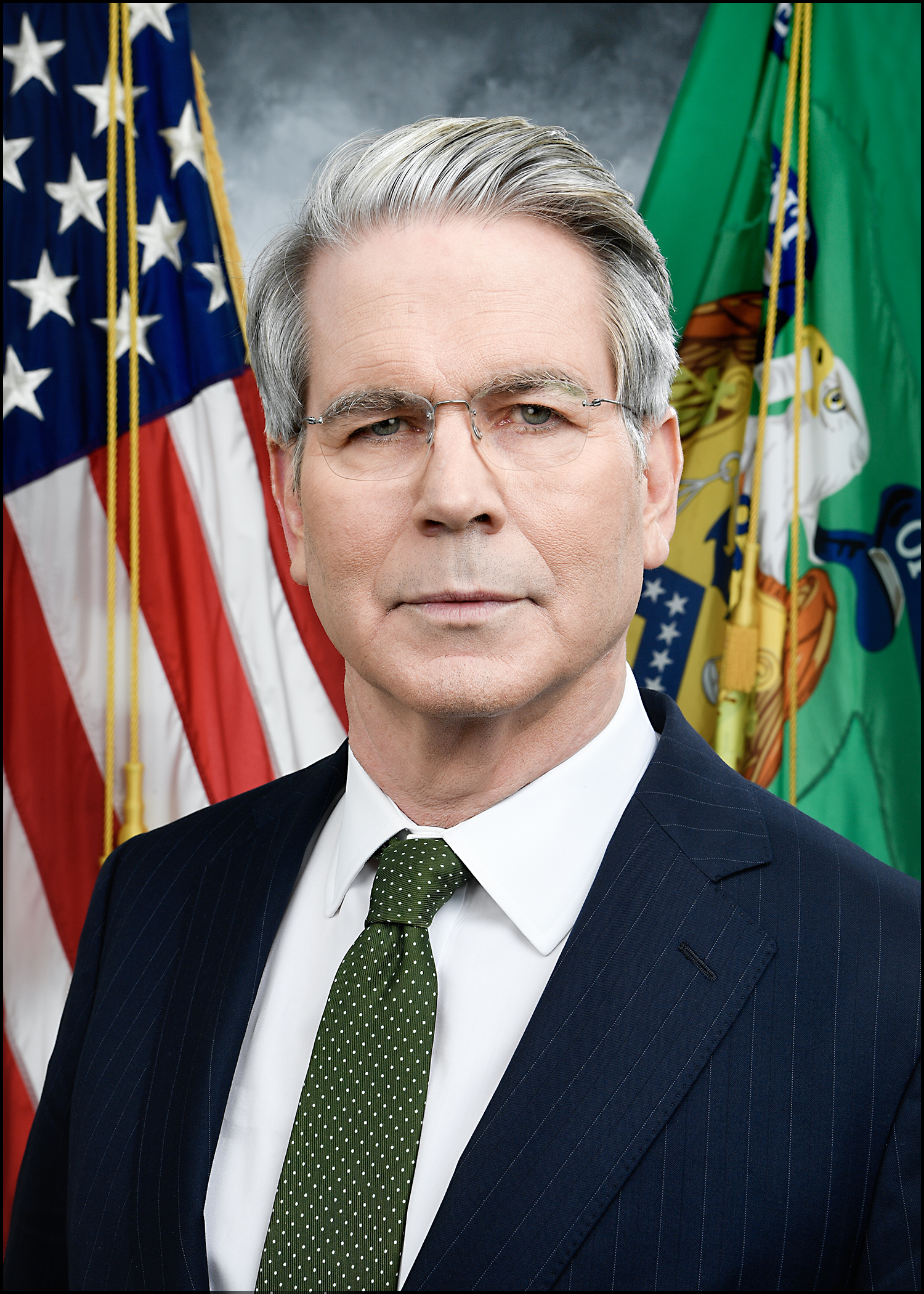
US Treasury Secretary Scott Bessent said the Trump administration could sanction Chinese companies accused of stealing American AI models, following a wave of accusations that Alibaba, DeepSeek and Moonshot AI mass-"distilled" models like Claude and GPT.
Contents
US Treasury Secretary Scott Bessent said on Tuesday that the Trump administration is considering sanctions against Chinese companies accused of stealing American artificial intelligence models. In an interview with Fox News, he said that "watermarks" of American large language models are being found in Chinese AI systems, calling it unacceptable.
Bessent's statement is the sharpest announcement yet of concrete action by the US administration against Chinese AI companies. Previously, the issue had mostly remained at the level of accusations from tech companies themselves and White House advisers; now the Treasury Secretary is explicitly raising the possibility of economic sanctions.
What model distillation means
The technique in question is called distillation, training a smaller, cheaper model on the outputs generated by a more expensive, more advanced system built by another company. The method itself is legal and widely used across the industry. The problem arises when it happens without the original model owner's consent and at massive scale, using thousands of accounts designed to hide the source of the queries.
If we see, especially that overseas models are stealing from our great companies, we have the ability to sanction them because of this theft - Scott Bessent, US Treasury Secretary
We are finding watermarks of our U.S. large language models on many of the Chinese models, and that's unacceptable - Scott Bessent, US Treasury Secretary
Alibaba at the center
The latest and most serious accusation is a letter from Anthropic to the Senate Committee on Banking, Housing and Urban Affairs, in which the company accuses Alibaba of carrying out the largest known distillation attack on its models. According to Anthropic, this involved nearly 29 million interactions with Claude carried out through roughly 25,000 fake accounts between April and June 2026.
This adds to an earlier list of accusations. Back in February 2026, allegations were made against DeepSeek, Moonshot AI (maker of the Kimi chatbot) and MiniMax, with presidential science and technology adviser Michael Kratsios describing an "industrial scale" campaign to extract the capabilities of American AI systems, carried out using tens of thousands of front accounts and jailbreaking techniques.
Beijing's response and political backdrop
China has consistently rejected these accusations as baseless and has called on Washington to stop "suppressing" Chinese technological development. The situation is further complicated by the fact that a month earlier, following a meeting between Donald Trump and Xi Jinping in Beijing, both countries declared their willingness to hold formal talks on AI governance, with specific negotiations involving Bessent scheduled for September.
In June, speaking at the Economic Club of New York, the Treasury Secretary himself described China overtaking the US in the AI race as the single biggest risk associated with the technology, ranking it above concerns about system safety or the job market. The sanctions threat thus comes in a context where diplomatic dialogue and tough economic rhetoric are unfolding side by side.
What it means for the market
For companies like Anthropic and OpenAI, the matter carries direct business consequences: cheap Chinese open-source models such as Kimi K3 compete with their products at far lower cost, partly by drawing on the output of American labs' work. Potential sanctions could limit Chinese companies' access to US cloud infrastructure and APIs, but could also complicate the global supply chain for AI services relied on by companies outside the US and China as well, including Polish firms.
So far, Bessent has not specified any concrete sanction mechanisms or a list of entities that would be targeted. The key question is whether these announcements translate into real decisions before the US-China talks planned for September, or remain a harder line of negotiating rhetoric ahead of that meeting.