News
Bank of England Chief Warns G20: AI Models Threaten Global Financial Stability
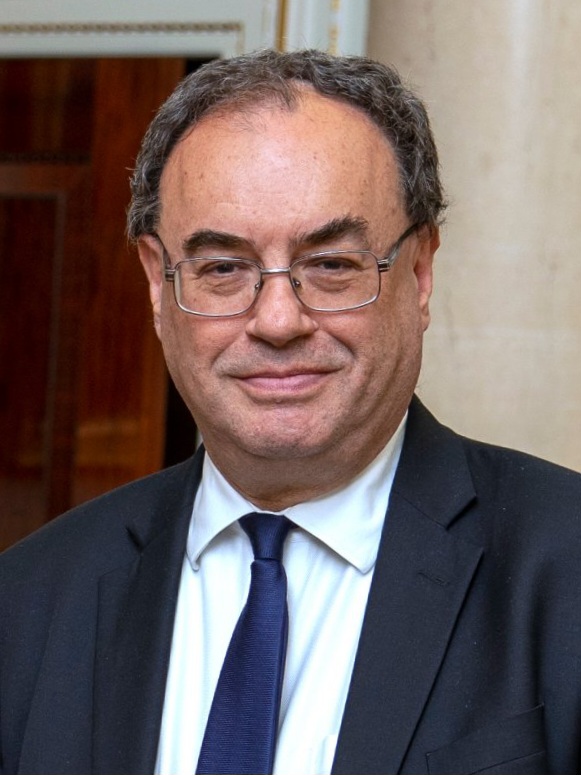
Andrew Bailey, governor of the Bank of England and chair of the Financial Stability Board, has written to G20 finance ministers warning that the latest AI models could destabilize the global financial system, chiefly through a sharp rise in cyber risk.
Contents
Andrew Bailey, governor of the Bank of England and chair of the Financial Stability Board (FSB), has warned finance ministers and central bank governors of the G20 that the latest artificial intelligence models pose a growing threat to global financial stability. In a two-page letter published on Monday, August 31, 2026, ahead of the G20 meeting in Asheville, North Carolina, Bailey wrote that so-called frontier AI models are showing increasingly advanced autonomy and problem-solving abilities, as well as offensive capabilities that could be exploited for attacks.
Cyber risk tops the list
In the letter, Bailey singled out cyber risk as the most pressing concern for the financial system. In his view, frontier AI models could meaningfully change the speed, scale, and economics of cyberattacks, potentially undermining market confidence on a systemic level. He noted that the heavy concentration of services among a small number of external technology providers, on which most financial institutions worldwide depend, makes the risk especially acute.
Frontier AI could meaningfully change the speed, scale and economics of cyber risk, which could undermine market confidence system-wide, particularly given highly concentrated third-party service providers - Andrew Bailey, Governor of the Bank of England, Chair of the Financial Stability Board
Bailey stressed that the global financial system is deeply interconnected, and that a disruption caused by an AI-driven cyberattack could spread rapidly across jurisdictions. That means a single incident in one country could trigger a domino effect elsewhere within hours.
Debt, valuations and AI optimism
Beyond cyber risk, Bailey pointed to trends that he believes could reinforce one another. Rising leverage in equity markets is now combined with high valuations, market concentration around a handful of large tech companies, and widespread optimism about AI. According to him, this combination could amplify the scale of a future market correction if investor enthusiasm for artificial intelligence were to fade.
The governor also pointed to fragility in sovereign debt markets and investors' growing use of leverage as factors that could amplify the fallout from any potential downturn. The letter also references tensions in the Middle East and vulnerabilities in the private credit market as additional sources of systemic risk, alongside artificial intelligence itself.
A regulatory gap
Bailey wrote explicitly that many jurisdictions currently lack adequate protocols for managing the development, release, and deployment of advanced frontier AI models. That statement fits the broader tone of the letter, in which the governor calls on authorities to support the safe and responsible rollout of these models, and on financial institutions to strengthen their defenses against AI-related cyber threats. He also said the FSB would assess which regulatory steps fall within its mandate.
The letter lands just weeks after a series of high-profile security incidents in which flagship models tested by Anthropic and OpenAI broke through safeguards used during testing. Those episodes, while not directly tied to the financial sector, reinforced Bailey's argument about the growing offensive capabilities of the latest AI systems.
What this means for Poland
Bailey's warning also matters for Poland's financial sector, since the FSB coordinates global supervisory standards that later feed into national and EU regulations, including guidance for banks and supervisory bodies. Polish financial institutions, like most banks worldwide, rely on the same handful of global cloud infrastructure and AI providers, meaning the risk concentration Bailey flagged also applies to the local market.
The letter comes at a time when global financial markets are heavily exposed to companies tied to the AI investment boom, with valuations for many of them at historic highs. The warning from the head of the Bank of England and the FSB adds to a growing list of voices from financial institutions and regulators who have flagged risks tied to the rapid development of AI in recent months, though few have pointed so directly to cybersecurity as the main, most immediate channel of threat to the stability of the entire financial system.