News
70 Percent of EU Teens Use AI for Homework, Karpacz Debate Shows
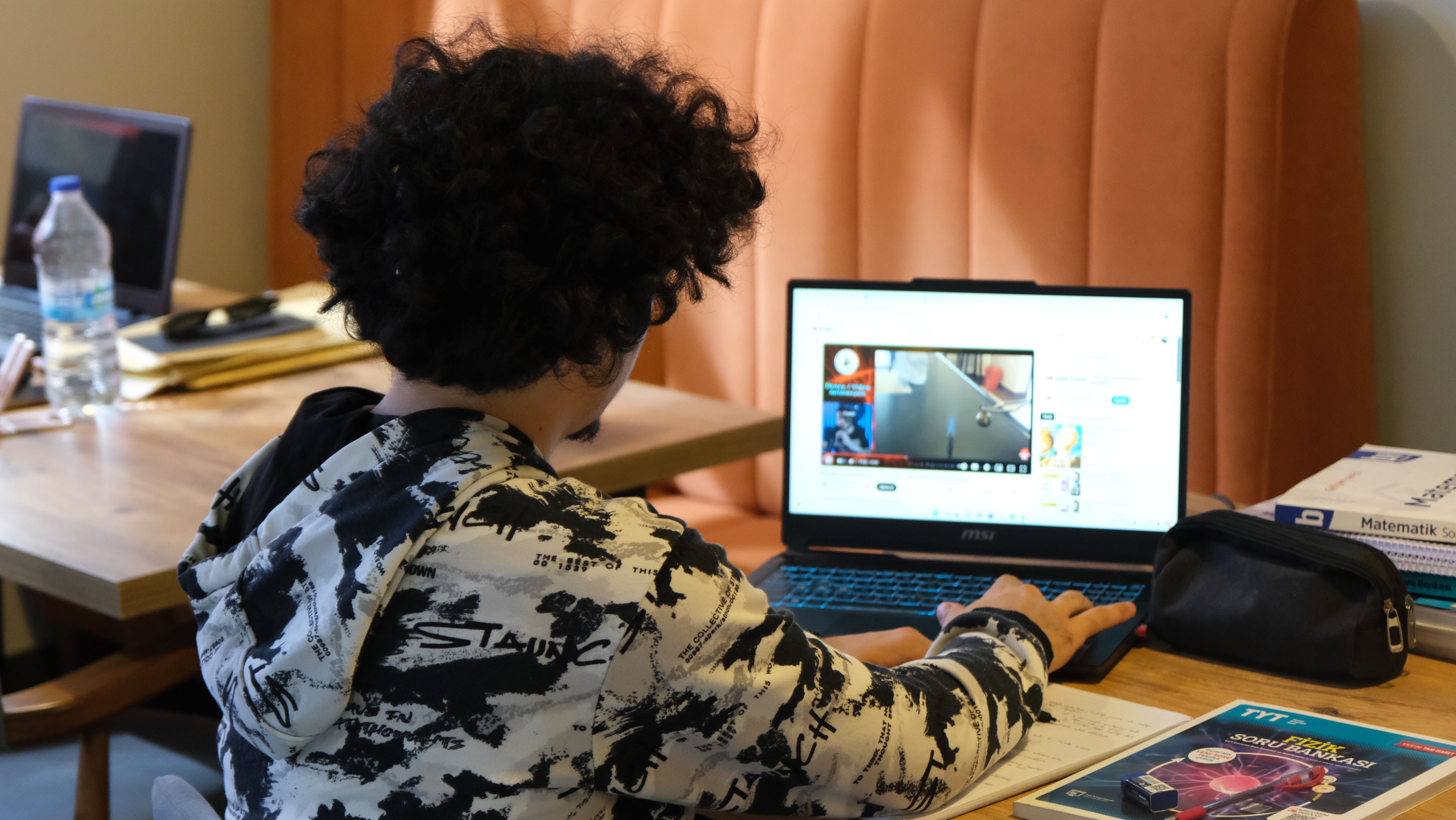
At the XXXV Economic Forum in Karpacz, experts discussed a generation growing up with AI as a natural tool, and debated whether schools should ban it or teach students to use it.
Contents
On Thursday, the XXXV Economic Forum in Karpacz hosted a panel on children and teenagers growing up with artificial intelligence tools. The conversation, part of the Digital Espresso series, touched on a question increasingly asked by parents and teachers in Poland: is AI the 21st century's calculator, or a real threat to the youngest generation's ability to think independently.
The guest of the conversation was Jan Kavalirek, who previously oversaw artificial intelligence policy in the Czech government and now serves as AI ambassador for the Central and Eastern European region. The panel was moderated by Przemysław Pająk, who has spent years commenting on technological transformation in Polish media. The starting point was a statistic cited during the panel: seven out of ten teenagers in the European Union turn to AI tools while doing homework or studying for exams.
A generation raised on AI
Kavalirek stressed that the gap between generations who learned to use computers and the internet as adults, and children entering today a world where AI has been present since their earliest years, is fundamental. In his view, this generation will function differently from previous ones, but that does not automatically mean worse.
My father is over 75 and although he learned to use a computer and the internet, he isn't able to adapt to the AI era. The youngest generation is growing up with this technology from its very first years. They will be different adults, but the challenge is teaching them to use these tools wisely and safely in a world full of deepfakes - Jan Kavalirek, AI ambassador for Central and Eastern Europe
According to Kavalirek, the real risk is not AI's presence in children's lives itself, but unreflective reliance on ready-made answers. He pointed out that the problem is already visible at the academic level, where even capable students copy chatbot conversation results without verifying them.
Oral exams instead of bans
Kavalirek firmly opposed ideas of banning AI in schools, an approach repeated in some countries, including Norway and New York, which have introduced restrictions on generative AI in primary schools. In his view, a classroom ban solves nothing, since students use the tools outside of teachers' supervision anyway.
I am completely against bans. Pretending AI doesn't exist at school misses the point, because students will use it outside class anyway, without any teacher supervision. Maybe it's time to bring back oral exams? Let's use AI to search for knowledge, but then turn off the screen and have the student explain in their own words whether they truly understand the topic - Jan Kavalirek, AI ambassador for Central and Eastern Europe
The proposal to bring back oral exams as a way to verify students' actual knowledge fits into a broader debate now underway in many European countries. Education authorities in Poland are asking similar questions, where the Ministry of National Education (Ministerstwo Edukacji Narodowej) is only just beginning to build a policy on AI in schools, while Cyfrowa Polska is proposing national usage rules to the ministry.
No safe careers left in the job market
The panelists agreed that previous assumptions about safe career paths are becoming outdated. Programming, long cited as a secure professional choice, is no longer seen as automation-proof. The discussion emphasized that the advantage will go to people who combine critical thinking, interdisciplinary work, and emotional skills that algorithms cannot replicate.
Kavalirek described himself as a technological optimist, while noting that he sees no real alternative to adaptation. In his view, the global race to develop AI among world powers will not slow down, so the only rational strategy is to understand the technology rather than try to block it.
I still consider myself a technological optimist. What's the alternative? The race between global powers isn't going to slow down. Trying to block or regulate AI won't save us. The only right approach is to be where the game is being played: to learn, understand, and use this technology so it genuinely improves our lives - Jan Kavalirek, AI ambassador for Central and Eastern Europe
What this means for Polish schools
For Polish parents and teachers, the discussion in Karpacz has direct relevance. Research cited in the public debate shows mixed effects of AI use among students: on one hand raising homework grades, on the other lowering exam results when the tool replaces independent thinking instead of supporting it. Kavalirek argued that the key factor is not access to the tool but how it is used and the ability to verify the answers it produces.
The Karpacz panel did not produce concrete legislative solutions or announcements of new education programs, but it showed that AI in schools has entered the agenda of the country's largest business events, alongside data center investment and AI Act regulation. It is a signal that questions about educating the youngest generation are increasingly treated as part of the economic debate, not just the educational one.