News
Former Google DeepMind Robotics Team Teaches Robots by Showing, Not Programming
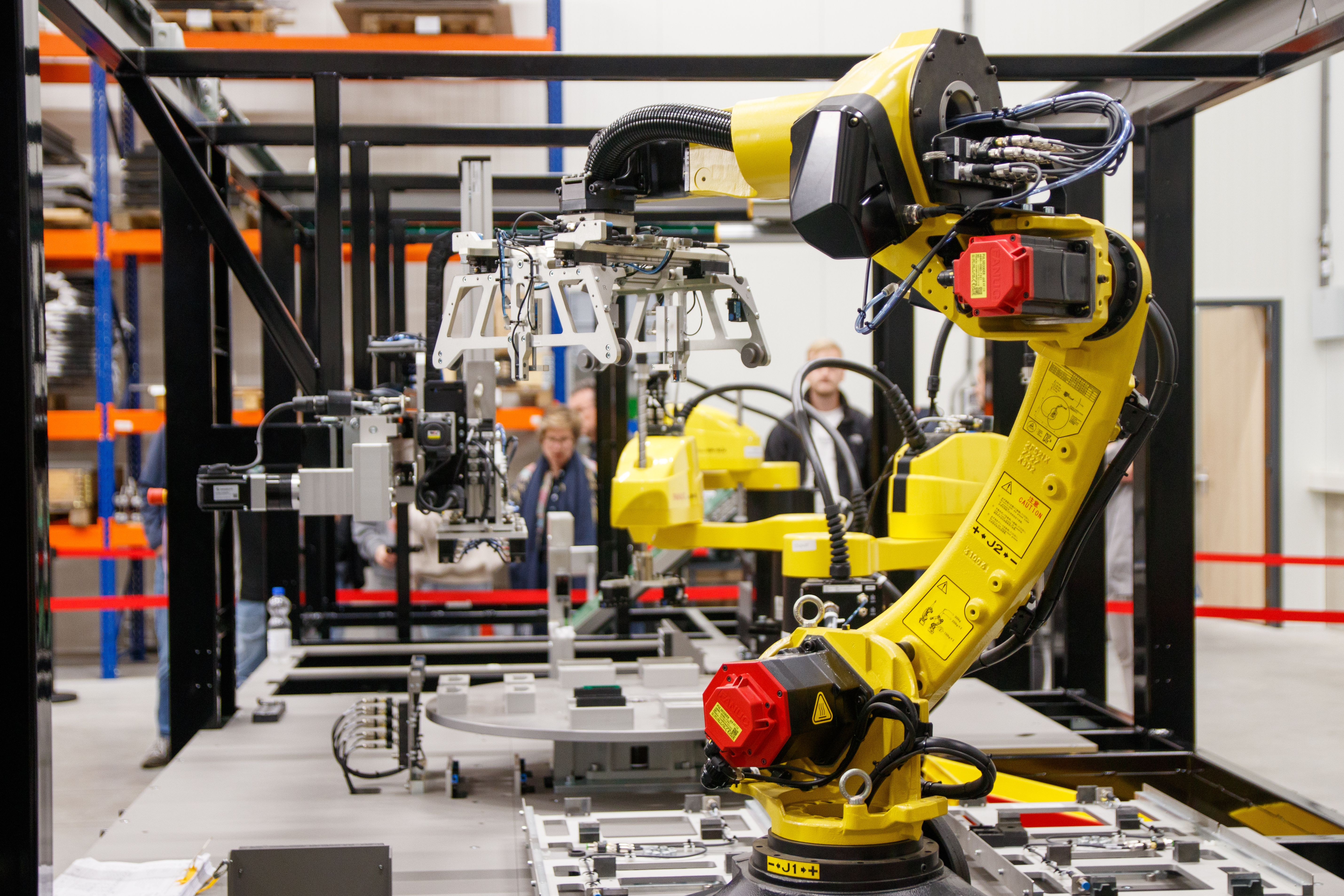
Reimagine Robotics, founded by the former head of applied robotics at Google DeepMind, has come out of stealth with a platform that lets factory workers teach industrial robots without writing code. The company is testing the system with customers who demonstrate tasks to robots and correct them in real time.
British-Australian startup Reimagine Robotics has revealed details of its technology, which turns factory workers into robot teachers. Instead of programmers writing code for every new task, the robot learns by being shown the task and receiving real-time corrections from the person who does the job every day.
Reimagine Robotics was founded by Jonathan Scholz, Oleg Sushkov, Akhil Raju and Misha Denil. Scholz spent seven years leading the Applied Robotics team at Google DeepMind in London before deciding to build his own company around a different approach to teaching machines physical work.
How robots learn from people
The system works on a principle Scholz calls "monkey-see, monkey-do": a worker shows the robot how to perform a task, watches its attempt, and then corrects mistakes on the spot. No programming knowledge or robotics engineers on the customer's side are needed.
In practice, this means workers identify bottlenecks in their own work, demonstrate a solution to the robot, and gradually refine its performance through corrections. The company says that in one deployment, the time needed to prepare a new robot behavior dropped from about a day to about ten minutes.
A useful robot should be able to learn from the person doing the job. It should be able to watch a task, be corrected when it makes a mistake, and move on to the next problem. - Jonathan Scholz, founder and CEO of Reimagine Robotics
First deployments
Reimagine Robotics describes two specific use cases for its platform. At a factory producing custom plastic parts, robots were taught to operate 3D printers overnight: removing print beds, working latches, and pressing control buttons. The customer's own team later used the same platform on its own to automate further steps in the process.
The second deployment involves a hard-drive disassembly line, where three robots working in a single production cell recover valuable materials alongside human workers. In both cases, the key factor was that the workers themselves, not outside programmers, trained the machines and made corrections.
A colleague, not a tool
Scholz stresses that his goal is to change the relationship between humans and robots in the workplace. Rather than a machine requiring specialized setup by engineers, the robot is meant to behave like a new employee ready to ask how it can help.
The robot should show up with the attitude of a new coworker: how can I help? - Jonathan Scholz, founder and CEO of Reimagine Robotics
Funding and next steps
Reimagine Robotics raised pre-seed funding from Fly Ventures and firstminute capital, along with angel investors. The company has not disclosed the size of the round or its valuation. Scholz said the company plans a further funding round, expansion of the team responsible for customer deployments, and bringing robots into more workplaces.
Reimagine Robotics' approach fits into a broader trend in industrial robotics, where companies are looking for ways to cut the time and cost of deploying robots at small and mid-sized plants that lack their own engineering teams for programming automation. Until now, this barrier to entry has meant that robotics paid off mainly for large manufacturers with repetitive, high-volume production.
For Polish manufacturing companies, which have long struggled with a shortage of industrial automation specialists, the model of teaching robots by demonstration could be an interesting direction to watch, though for now Reimagine Robotics is testing its solutions only in the UK and Australian markets.