News
Gawkowski Announces Full Digitization of Public Services by 2030
At the Digitization Forum during the Economic Forum in Karpacz, Poland's digital affairs ministry leaders outlined goals for the coming years: full digitization of public services by 2030 and 12,000 AI classrooms in schools this year alone.
Contents
During the Digitization Forum, held as part of the XXXV Economic Forum in Karpacz, representatives of the Ministry of Digital Affairs outlined plans for the coming years. Deputy Minister Dariusz Standerski announced that by 2030 all public services that can be moved online are to be available digitally, while Deputy Prime Minister Krzysztof Gawkowski summarized the first thousand days of his term leading the ministry.
Target for 2030
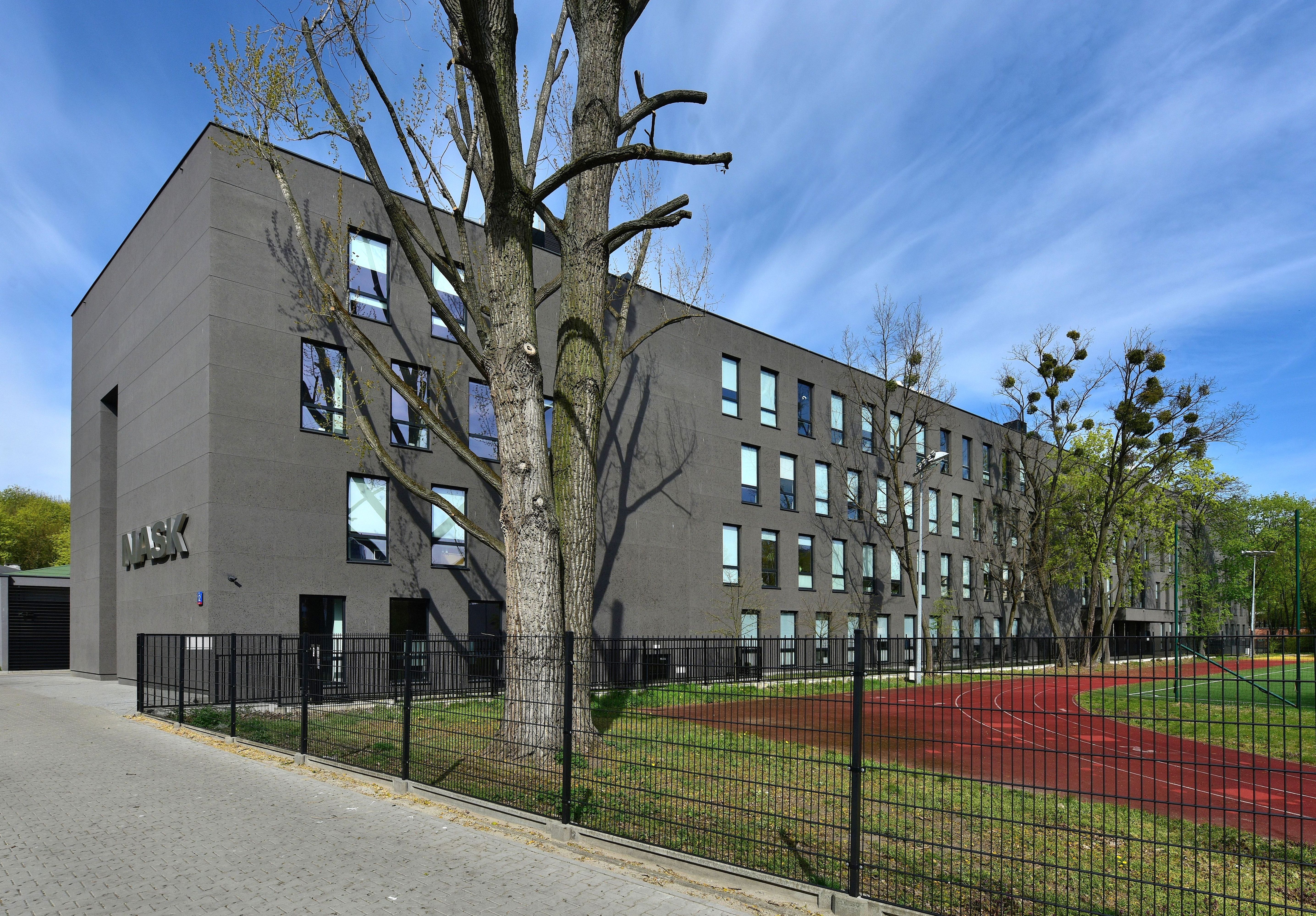
Standerski described the digitization of public services as the ministry's priority for the coming years. The goal is for citizens to be able to handle most official matters by phone or computer, without needing to visit an office in person. The infrastructure for this goal is to be built partly through AI factories and the quantum infrastructure being developed by NASK, including Poland's first quantum computer based on trapped-ion technology.
By 2030 we want to digitize all public services, wherever possible - Dariusz Standerski, Deputy Minister of Digital Affairs
The declaration fits within the government's previously adopted State Digitization Strategy through 2035, which assumes that by 2030 all key public services will be fully available digitally, and 100 percent of households will be covered by fiber-optic and 5G network access. By 2035, the strategy further envisions that 80 percent of public offices will use tools based on artificial intelligence.
AI Classrooms in Schools
Gawkowski announced that by the end of 2026, 12,000 AI classrooms will open in Polish schools, specialized classrooms equipped with hardware for working with artificial intelligence tools. The investment, financed from the National Recovery Plan (KPO), covers 8,000 sets for primary schools and 4,000 for secondary schools. The tender for equipment supply was run by the Naukowa i Akademicka Sieć Komputerowa (NASK, Poland's national research and academic computer network), and the equipment is to reach schools before or shortly after the start of the new school year.
The deputy prime minister argued that the scale of the program shows Poland is ahead of other European Union countries in equipping schools with AI tools. The classrooms are meant to complement earlier hardware programs for education, under which more than 400,000 laptops and 220,000 tablets have already been delivered to schools.
A Thousand Days in Review
Gawkowski's speech in Karpacz also served as a review of his thousand days as deputy prime minister and minister of digital affairs, counting from December 2023. He pointed to the rapid growth in popularity of the mObywatel app, where the free qualified signature has already been used more than 300,000 times, and official fee payments have been made by phone more than a million times. Since January 2025, e-Doręczenia (e-Delivery, Poland's official electronic mail delivery system) has also been in effect, through which more than 100 million letters have already been delivered, which, as the minister noted, represents savings equivalent to 6,500 trees worth of paper.
Digitization is not an app, a website... It's how a modern state operates - Krzysztof Gawkowski, Deputy Prime Minister and Minister of Digital Affairs
Cybersecurity and AI Factories
Gawkowski also spoke about expanding the state's cybersecurity system. The number of institutions covered by protection has grown from around a thousand to nearly 40,000 entities, and the budget for this purpose in 2026 will exceed 5 billion zlotys. The minister rated the effectiveness of defense against attacks at over 99 percent. Among the priorities for coming years, he named implementation of the EU's NIS2 directive and the national law on artificial intelligence systems from 2026.
A separate thread concerns the development of the Polish language model PLLuM, created with public administration, businesses, and researchers in mind, and available to citizens in the form of a chatbot. The ministry also announced the launch of AI factories in Kraków and Poznań, as well as the implementation of the European Digital Identity Wallet, which is to be integrated with mObywatel, along with a separate business wallet for digitally managing companies.
More than 50 billion zlotys from the KPO (National Recovery Plan) have been spent on digitization so far, of which more than 1 billion zlotys went directly to developing digital competencies. During this time, the number of public offices using electronic document management systems grew from 140 to more than 4,000.
What It Means for Citizens and Businesses
For the average citizen, the announcements from Karpacz mean in practice a further reduction in the number of matters requiring an office visit, and broader use of AI in educational institutions starting as early as the coming school year. For IT sector companies, it signals another wave of public procurement tied to digital infrastructure, AI factories, and the rollout of electronic document workflow systems in public administration.
The ministry has not yet given a detailed timetable for which specific public services will be digitized first by 2030. Another test of how realistic these announcements are will be the appointment of a national AI regulator: the law on artificial intelligence systems is in force in Poland, but the oversight commission meant to monitor its application still has not been appointed.