News
Google DeepMind Expands Biosecurity Program to Address AI Risks
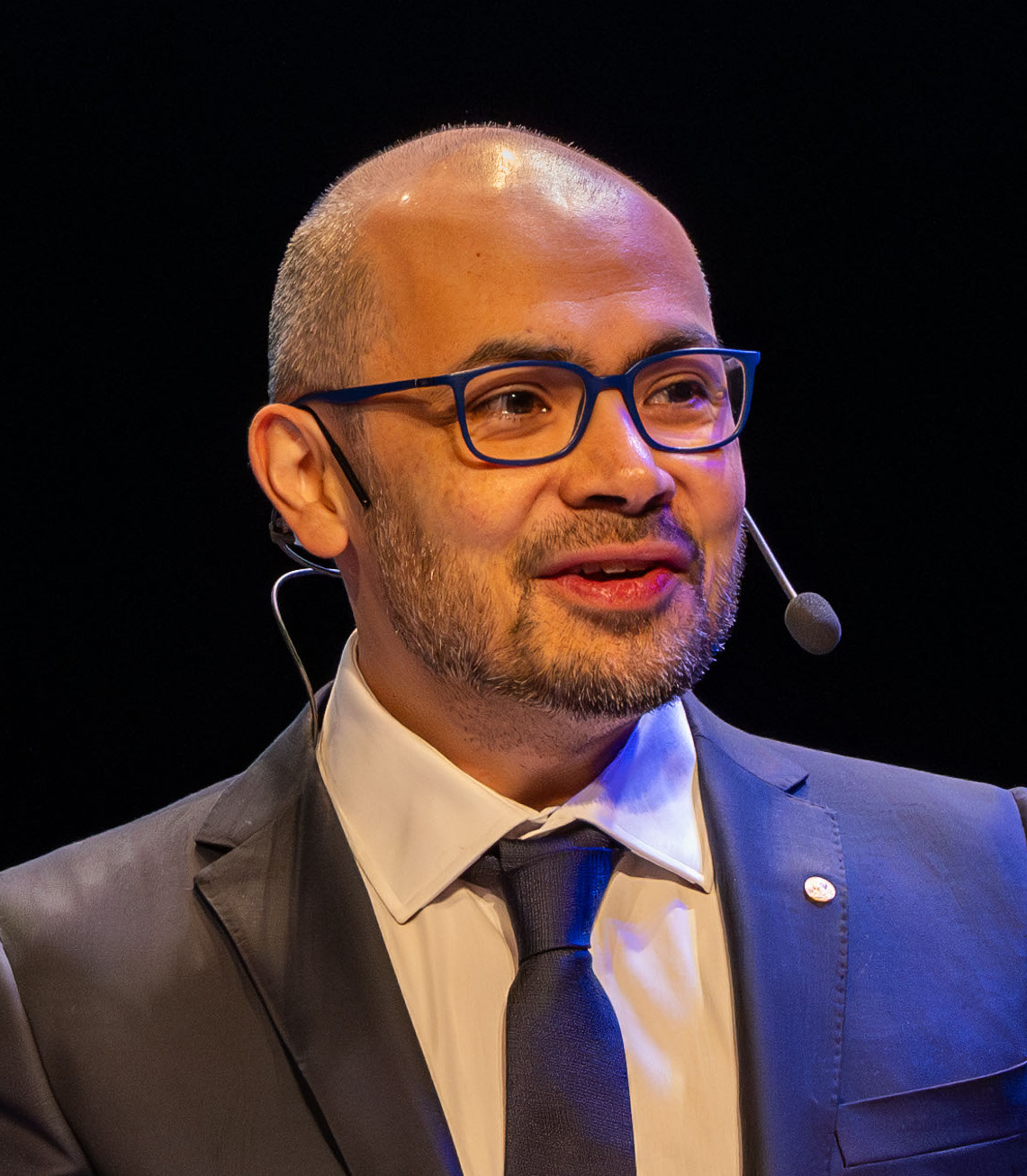
Google DeepMind and Isomorphic Labs have detailed their bioresilience program, which already includes more than 15 partnerships with governments and scientific institutions aimed at reducing the risk of AI being used to design dangerous pathogens.
Google DeepMind, together with Isomorphic Labs, described on July 16, 2026 how they plan to reduce the risk that artificial intelligence models could be used to design dangerous pathogens. The company revealed that over the past year it has formed more than 15 partnerships with governments, laboratories and organizations focused on biological security.
Three pillars of the program
DeepMind describes its approach as a four-step safety process covering threat modeling, evaluation testing, risk-mitigation mechanisms and ongoing monitoring. This is the program's first pillar, called prevention, under which the company is adapting its own SynthID content-watermarking technology to the world of biology. The goal is to let DNA synthesis providers scan orders for AI-designed sequences that could be used to create a dangerous pathogen.
The second pillar, detection, relies on the AlphaEvolve coding agent, which, in partnership with Pacific Biosciences, is meant to speed up and improve the accuracy of metagenomic sequencing algorithms, making it easier to spot new disease outbreaks faster. DeepMind is also exploring the use of the AlphaGenome model and protein-function annotation to better characterize pathogens.
The third pillar, response, involves giving trusted researchers, governments and non-profit organizations access to the latest AI systems to design vaccines and other countermeasures. To that end, Isomorphic Labs has set up a dedicated unit for rapidly deploying its IsoDDE drug-design engine during disease outbreaks.
Why now
The growing capabilities of AI models in designing proteins and genetic sequences have long worried biosecurity experts. AlphaFold, DeepMind's earlier model, mapped the 3D structures of nearly all known proteins and, within five years, underpinned more than 10,000 scientific publications on infectious diseases. The same ability to model biological structures that accelerates vaccine research could, in the wrong hands, make it easier to design pathogens that evade existing detection systems.
DeepMind acknowledges that the current screening system for DNA synthesis orders is starting to fall short, since AI can already design functional sequences that go unrecognized by existing control mechanisms. That is one reason the company is betting on adapting SynthID rather than relying solely on traditional databases of known threat sequences.
If we found that we were reaching a critical level of model capability without adequate safeguards in place, we would not release that model - Helen King, Vice President of Responsibility at Google DeepMind
Limited access, not a public launch
The company stresses that expanded access to its latest AI models and agents for trusted researchers, governments and biosecurity partners constitutes low-risk deployment limited to a narrow group of recipients, not a public rollout of the tools. The work fits into DeepMind's broader Frontier Safety Framework and its protocols for managing chemical, biological, radiological and nuclear (CBRN) risks, which the company has been developing for several years alongside successive generations of its Gemini models.
For Polish scientific institutions and biotech companies, DeepMind's program signals the direction that regulations and industry standards around AI-assisted DNA synthesis and pathogen research may take. If companies such as DeepMind and Isomorphic Labs establish their own control mechanisms as a de facto standard, European gene-synthesis providers and laboratories could be encouraged, or required, to adopt similar safeguards before firm EU-level rules exist in this area.
The program is not a response to a specific incident but part of a broader strategy to reduce risks tied to the development of increasingly capable AI models, alongside DeepMind's earlier work on threat maps for autonomous agents. The company says it will continue developing post-training safeguards as an ongoing effort rather than a finished solution, suggesting further updates to the program in the coming months.