News
Google DeepMind Teaches Gemini to Talk to Antiquity
Google DeepMind and Durham University have launched a new feature in Antigravity that lets historians analyze Roman and Greek inscriptions in plain English, without writing code.
Contents
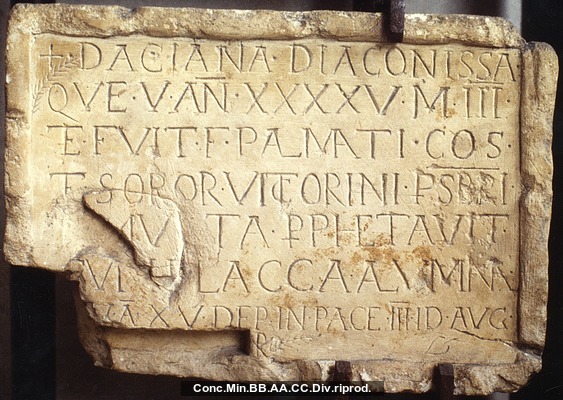
Historians of ancient Rome and Greece have gained a tool that used to require a team of researchers, months of work and a database engineer. Google DeepMind, together with Durham University, has launched the Predicting the Past feature in the Antigravity system, which lets a single natural-language conversation produce answers that previously required manually searching through thousands of epigraphic records.
Until now, analyzing fragmentary inscriptions meant manually comparing text against thousands of other records to find linguistic and historical parallels. That work could take epigraphers weeks, sometimes months, and required access to scattered databases maintained by different institutions across Europe.
How the Tool Works
Predicting the Past doesn't generate answers from the language model's memory. In this case, Gemini is "anchored" to the outputs of two specialized models, Aeneas and Ithaca, which have been trained for years exclusively on corpora of ancient inscriptions. This lets a historian ask a question the way they would talk to a colleague, while the system reconstructs missing fragments of text, estimates the place and time an inscription was created, and identifies patterns that recur across hundreds of similar records.
Such a conversation can produce a ready-made visualization, for instance a map showing the spread of a specific votive formula across a given province, prepared in minutes instead of weeks of team work.
Where the Data Comes From
The models were trained on data from open epigraphic databases: the Epigraphic Database Roma, the Epigraphic Database Heidelberg, and the EDCS repository, all released under Creative Commons licenses. These databases have spent decades gathering transcriptions and photographs of inscriptions from across the former Roman Empire and the ancient Greek world.
Aeneas, the model that attributes and restores Latin texts, builds on the earlier Ithaca project, which focused on Greek inscriptions. In the new feature the two models work together, with Gemini serving as the conversational layer that translates the models' technical outputs into language a researcher can understand and allows questions that combine sources from different corpora.
Testing on Real Artifacts
The team ran three case studies on real objects, working with Dr. Thea Sommerschield. The artifacts tested included a Latin tablet found in Bath, United Kingdom, an altar from Mainz, Germany, and badly damaged tablets from the oracle at Dodona in Greece, one of the oldest cult sites in ancient Greece.
The choice of these particular objects was not accidental. All three represent typical challenges in epigraphy: fragmentary text, uncertain dating and lack of clear geographic context, precisely the problems Predicting the Past is meant to help solve.
Significance for Scholarship
For the academic world, this is a sign that large language models are starting to move into narrow, highly specialized research niches, where what matters is not general knowledge but the ability to reason precisely over small, well-defined datasets. Historians with no programming experience now gain access to analyses that previously required bringing in computer scientists.
The tool is available to researchers through the antigravity.google website, in the scientific applications section. Google DeepMind says it plans to develop further specialized features like this one as part of its Science Workflows research program, which also covers fields beyond ancient history.