News
Intel-Powered Exoskeleton Helps Stroke Patients Relearn to Walk
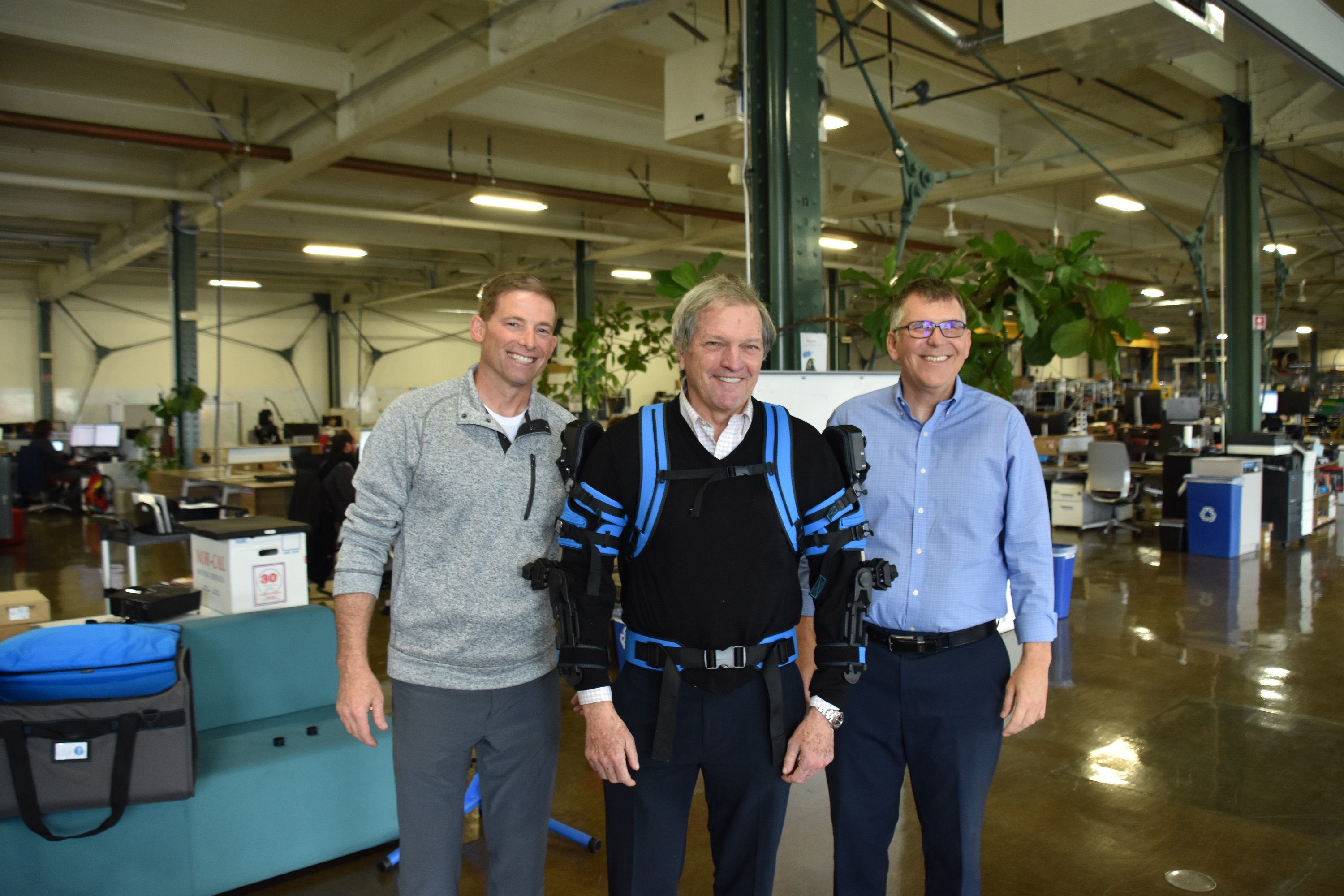
Taiwanese company Onyx Healthcare has deployed the FREE Walk exoskeleton, powered by Intel Core Ultra processors, in 22 countries, cutting in half the number of therapists needed for a single rehabilitation session.
Contents
Patients recovering from strokes, spinal cord injuries, or neurological conditions have a new tool for relearning how to walk. Taiwanese company Onyx Healthcare, working with Intel and robotics maker FREE Bionics, is developing FREE Walk, a wearable exoskeleton that uses artificial intelligence to analyze a patient's muscle signals and guide their limbs through repetitive movements that reproduce a correct walking pattern.
The exoskeleton is a metal-and-fabric frame worn on the patient's legs and torso, fitted with pressure sensors that track body weight distribution, electromyography sensors that detect the electrical signals generated by muscle contractions, and inertial sensors that monitor the body's position in space. Data from all three sources feeds into an Intel Core Ultra processor, which combines a CPU, GPU, and a dedicated NPU to accelerate AI computations.
How the system works
A key element is Intel's OpenVINO software, which optimizes how AI models run across the processor's individual components, splitting the workload between the CPU, GPU, and NPU depending on the task. This lets the system analyze the patient's bioelectric muscle signals in real time and predict their next movement, rather than simply playing back a pre-programmed sequence.
This mechanism carries clinical weight, since classic neurological rehabilitation relies on repetitive movement to help the brain rebuild the damaged nerve pathways responsible for walking. The more repetitions a patient performs in a way that resembles a natural gait, the greater the chance of lasting improvement.
Scale of deployment
Onyx Healthcare says FREE Walk has already reached nearly a third of Taiwan's top-tier clinical hospitals, and outside Taiwan the system is now in use across 22 countries. In that time it has amassed more than 40,000 patient training records, which the company calls the largest rehabilitation dataset of its kind tied to a single device on the market.
Intel's highly efficient, low-power NPU and the OpenVINO software stack are truly transforming smart rehabilitation from a paper concept into an AI medical solution that is already being used around the world. - John Chuang, President of Onyx Healthcare
Fewer therapists, more patients
The most practical consequence of the rollout is cutting the staff needed for a single rehabilitation session from four to two people. In healthcare systems struggling with a shortage of physiotherapists, including Poland, that change means being able to treat more patients with the same headcount, though it doesn't replace the therapist altogether, only reduces the number of people physically assisting the patient during exercises.
Rehabilitation exoskeletons have been in use for years, including in Poland, where such equipment has reached some clinical hospitals and rehabilitation centers. What's new with FREE Walk is the scale of its commercial rollout and the fact that its movement control relies on an AI model analyzing muscle signals in real time, rather than solely on pre-programmed movement trajectories.
Context for Polish facilities
Adoption of AI tools in Polish hospitals is growing, albeit from a low base. According to 2024 data, 13.2 percent of Polish hospital facilities used artificial intelligence solutions, twice as many as a year earlier. Exoskeleton-based rehabilitation remains costly and still rare in Poland, so systems like FREE Walk, if they reach the European market, may need financial support from NFZ (Poland's National Health Fund) or EU programs before they spread beyond a handful of clinics.
Onyx Healthcare and Intel have not yet disclosed plans to expand the system into the European market or timelines for certification under EU medical device requirements. For companies developing similar technologies in the region, the key question remains the cost of deployment per facility and whether staff savings will translate into lower therapy prices for patients.