News
President Signs Law Implementing EU AI Act in Poland
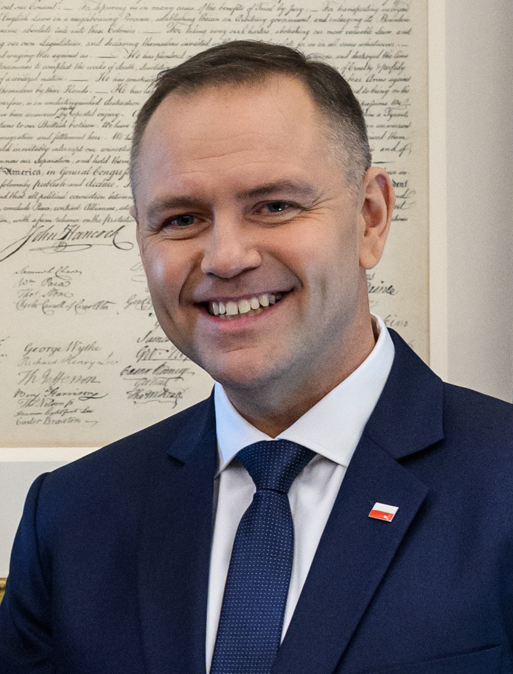
Karol Nawrocki signed a law on artificial intelligence systems on July 24, implementing the EU AI Act and creating a new market oversight authority, KRiBSI, with powers to inspect companies and impose fines.
President Karol Nawrocki signed the law on artificial intelligence systems on July 24, 2026. It is the first Polish regulation to put the EU's AI Act into practice, equipping the national oversight authority with real tools to inspect and penalize companies.
New Oversight Body
At the heart of the law is the creation of the Komisja Rozwoju i Bezpieczeństwa Sztucznej Inteligencji. KRiBSI is tasked with reviewing complaints from citizens, examining whether specific AI solutions comply with the EU regulation, and imposing administrative fines on companies that violate the bans or obligations set out in the AI Act.
The commission also takes on an advisory role toward businesses. The law gives it the power to issue individual opinions meant to give companies certainty about the legality of AI-based solutions they are planning or have already deployed, before any accusation of a violation arises.
Regulatory Sandboxes
The law also introduces a regulatory sandbox mechanism, under which selected entities will be able to test new AI technologies with KRiBSI's approval, subject to exemptions from some requirements. Small and medium-sized companies are to be exempt from fees for participating in the program, while large enterprises will pay a one-time fee equal to three times the minimum wage.
Alongside the commission, the law establishes the Społeczna Rada do spraw Sztucznej Inteligencji (Social Council for Artificial Intelligence), an advisory body meant to represent the voice of experts, NGOs, and academic circles in the drafting of further implementing regulations.
Penalties and Deadlines
The penalty provisions themselves stem directly from the EU's AI Act, which provides for sanctions of up to 35 million euros or 7 percent of a company's global annual turnover for banned practices such as manipulative AI systems or unauthorized biometric identification. The Polish law gives KRiBSI the procedural tools to actually enforce those penalties domestically.
The key date is August 2, 2026, when the full system of oversight and penalties for high-risk systems and general-purpose AI models takes effect across the entire European Union. By then, Poland's oversight authority must be ready to operate, putting pressure on lawmakers to appoint the commission's leadership before the parliament's August recess.
What It Means for Businesses
For Polish businesses using AI tools, the law marks the end of a period in which the EU regulation was formally in force but lacked a national authority capable of enforcing it. Companies deploying high-risk systems, for example in recruitment, credit scoring, or medical diagnostics, will now face real oversight and the possibility of fines from KRiBSI, not just a theoretical EU-level risk.
The law is part of a broader process of implementing the AI Act in Poland, which also includes July rules on mandatory labeling of AI-generated content, taking effect in parallel on August 2. Companies that until now treated the EU regulation as a distant legal issue now have a concrete national address where both customer complaints and inspections can land.