News
Poland's Institute of Telecommunications Proposes Backup Plan for AI Computing Independence
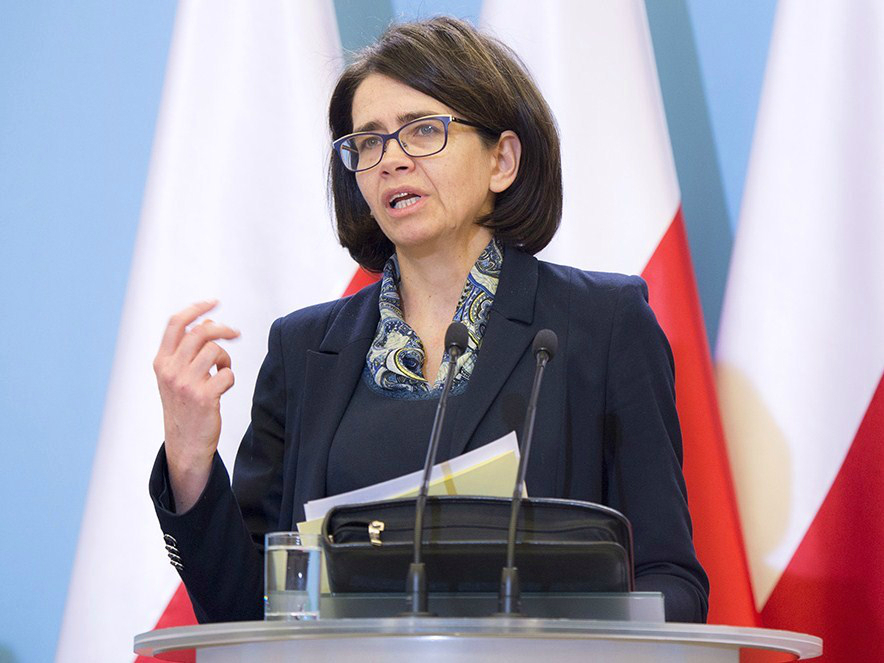
Anna Streżyńska, director of Poland's Institute of Telecommunications, has outlined a five-pillar plan for a National AI Cloud in case Poland fails to win the EU's AI gigafactory tender. Behind the plan lies a financial squeeze: the institute's revenue is falling as Ukraine reduces its reliance on Starlink.
Contents
Poland needs a plan B in case it fails to win an EU AI gigafactory. That's the takeaway from an interview that Anna Streżyńska, director of the Institute of Telecommunications (Instytut Łączności, Poland's national telecom research institute), gave to Rzeczpospolita, in which she laid out a five-pillar concept for a National AI Cloud meant to secure the country's computing sovereignty regardless of the outcome of the European tender.
A Fallback Plan
Streżyńska, who has headed the Institute of Telecommunications since March 2025, makes no secret of the fact that the outcome of the EU's AI gigafactory tender is uncertain. The program's original concept gave member states more influence over decisions, but the final procedure, as she put it, ended up far more centralized at the European level. Poland, together with a group of other large member states, has raised objections on this point.
That's why the institute has prepared a parallel scenario designed to work regardless of whether Poland secures EU funding for a gigafactory. The idea is to build domestic computing infrastructure based on several regional centers equipped with GPUs, logically linked into a single platform called the National AI Cloud.
Five Pillars of Independence
The first pillar is the network of regional GPU centers itself. The second calls for guaranteed demand from public administration, academia, the military, and state-owned companies, meant to give the infrastructure economic stability regardless of market conditions. The third pillar is an open platform for Polish companies and startups with preferential access to computing power.
The fourth pillar involves integration with existing supercomputing infrastructure, including the PIAST and ACK Cyfronet systems, while the fifth covers the development of proprietary language models, cybersecurity expertise, and compliance with EU regulations. Streżyńska stressed that her goal is to build an institute modeled on those that supply expertise not only to their own governments but to the European Commission as well.
My goal is to build an institute modeled on those that supply expertise not only to their own governments, but to the European Commission as well. - Anna Streżyńska, director of the Institute of Telecommunications
Starlink Stops Fueling the Budget
In the background of the interview lies the institute's own financial problem. For years, handling Starlink terminals for Ukraine, with payments routed through the Institute of Telecommunications, made up the bulk of its budget. That's now changing, as Ukraine builds its own system linking mobile networks with satellite connectivity and increasingly needs fewer additional terminals.
Streżyńska attributes this to a shift in the nature of the fighting, which is no longer spread across the entire country but concentrated in specific areas, reducing the need for additional satellite connectivity. The result is a noticeable drop in the institute's revenue, which lost PLN 20 million in 2025, while its profit shrank almost threefold.
I hope that closing out this task also means the end of the war and freedom for Ukraine. - Anna Streżyńska, director of the Institute of Telecommunications
What It Means for Poland's AI Scene
For Polish companies and researchers working on artificial intelligence, Streżyńska's proposal means more than an internal restructuring at a single institute. It's a signal that the state is starting to treat access to computing power as a strategic matter, independent of whether it wins any single European competition.
The Institute of Telecommunications already has experience running large, sensitive infrastructure projects, having coordinated the Starlink program for Ukraine on behalf of the Polish government. It now wants to translate that experience into the role of project office for Poland's bid for an EU AI gigafactory, while simultaneously building a backup scenario in case that bid fails. The National AI Cloud plan fits into a broader debate that has been running in Poland for months over whether the country can build its own computing base before other states in the region, such as Lithuania or Croatia, start buying computing power from gigafactories that Poland still doesn't have.
Open Questions
Streżyńska has not yet given specific figures or a timeline for rolling out the National AI Cloud, limiting herself to outlining the program's general architecture. It's also unclear what stage the EU's AI gigafactory tender is currently at, or when Poland will learn the outcome.
What is clear is that falling Starlink-related revenue is forcing the institute to look for new funding sources, and the role of coordinator for Poland's national AI computing policy could be one of them. It's also a test of whether Polish research institutions can shift from project-based funding tied to individual contracts toward a more durable model built on steady state demand. Sources: Anna Streżyńska: Trzeba myśleć o alternatywie dla gigafabryki AI (https://www.rp.pl/biznes/art45057291-anna-strezynska-trzeba-myslec-o-alternatywie-dla-gigafabryki-ai)