News
Polish Military Tests AI-Driven Autonomy for Eastern Border Protection
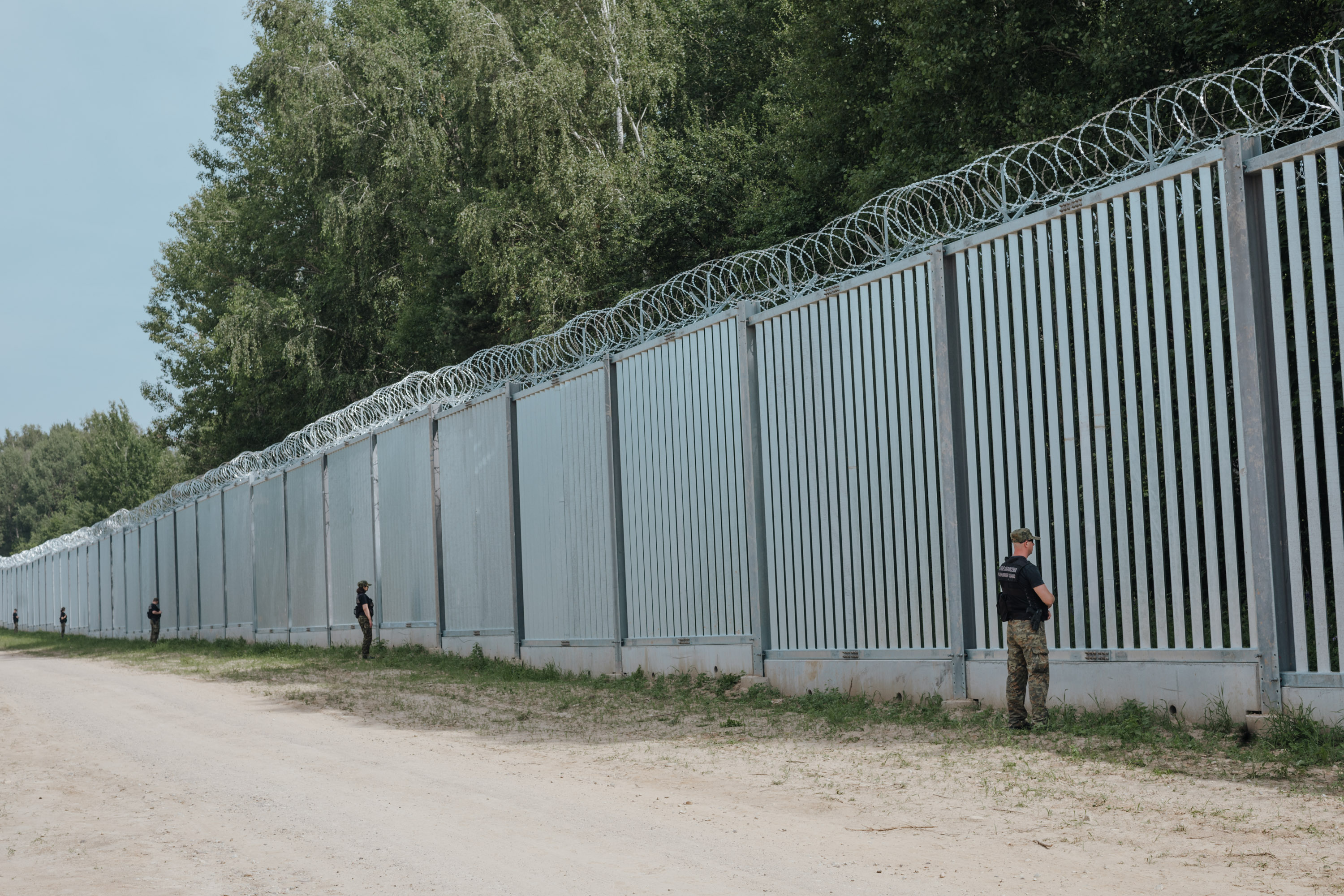
The Centre for Artificial Intelligence Implementation ran its first exercises with the 18th Mechanized Division on an autonomous system for protecting Poland's eastern border, fusing data from sensors and platforms into a single AI-analyzed situational picture.
Contents
The Polish military has begun practical tests of a system designed to automatically analyze the situation on the country's eastern border and cut down commanders' decision-making time. The project is run by the Centre for Artificial Intelligence Implementation (CISI - Centrum Implementacji Sztucznej Inteligencji), and the first exercises using the new tools were carried out together with the 18th Mechanized Division, known as the Iron Division.
CISI is headed by Colonel Piotr Turek, who says plainly that the goal is to build technological autonomy in areas critical to command support. The idea is for Polish forces to be able to rely, at critical moments, on solutions built by domestic industry, academia and DKWOC teams, rather than on external suppliers.
One situational picture
The system CISI is developing is meant to merge data from multiple platforms into a single, coherent situational picture. Within it, artificial intelligence simultaneously analyzes enemy force positions, the deployment of Poland's own units, and data streaming in from sensors and weapons systems. Instead of manually cross-referencing information from different sources, officers are meant to receive a ready-made, aggregated picture of the battlefield.
Turek stresses that time is what's at stake. In his assessment, the modern battlefield demands decisions at a pace that is difficult for a human to achieve without algorithmic support, especially given the large number of simultaneous threats and signals coming in along the long, eastern stretch of the border.
We have begun the process of border autonomy - Colonel Piotr Turek, head of the Centre for Artificial Intelligence Implementation
Cybersecurity as the foundation
Turek links the border autonomy project to the military's broader program of strengthening cyber defense. Without secured communications and data systems, no AI-based solutions could function under real conflict conditions, and if an adversary seized or disrupted them, it could reverse the advantage they are meant to provide.
Without cybersecurity in the military, we cannot effectively conduct any armed operations - Colonel Piotr Turek, head of the Centre for Artificial Intelligence Implementation
The scale of the threat CISI describes is concrete. The number of cyberattacks targeting Polish systems has grown fivefold since Russia's full-scale invasion of Ukraine in February 2022. Expanding AI capabilities is meant to be a response to that pressure, not an isolated research project.
What's already working at the border
CISI's project overlaps with solutions the Border Guard (Straż Graniczna) has been using for some time. Under the Electronic Barrier on the border with Belarus, AI algorithms filter and verify alerts coming from day-night cameras, thermal imaging, and fiber-optic detection cables, distinguishing signals generated by people, vehicles and animals. The system also helps verify friend-or-foe alerts, helping officers position their own forces relative to detected objects more quickly.
The Border Guard says it plans to further expand these tools with more effective drone detection and smart camera traps, and work is under way on advanced video analysis meant to speed up and automate the recognition of events recorded by cameras along the border.
CISI's next step
CISI was established within the Polish Armed Forces as a unit funded from the Ministry of National Defence budget, bringing together soldiers and civilian specialists tasked with conducting research and development work and deploying AI for the army's operational needs. Previously, the center focused mainly on building competencies and forging cooperation with industry and academia through a technology hub. The exercises with the 18th Mechanized Division, which had earlier been responsible for, among other things, Operation Safe Podlasie (Bezpieczne Podlasie), are the first sign that the center is moving from building structures to testing concrete tools in the field.
For Poland, which borders Belarus and Russia, the pace of this work has practical significance. Migratory pressure on the eastern border is not easing, while the number of attempts to disrupt Polish communication and command systems through digital means keeps growing. Combining the Border Guard's experience with the military CISI's projects could show in the coming months whether border autonomy remains a slogan or translates into systems that are actually deployed.