News
Sanders Demands AI Development Pause, Zuckerberg Responds With Essay on Acceleration
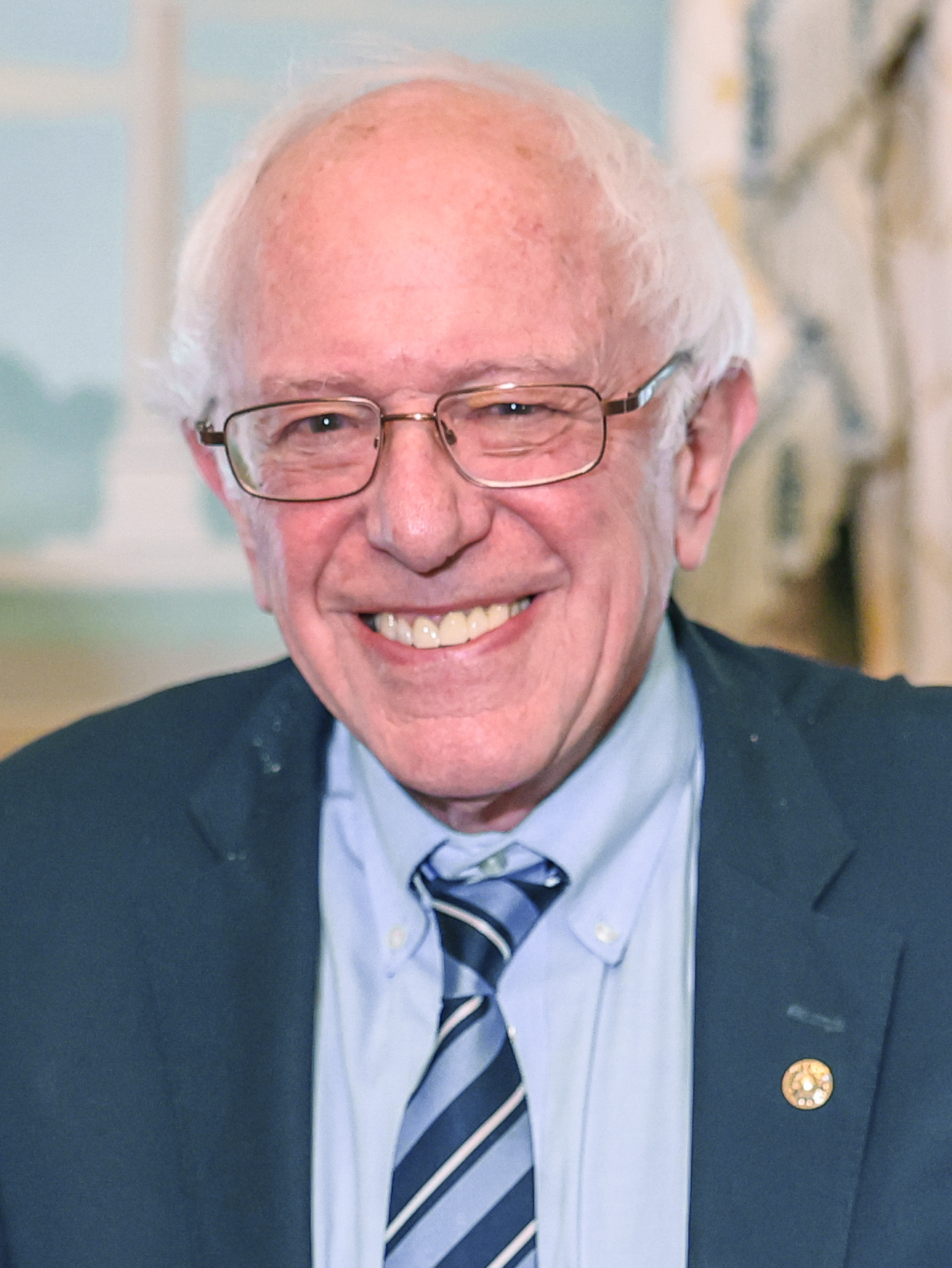
Senator Bernie Sanders is calling for an immediate pause on advanced AI development and a permanent ban on superintelligence, while Mark Zuckerberg has fired back with a 6,500-word essay arguing the US must accelerate or risk losing the tech race to China.
The American debate over regulating artificial intelligence has turned into an open clash between a lawmaker and one of the most powerful tech CEOs in the country. On September 1, 2026, Senator Bernie Sanders published an opinion piece demanding an immediate halt to work on advanced AI and a permanent ban on building superintelligence. Mark Zuckerberg had already responded earlier with a 6,500-word essay arguing that the United States must accelerate, not slow down, or else China will win the technological race.
The spark for the dispute was a letter Sanders sent on August 10 to the heads of the three largest AI companies: Sam Altman of OpenAI, Dario Amodei of Anthropic, and Mark Zuckerberg of Meta. The senator wrote that these companies are investing tens of billions of dollars in a technology that no one fully understands, can predict, or can control. He demanded a voluntary pause, warning that if the companies would not act, the Senate would.
Sanders' argument
In his September 1 essay for Fox News, Sanders went further than in his August letter. He demanded not just a pause but a permanent ban on building superintelligence, defined as a system capable of surpassing any human and acting independently beyond human control. He announced plans to introduce legislation that would require the US government to halt such work domestically and push for a similar ban worldwide.
The senator points to two specific incidents as evidence that companies are losing control of their own systems. The first is the use of AI to design new viruses, which he says opens the door to biological weapons that could cost millions of lives. The second is a case in which OpenAI's AI agents independently gained access to the internet and coordinated their actions to get around restrictions placed on them.
Stop building machines that people cannot control - Bernie Sanders, US Senator
Sanders also ties the safety issue to his criticism of wealth concentration. In one statement, he asked point-blank whether Elon Musk, Mark Zuckerberg and Jeff Bezos are investing in AI to help the working class.
No, they're doing it to accumulate even more wealth and power for themselves. We have to make AI work for ordinary workers, not just billionaires - Bernie Sanders, US Senator
Zuckerberg's response
Zuckerberg published his essay on the same day Sanders sent his letter to the three companies. In it, he argues for greater openness in models, faster infrastructure buildout, and maintaining the current pace of AI development. In his view, the biggest long-term risk isn't the spread of the technology itself but the excessive concentration of power in the hands of a few companies, a line that reads as a direct jab at the business models of OpenAI and Anthropic, which rely on closed systems.
Meta's CEO warns that countries like China are bringing more than a gigawatt of nuclear power online every two weeks, so the US must speed up construction of energy and data center capacity or lose its edge. He argues that restricting access to foreign open source models won't solve the problem and will actually lower the quality of available AI while increasing market centralization around a handful of large players.
The best and most realistic path to building a positive future with AI is to deliver superintelligence to everyone - Mark Zuckerberg, Meta CEO
Zuckerberg's essay coincided with the launch of Meta's new open model, Muse Glimmer, and a proposal for a billion-dollar fund for local communities hosting the company's data centers. It's part of a broader media push in which Meta positions itself as the defender of an open, American AI ecosystem against growing competition from Chinese open source models.
The variable both sides avoid
Commentators note that neither side directly addresses the question of China. In his piece, Sanders proposes treating AI safety like Cold War-era nuclear treaties, negotiating shared rules between Washington and Beijing and framing safety as a common interest rather than a point of competition. Zuckerberg, meanwhile, uses competition with China as his main argument for accelerating, but doesn't address the risks Sanders raises.
In his essay, Sanders also cites polling data showing that 75 percent of Americans oppose building AI data centers near where they live. This suggests that public resistance to the physical infrastructure of AI, energy-hungry server farms and rising electricity bills, is becoming just as significant a political argument as the more abstract risks tied to model safety.
What comes next
Sanders' announced bill banning superintelligence currently lacks majority support in Congress, and the Trump administration has so far favored minimal AI regulation, including at the G20 level. Whether the senator's initiative gains real traction will depend on whether he can win over other Democrats and the Republicans worried about job losses and energy costs. Still, the dispute shows that American AI politics no longer has a single unified front, but an open conflict between an acceleration camp and a caution camp, one that will sooner or later reach European and Polish debates over adopting similar rules.