News
Singapore Launches Server Powered by Living Human Neurons
DayOne, Cortical Labs and NUS Medicine have launched the world's first commercial server rack in Singapore powered by living human neurons instead of silicon chips. The system runs on a fraction of the energy used by conventional AI data centers.
Contents
At the Life Sciences Institute of the National University of Singapore, a server rack has been running since mid-July in which computations are performed not by transistors but by sixteen million living human neurons. It is the world's first commercial deployment of a biological data center, built by operator DayOne, Australian startup Cortical Labs, and NUS Medicine, the university's medical faculty.
How the biological server works
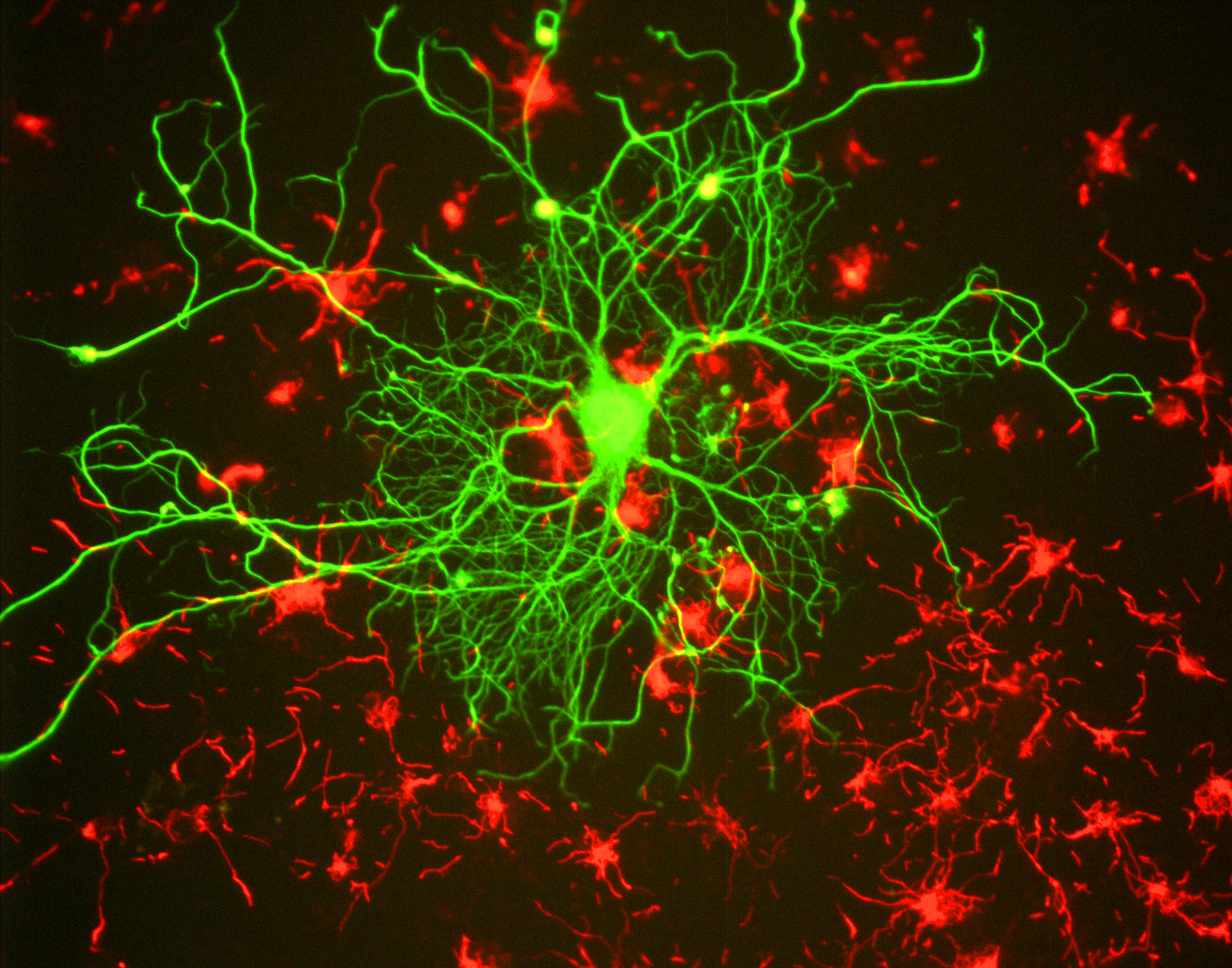
Each CL1 unit combines neurons grown from human stem cells with a silicon chip fitted with microelectrodes. The cells grow directly on the chip, which sends and receives electrical impulses, while Cortical Labs' software creates a digital environment in which neuron activity interacts with running applications. It is an extension of the company's earlier project, DishBrain, which used a chip with 800,000 neurons to learn to play Pong.
Keeping the culture alive requires constant care: every three days, technicians supply the neurons with a nutrient solution containing glucose and trace elements, and regulate oxygen, carbon dioxide and temperature levels. Despite this overhead, the system remains radically less energy-hungry than the silicon graphics processors powering today's AI models.
The energy math versus silicon
The project's starting point is physiology. The human brain uses under 20 watts of power while performing work comparable to enormous GPU clusters consuming megawatts. Cortical Labs translates that ratio into living silicon: a single CL1 unit draws 25-30 watts, and the entire twenty-unit rack falls within the 800-1000 watt range - a level that, in a typical data center, would power a single small server rather than an entire compute infrastructure.
By comparison, a conventional silicon system with similar computing power would need, by the company's estimates, up to several hundred watts per component. With the International Energy Agency projecting data center electricity consumption to rise from 415 to 945 terawatt-hours a year by 2030, any technology promising a step-change reduction in energy demand finds a receptive audience among AI infrastructure investors.
From lab to commercial applications
The Singapore deployment remains, for now, a research project rather than an on-demand commercial product. NUS Medicine says it will use the system for drug discovery, modeling of neurological diseases, and research into biological learning. No benchmarks comparing CL1's performance with GPU systems on specific computing tasks have been published so far.
It's the world's first independently operated server built on biologically integrated components - Rickie Patani, professor of neurobiology, NUS Medicine
Establishing this prototype moves the conversation from scientific research to commercial application - Hon Weng Chong, founder and CEO of Cortical Labs
DayOne's head, Jamie Khoo, stresses that for a data center operator, the project is more than an academic experiment. The company says it wants to help shape the next generation of digital infrastructure in Singapore, a country already investing heavily in AI computing capacity but running up against the limits of its power grid and available land for new data centers.
What it means for the AI industry
Biological computers will not replace the graphics processors training large language models any time soon - CL1 does not perform matrix multiplication in a way directly comparable to GPUs, and its applications are focused on biological simulations and adaptive learning. The project's significance lies elsewhere: it shows that the energy pressure created by the AI boom is pushing data center operators to experiment with technologies that, just a few years ago, seemed like pure science fiction.
For Polish companies working on AI infrastructure and data centers, it's a signal that the race for computing energy efficiency extends beyond optimizing silicon chips. Domestic data centers, already grappling with rising electricity prices and grid connection constraints, are watching closely any technology that promises a real reduction in power draw, even if - as with neurons in a server rack - the path to mass deployment remains distant and fraught with ethical questions about the commercial use of living nerve tissue.