News
Strezynska: AI Won't Replace Workers, It Will Change Required Skills
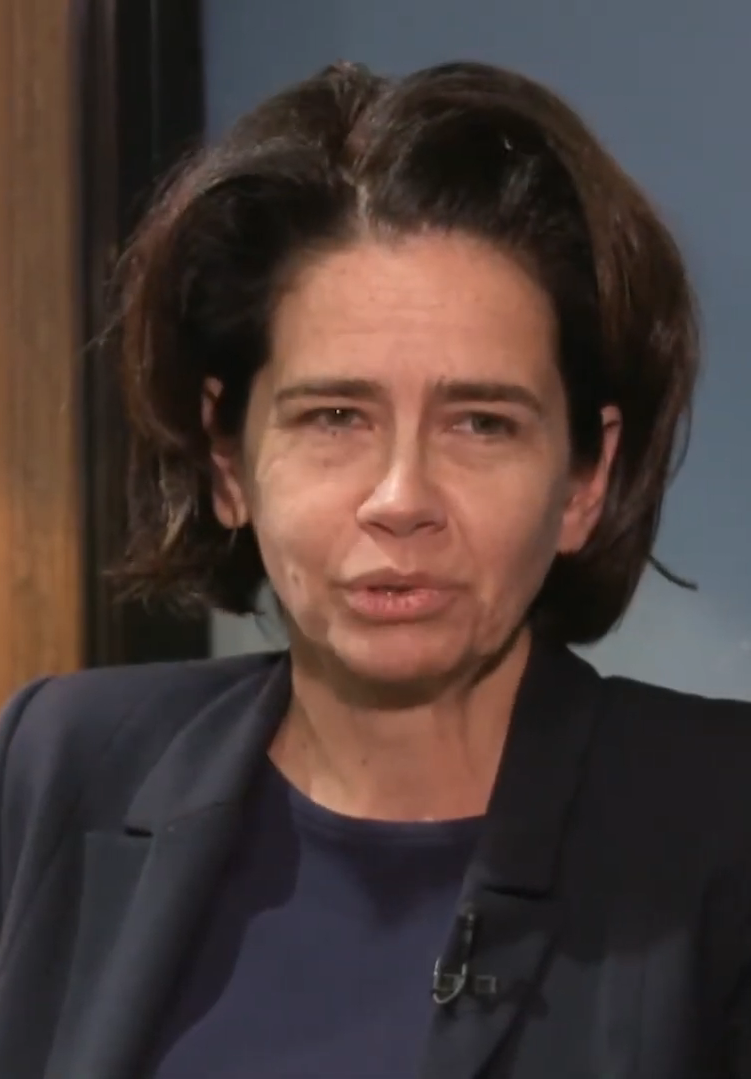
Anna Strezynska, director of Poland's National Institute of Telecommunications and former digitization minister, says the real threat isn't AI but organizations that fail to adapt to it. Her institute has already adopted internal AI-use rules, including a warning against China's DeepSeek.
Contents
Anna Strezynska, director of the National Institute of Telecommunications (Instytut Lacznosci - Panstwowy Instytut Badawczy) and Poland's former digitization minister, says artificial intelligence will not lay anyone off on its own. In an interview with "Rzeczpospolita" and on a podcast produced by the Educational Research Institute, she argues that the real threat to workers isn't AI itself, but companies and institutions that fail to keep pace with its development.
What Strezynska said
In the conversation with "Rzeczpospolita," Strezynska put it bluntly: artificial intelligence will not replace people, because without a thinking human behind it, it remains useless. In her view, fears of mass layoffs driven by AI are largely overblown, and the public debate is focused on the wrong question.
AI will not replace anyone - Anna Strezynska, director of the National Institute of Telecommunications (Instytut Lacznosci - Panstwowy Instytut Badawczy)
The real threat
Rather than the technology itself, Strezynska points to organizations that cling to the status quo. Companies and institutions focused solely on survival, rather than growth, risk losing competitiveness far faster than their employees risk losing jobs to AI adoption.
That shift in emphasis has practical implications. Instead of asking how many jobs will disappear, Strezynska suggests asking which skills will become required, and where within an organization there remains room for work a machine cannot do as well as a person.
What the future holds, and what every report points to, is the use of artificial intelligence, which will be a required competency, but also one that keeps us in the labor market - Anna Strezynska, director of the National Institute of Telecommunications (Instytut Lacznosci - Panstwowy Instytut Badawczy)
AI rules inside the institute
The National Institute of Telecommunications, which Strezynska has run since March 2025, has itself introduced internal guidelines on the use of AI tools. They specify which systems staff may use for work tasks and what restrictions apply to the data being processed.
Among the institute's recommendations is guidance not to use Chinese systems such as DeepSeek for work purposes. That reflects concerns over where and how data sent to foreign models is processed, particularly at a public institution focused on telecommunications and cybersecurity.
Micro-credentials instead of just a resume
The second thread of Strezynska's remarks concerns hiring. In her view, the traditional resume will increasingly be supplemented, and eventually replaced, by digital micro-credentials: certificates confirming specific, narrowly defined skills gained through short courses.
Employers, she says, will increasingly search for candidates through sets of such micro-credentials, aided by AI systems that match a candidate's skill set to a given role's requirements. In this model, the ability to use AI tools effectively becomes one of the most sought-after competencies in its own right.
The numbers behind the WEF report
Strezynska cites the World Economic Forum's Future of Jobs 2025 report, according to which nearly 40 percent of workers worldwide will need to reskill by 2030 due to technological change, including the rise of AI. In her framing, that figure justifies investing in education and micro-credentials now, rather than waiting until labor-market pressure becomes irreversible.
For Polish companies and public institutions, the takeaways from Strezynska's comments are fairly concrete. Rather than treating AI as a threat to jobs, organizations would do well to set internal rules for its use now, as the National Institute of Telecommunications has done, and start building reskilling pathways for employees instead of waiting for layoffs.
Strezynska, who previously headed Poland's Ministry of Digitization and the Office of Electronic Communications, says the institute under her leadership wants to be an example of this approach itself. She has announced training programs covering not just administrative staff but also subject-matter experts, with an emphasis on creative rather than purely technical applications of AI.