News
AMD Unveils Threadripper Halo Station, a Desktop AI "Supercomputer" Priced Over 100,000 Euros
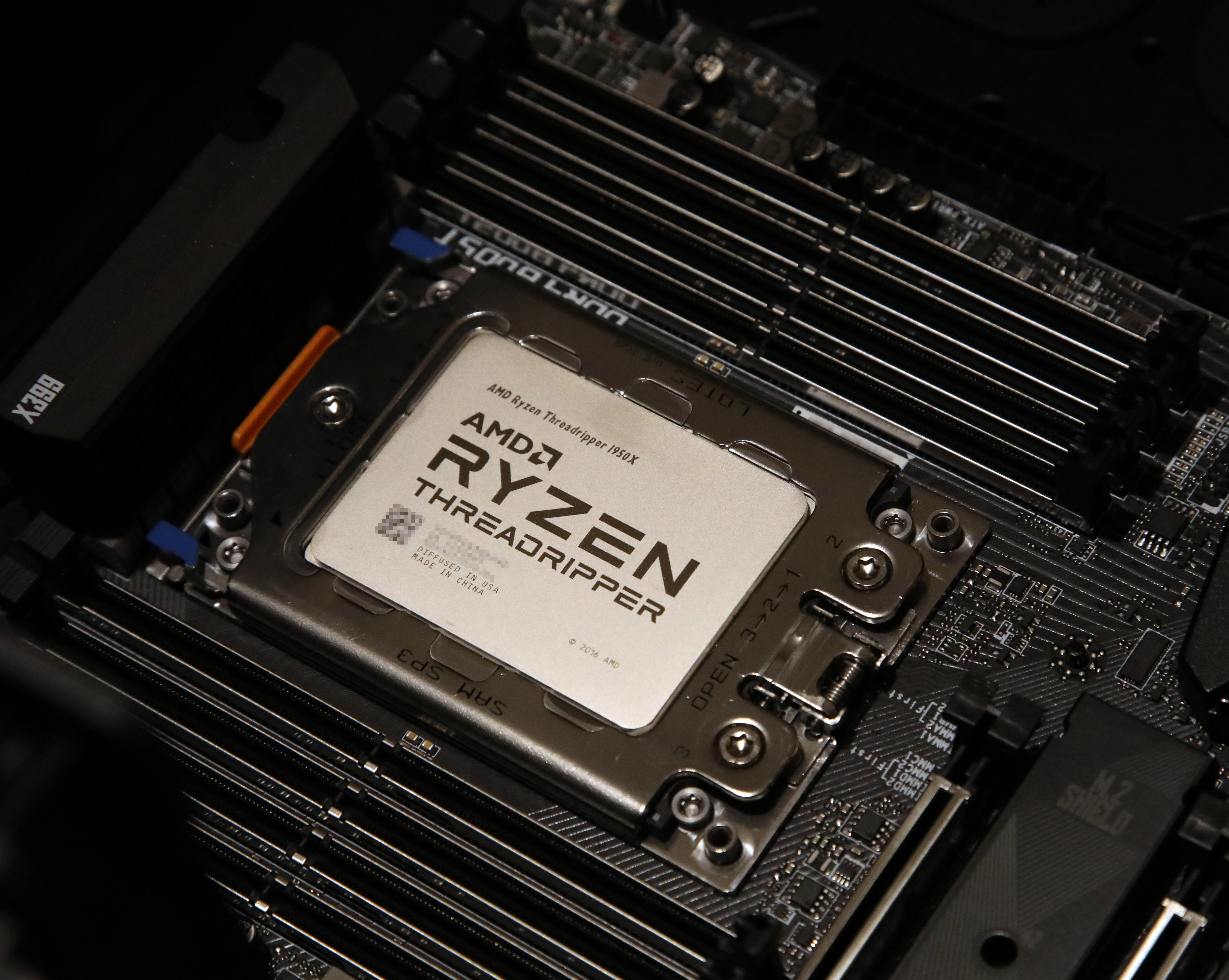
At IFA 2026 in Berlin, AMD unveiled the Threadripper Halo Station, a desktop workstation designed to run AI models with over a trillion parameters locally. The hardware goes on sale in early 2027, with a price expected to exceed 100,000 euros.
Contents
AMD unveiled new hardware on Friday at the Internationale Funkausstellung in Berlin that the company is calling a "personal supercomputer." The Threadripper Halo Station is a desktop workstation built around one specific task: running large language models and agentic systems locally, without sending data to the cloud.
The presentation was led by Jack Huynh, AMD's senior vice president in charge of the computing and graphics business. He described the Threadripper Halo Station as "the most powerful workstation in the world" and heralded the arrival of "a completely new era of computing" driven by artificial intelligence.
A completely new era of computing - Jack Huynh, senior vice president at AMD
What's inside the case
At the heart of the machine is the 96-core Threadripper Pro 9995WX processor, AMD's most powerful workstation chip currently available, previously known under the code name Shimada Peak. It's paired with two Instinct MI350P compute accelerators, the same chips AMD sells to data center operators, with the option to scale up to four units in a single chassis.
The full configuration offers up to 576 GB of HBM3E memory spread across the accelerators and up to 2 TB of DDR5 system memory. The system is liquid-cooled, which is meant to keep clock speeds stable under full load across all cores and accelerators at once.
Why put a trillion parameters on a desk
The point of this design lies in memory, not raw computing power. Language models with more than a trillion parameters require enormous amounts of high-bandwidth memory, until now available almost exclusively in cloud data centers. AMD claims the Threadripper Halo Station offers more than three times the memory and bandwidth of the competing Nvidia DGX Station, allowing such models to run without an internet connection.
During the presentation, Huynh showed the machine generating an entire three-dimensional world, complete with a flight simulator, from a single text prompt, in real time and without help from external servers. The demo was meant to show that power once reserved for data centers is now landing on the desktop.
Who this hardware is really for
Despite the "personal supercomputer" label, the product isn't aimed at ordinary home users. AMD is targeting developers, small research teams and institutions that want to train or run large models without handing data to external cloud providers, but can't justify building a full data center. Data sovereignty and the rising cost of cloud AI subscriptions are meant to be the main selling points.
AMD hasn't announced an official price yet, but industry analysts estimate that a full configuration with four accelerators will cost more than 100,000 euros, putting it near the top of what comparable Nvidia DGX stations cost. That places the hardware squarely in corporate and institutional budgets rather than among enthusiast computers, despite the marketing use of the word "personal."
AMD versus Nvidia in local AI
The Threadripper Halo Station is a direct answer to Nvidia's DGX Station, already available in a similar price range, around 100,000 euros. Nvidia has the advantage of integration with its own cloud ecosystem and CUDA tools, which most AI developers have worked with for years. AMD is betting on its platform's memory advantage and the open-source ROCm software, which still lags behind CUDA in maturity and the number of ready-made tools.
The hardware is set to go on sale in early 2027. Until then, AMD has time to refine its software and convince developers that running trillion-parameter models locally is a genuine alternative to renting cloud compute, not just an expensive gadget shown off at a trade show.