News
Claude Helped Nobel Laureates Prove a Decade-Old Physics Conjecture
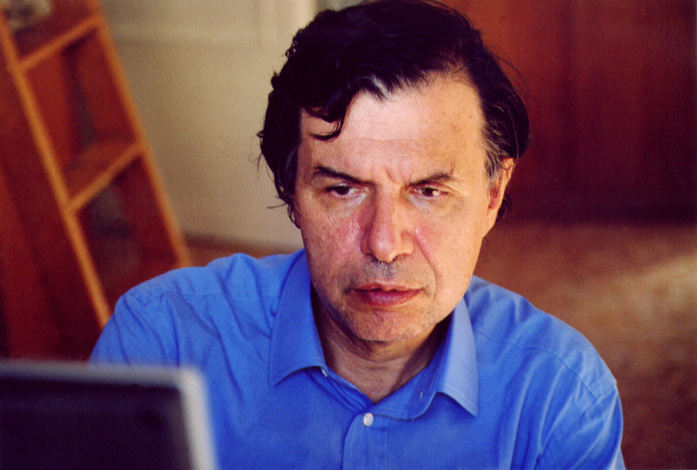
Nobel laureate Giorgio Parisi and physicist Francesco Zamponi used Anthropic's Claude model to prove a mathematical relationship in jamming theory that had eluded them for more than a decade. The paper appeared on July 1, 2026, in the Journal of Statistical Mechanics.
Contents
Italian physicist Giorgio Parisi, winner of the 2021 Nobel Prize in Physics, and his longtime collaborator Francesco Zamponi of Rome's La Sapienza University have published a proof of a mathematical relationship they had been chasing for more than ten years. A Claude model from Anthropic played a key role in cracking it.
What jamming is
Jamming is a phenomenon in which a system of loosely moving particles, such as grains of sand, foam, or a dense suspension, suddenly loses fluidity and starts behaving like a solid, even though it forms no ordered crystalline structure. Physicists have spent decades trying to describe this transition mathematically, since it applies to granular materials, foams, colloids, and many other systems found both in laboratories and in industry.
The description of this phenomenon involves two independently calculated parameters, denoted a and b. In numerical calculations, their sum came out to exactly one with remarkable precision every time. Parisi and Zamponi first noticed this regularity back in 2014, but for years could not show why it had to be true. The lack of a formal proof meant the relationship could have been a numerical coincidence rather than a physical law.
How the work with Claude unfolded
Parisi turned to Claude, citing the model's more advanced mathematical reasoning capabilities as the reason for his choice. As a first step, he asked it to reproduce the decade-old numerical calculations. Once the model handled that task, the researchers asked it directly whether it could prove why a+b=1.
Pretty quickly Claude proposed an idea that was essentially correct - Francesco Zamponi, La Sapienza University
The first version of the proof contained errors and required several rounds of verification and correction from the researchers, but the underlying intuition behind the solution turned out to be right. Notably for the scientists, the path the model pointed to was simpler than they expected.
The answer was right there, and we just hadn't seen it - Francesco Zamponi, La Sapienza University
Skepticism from the scientific community
Not every mathematician is ready to call this a breakthrough. Will Sawin of Princeton, commenting on the case, noted that language models tend to excel at searching the literature and spotting patterns humans might have missed, rather than necessarily generating entirely new ideas beyond researchers' reach. Parisi and Zamponi themselves admitted they had been searching for a deeper, more complex answer and overlooked the conceptually simple case that Claude pointed to.
The proof confirms that two independently developed theoretical approaches, one stemming from work by Parisi and collaborators, the other from Matthieu Wyart's team at EPFL in Lausanne, lead to the same physical laws describing the jamming transition. That settles a theoretical dispute that had persisted in the field for years.
Significance for science and AI
The Parisi and Zamponi case joins a growing list of examples in which language models support scientific work beyond simple information retrieval or calculation checking. In recent months similar reports have surfaced involving other models as well, but this story, involving a Nobel laureate and a ten-year-old open physics conjecture, stands out for a concrete result verified in a peer-reviewed journal.
For Anthropic itself, it's another data point in the ongoing debate over how genuinely useful the latest models are in science, mathematics, and basic research, against claims that these systems mainly process and recombine existing knowledge rather than generating anything new.