News
Gemini 4 Argon and Carbon in our tests: 10 to 18 cents per page, Carbon writes 34% more
testingmodels.com, run by the publisher of nowosci.ai, has published first results for Gemini 4 Argon (9 tasks) and Gemini 4 Carbon (3 tasks) on the Flex tier. A page cost between $0.10 and $0.18, and on the three shared tasks Carbon produced 34% more tokens than Argon.
Generating one web page cost between $0.096 and $0.133 with Gemini 4 Argon in our tests, and between $0.122 and $0.176 with Gemini 4 Carbon. Those are the first results published on testingmodels.com, a site run by the publisher of nowosci.ai. Argon has finished 9 tasks so far and Carbon 3. Every complete output can be opened and checked in the browser.
nowosci.ai covered the launches earlier. Google made Argon generally available on October 13 and Carbon on November 10, 2026. This piece is only about our measurements.
Three shared tasks
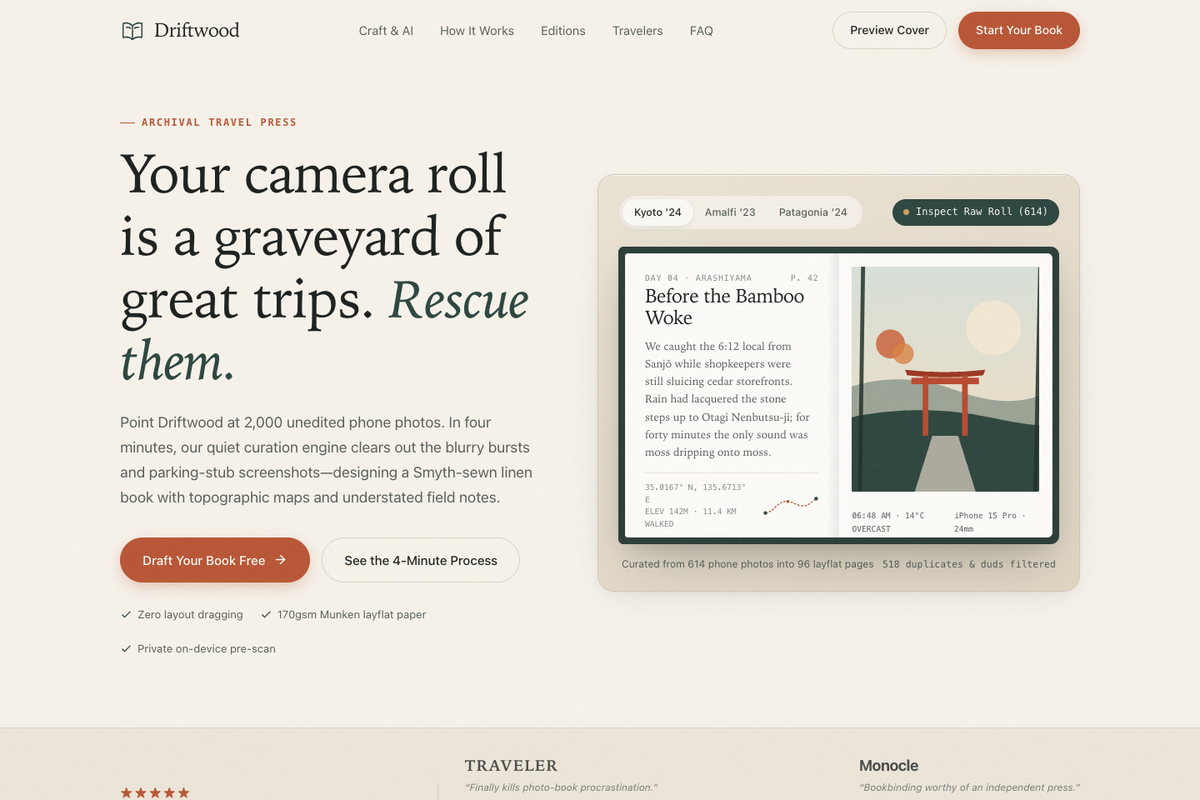
Both models built the Driftwood landing page (a fictional travel photo book service), the NEON BREAKER arcade game and an analytics dashboard for a coffee chain. Argon produced 26,600, 21,501 and 22,262 tokens, Carbon 35,099, 24,420 and 34,852. In total that is 70,363 tokens for $0.353 against 94,371 tokens for $0.473. Both models have the same price, so the cost difference follows directly from the token count.
Carbon reports its thinking tokens separately (1,691, 1,096 and 3,546) and they are included. For Argon the API returned no thinking-token count, so its figure is simply the billed output. That is a reporting difference, not proof that Argon did no thinking.
On screen the two took the same brief in different directions. On the landing page Argon writes about photos forgotten in the cloud and shows a photo book cover from Oaxaca, while Carbon opens with the camera roll as a graveyard of great trips and a Kyoto spread. For the dashboard Argon chose a dark theme with a list of cities, Carbon a light one with a category donut chart.
What is still running
Two runs ended with a broken response stream: Carbon on the color palette tool and Argon on the kanban board. They are recorded as unresolved infrastructure events, separate from completed model results, with each attempt preserved. The landing pages from Gemini 4 Hydrogen, Mistral Large 4 and GPT-6.1 Sol have passed the browser check and are now live in the arena. Sol used medium effort through the Codex CLI subscription. Claude Opus 5.5 is still running. Its first attempts at low and medium effort ended without a finished page, and it now runs under a separately labeled method that allows up to two automatic continuations of the same prompt in the Claude Code CLI.
How we measured and what the data does not show
Each completed task has one sample per model from the Gemini API on the Flex tier, with thinking level MEDIUM and a 65,536-token output cap that includes thinking, without tools, quality rerolls or code fixes. Infrastructure retries are recorded separately: an HTTP 503 on the Argon particle task and an HTTP 504 on the Carbon color task were retried. The incomplete responses are preserved separately, and their unresolved billing is excluded from these initial completed-page costs. The counts and costs are an initial snapshot of completed samples from November 12, 2026. Cost is computed from the usage the API returned at the Flex price. We do not report generation time, because Flex requests can wait in a queue. There is one completed sample per task and only three shared tasks, so these are observations, not a quality ranking.