News
Google Trains AI to Calibrate Willow Quantum Computer Without Halting Computations
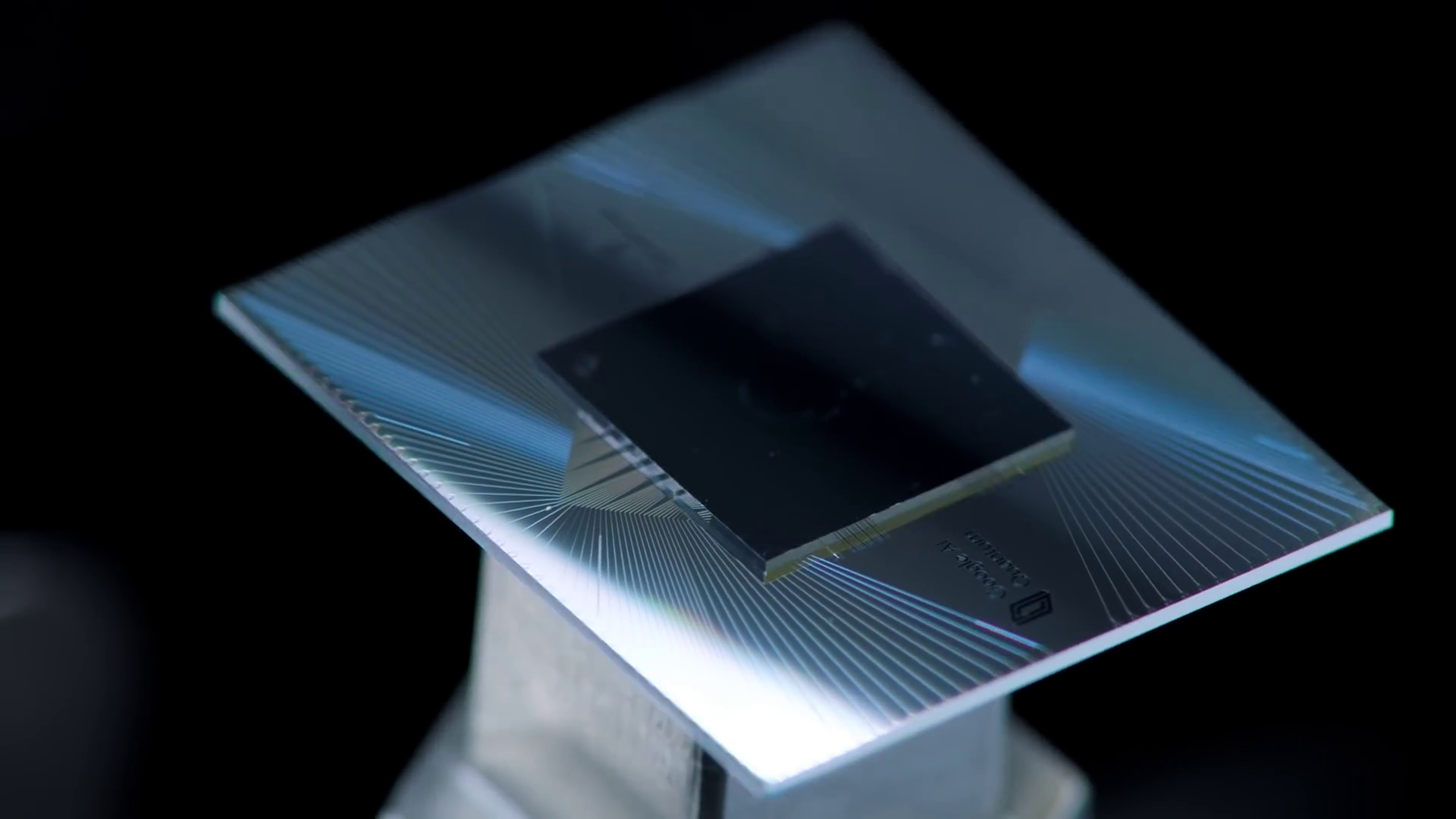
Google Quantum AI researchers described in Nature a reinforcement learning system that corrects errors in the Willow quantum processor in real time, without stopping the machine for manual recalibration.
Contents
Researchers at Google Quantum AI have published a study in Nature describing an artificial intelligence system that learns from a quantum computer's errors while it is running. Instead of periodically halting the Willow processor for manual recalibration, the reinforcement learning algorithm adjusts settings continuously, using the quantum error detection signals themselves as training data.
The problem of unstable qubits
For years, the biggest obstacle to building useful quantum computers has no longer been simply the number of qubits, but keeping them in a stable state over extended periods. Qubits respond to vibrations, temperature fluctuations, cosmic radiation, and interference from control electronics, and each of these factors gradually throws off the precise settings of the microwave pulses used to operate individual qubits.
Until now, quantum computer operators have dealt with this problem by periodically shutting down the machine and running physical calibration procedures, often requiring expert supervision. This method relied on isolated tuning of individual control lines based on directed graphs, which worked well at small scale but became increasingly vulnerable to thermal drift and measurement errors as the number of qubits grew.
How the new system works
The Google Quantum AI team proposed a different approach: instead of treating quantum error detection solely as a signal for correcting computations, they used those same binary signals as continuous training data for a reinforcement learning agent. The agent, which operates on a factorized Gaussian distribution, tunes more than a thousand control parameters at once, including microwave pulse amplitudes, frequencies, and inter-qubit coupling strengths.
The key difference from earlier methods is that the system doesn't require interrupting computations. The algorithm learns during the processor's normal operation, treating every detected quantum error correction failure as feedback that it uses to adjust its future control decisions.
Results from experiments on Willow
The experiments were carried out on the superconducting Willow processor. The reinforcement learning system lowered the baseline rate of logical computation errors by 20 percent compared to conventional physical calibration. With artificially introduced hardware drift simulating deteriorating operating conditions, logical stability increased 3.5-fold and the error rate fell by 24 percent.
Under natural hardware drift, meaning without any artificial intervention by the researchers, stability improved 2.4-fold. In tests on a distance-7 surface code, the processor achieved an average logical error rate of 7.72×10⁻⁴ per cycle, and on a distance-5 color code, 8.19×10⁻³. The team also confirmed in simulations that the algorithm's convergence rate is independent of the overall system size, suggesting it could scale to architectures containing tens of thousands of physical qubits.
Implications for future quantum computers
Practical, fault-tolerant quantum computers will need to run computations lasting days or even months without pausing for manual recalibration. Maintaining precise calibration over such long stretches had remained an unsolved engineering problem, regardless of progress in increasing qubit counts and reducing hardware noise.
This marks another step by Google toward using artificial intelligence to solve problems in the quantum hardware itself, following its earlier AlphaQubit system, which handled decoding of quantum error correction. This time, the AI doesn't just interpret errors, it actively controls the processor's physical parameters, bringing closer the vision of quantum computers operating autonomously for long periods without operator oversight.
For readers in Poland interested in quantum computing, the study shows that the scaling barrier for these machines is shifting away from the hardware itself and toward control-system engineering, where machine learning is beginning to play a key role. This is an area where research teams focused on quantum physics and computer science, including those in Poland, may find room for their own experiments with AI-based control algorithms.