News
Microsoft Releases Aurora 1.5, an Open Weather Forecasting AI Model
Microsoft has open-sourced Aurora 1.5, a weather forecasting AI model that beats the ECMWF system on nearly 89 percent of tested variables and cuts hurricane track error by a third.
Contents
Microsoft Research released Aurora 1.5 on July 9, an expanded version of its foundation AI model for weather forecasting. The model went up on GitHub and Hugging Face as open source, and the company says it will be integrated into Microsoft Weather, Azure AI Foundry, and Planetary Computer Pro.
What's new in Aurora 1.5
The first version of Aurora, described in a 2025 paper in Nature, forecast only four atmospheric variables. Aurora 1.5 expands that to 26 variables, adding surface fields, pressure levels, wind, temperature, humidity, precipitation, and radiation. The model also moved from six-hour forecast steps to hourly ones, and instead of a single forecast it now generates a set of probabilistic simulations, known as an ensemble, showing a range of possible scenarios rather than one answer.
Results against ECMWF
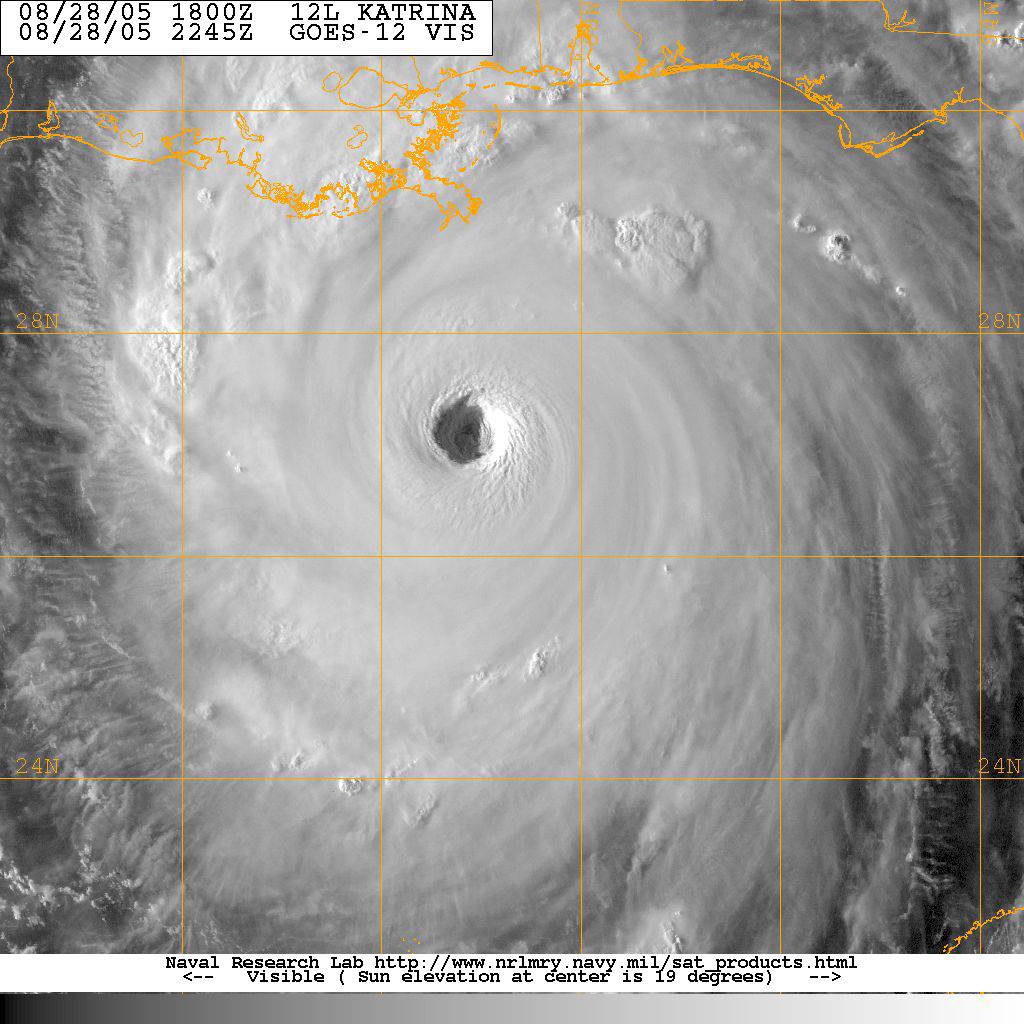
Microsoft compared Aurora 1.5 ENS against the operational ECMWF ENS system, considered the benchmark in numerical meteorology. Microsoft's model performed better on 88.9 percent of the evaluated variable and forecast-horizon combinations, spanning one to ten days. The company also says hurricane track error fell by a third compared with the original Aurora, and the ensemble forecast's median accurately traced Hurricane Helene's path.
There's also an improvement in heat wave forecasting, where the model shows a significantly lower error at extreme temperature values in the upper percentile of the distribution. These are areas where classical numerical models, based on simulating atmospheric physics, are computationally expensive and hard to fine-tune quickly.
Business applications
Microsoft is positioning Aurora 1.5 not just as a research tool but as a foundation for weather-dependent sectors: energy, agriculture, transportation, and planning for extreme-weather resilience. Swiss energy company BKW is testing the model for managing renewable energy systems, where power output is directly tied to atmospheric conditions.
This collaboration shows how advanced AI capabilities and robust cloud infrastructure can be applied to one of the most strategic fields, energy, where weather plays a fundamental role - Farhat Quinones Yamshid, Lead, AI and Technology, BKW
Climate startup Terradot is building its own system, TerraNova, on top of Aurora, using the model's weather representations for large-scale work on removing carbon dioxide from the atmosphere.
By building on Aurora, we're significantly accelerating our R&D timelines and moving closer to gigaton-scale carbon removal - Sasankh Munukutla, co-founder of Terradot
Open code and availability
Unlike many commercial forecasting systems, Microsoft has published Aurora 1.5's code on GitHub and the model's checkpoints on Hugging Face, letting researchers and third-party companies independently evaluate and fine-tune the model. Aurora 1.5 is also being added to the Azure AI Foundry model catalog and to Planetary Computer Pro. The UK's Met Office is also testing the model for climate forecasting work, combining its own climate science expertise with Microsoft's machine-learning approach.
Aurora 1.5 is an important step toward making foundation weather models more open, useful, and practical - Sridhar Iyer, Corporate Vice President, Microsoft AI
What it means for the industry
Models like Aurora compete with classical numerical meteorology, which for decades has relied on simulating the atmosphere's physical equations on supercomputers. AI models, trained on historical weather data, generate forecasts much faster and at lower computational cost, though they're still learning from data that describes the past, which raises questions about their reliability for events with no prior precedent.
Openly releasing the weights and code sets Aurora 1.5 apart from the approach taken by some competitors, who keep their weather models closed. For smaller meteorological companies and research institutions, including in Poland, this means the ability to test and fine-tune the model without having to build their own atmospheric-simulation infrastructure from scratch.