News
Magnetic Tape Market Grows 57 Percent, Driven by AI's Data Hunger
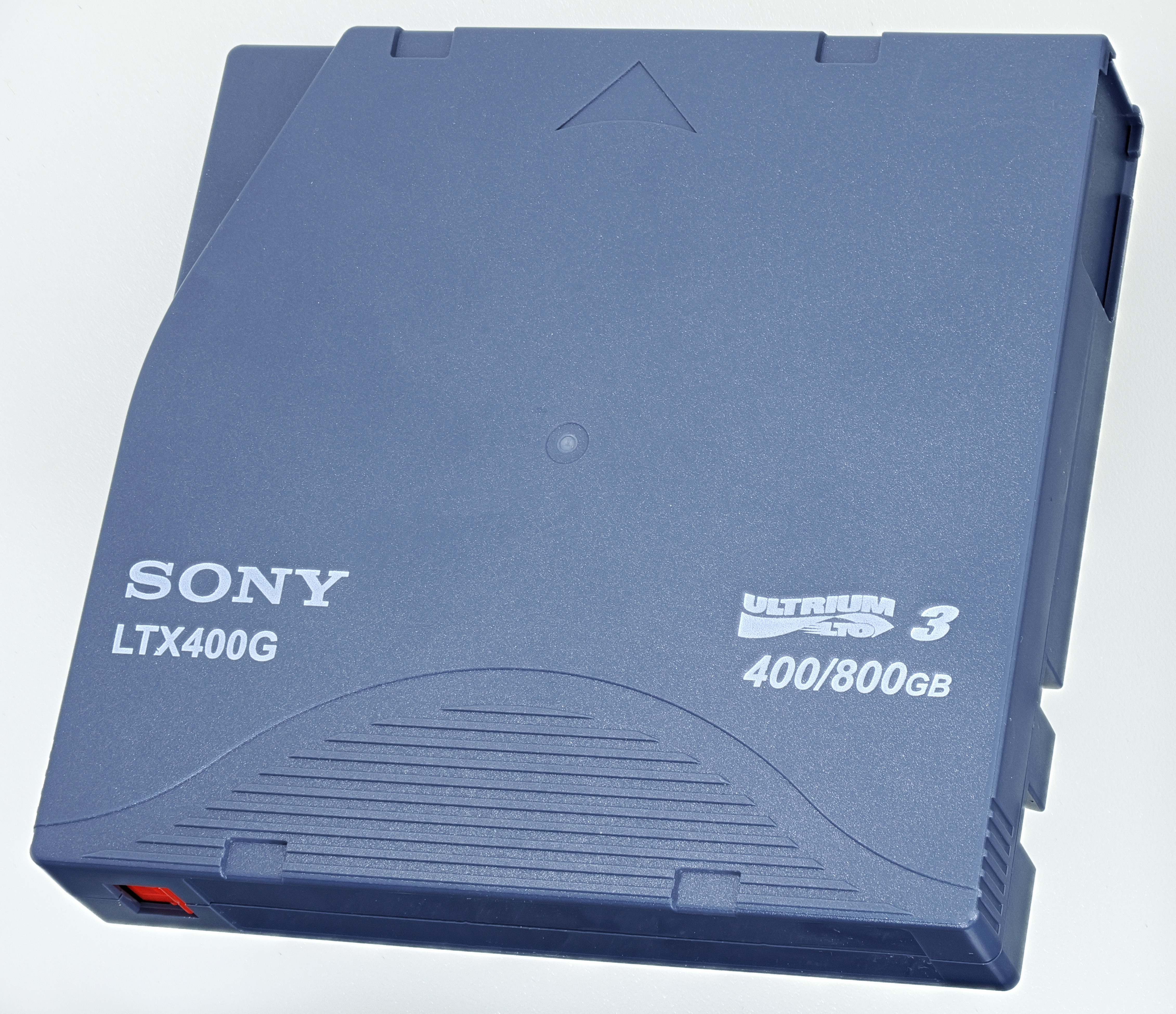
LTO tape capacity shipments jumped 57 percent year over year in the first quarter of 2026, and the industry points to AI model training as the main driver behind the decades-old technology's revival.
Contents
A technology many wrote off as a relic of the 1990s is now posting its strongest growth in years. The LTO Consortium, which brings together HPE, IBM and Quantum Corporation, announced on September 1, 2026, that shipments of magnetic tape capacity in the first quarter of 2026 rose 57 percent year over year. The driver isn't nostalgia, it's the avalanche of data that needs to be stored somewhere cheap and secure to train and archive AI models.
What changed
As recently as 2025, tape shipments fell 9 percent from the record set in 2024, which some analysts read as a sign the market had peaked. The first quarter of 2026 told a different story: a 57 percent year-over-year jump, driven by two factors. The first is sustained demand for the proven LTO-9 cartridges, the second is early adoption of the newly launched LTO-10, with a native capacity of 40 TB per cartridge.
The LTO Consortium directly ties this growth to the buildout of AI infrastructure. Companies building large language models and other machine learning systems are amassing training data at a pace that outstrips the capacity and power budgets of hard drives and flash memory in data centers. Tape, despite slower data access, offers a lower cost per terabyte stored and dramatically lower energy use, since cartridges sitting idle don't need power.
Industry voices
Hugues Meyrath, CEO of Quantum Corporation, one of the three companies in the LTO Consortium, linked the growth directly to the pressure the AI boom is putting on IT infrastructure. In his view, companies are simultaneously grappling with explosive data growth, rising energy and hardware costs, and the need to build resilience against cyberattacks, and tape addresses all three at once.
We're seeing unprecedented data growth combined with mounting cost, energy and cyber-resiliency pressures across the industry - Hugues Meyrath, CEO of Quantum Corporation
Tape remains a critical, strategic storage solution, driven by the expansion of all types of storage supporting AI workloads - Tom Coughlin, storage market analyst
Why tape over disk
Tape's edge in the AI era comes down to simple data center arithmetic. Training large language models requires gathering and storing, over the long term, enormous sets of training data, logs and model backups, most of which are rarely read again. Tape sitting offline draws no power, is resistant to ransomware because it's physically disconnected from the network, and the cost of storing a terabyte on an LTO cartridge remains markedly lower than on a hard drive or flash media.
That reverses a trend from a few years ago, when some companies and institutions, including US government agencies under the DOGE initiative, tried to phase out tape systems as outdated. The rebound in demand shows that in the AI era, the choice of storage medium is decided not by the age of the technology, but by the math of energy costs and data security at exabyte scale.
What it means for companies in Poland
For Polish companies and institutions building or renting data center capacity for AI workloads, the rise of tape is a practical signal: long-term archiving of training data and backups doesn't have to mean expensive disk array expansion. Cloud providers and local data center operators are increasingly offering tape-based archival tiers as a cheaper alternative for data that must be kept but rarely needs to be retrieved.
The rising energy consumption of AI data centers is also an issue that touches Poland's energy market directly, where grid operators are already warning about the growing share of data centers in national electricity demand. Lower-energy-footprint technologies, such as magnetic tape used for storing inactive data, could partly ease that pressure, though they won't replace the computing power needed for model training itself.
What's next
The LTO Consortium forecasts that 2026 will close out with another record year for shipments, driven by further LTO-10 adoption and sustained demand from AI data center operators. If the first quarter's growth rate holds, the storage industry could log its strongest year on record, even though magnetic tape recording technology itself is now more than seventy years old.