News
Polish PM's Future Council Names Tech Sovereignty a Top Priority
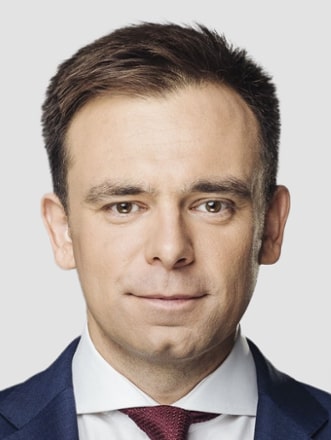
The Council of the Future, an advisory body set up by Prime Minister Donald Tusk, has adopted five recommendations for Poland's development, led by calls to build domestic AI models and create a national AI oversight body.
Contents
The Council of the Future, an advisory body to Prime Minister Donald Tusk established in February 2026, has adopted its first five recommendations for Poland's long-term development. Topping the list is technological sovereignty, understood as building domestic artificial intelligence models, strengthening homegrown digital infrastructure, and auditing dependencies in major public tenders.
The recommendations were announced on July 15, 2026, following a meeting attended by government representatives and invited experts. It is the first concrete output from a body the prime minister had billed as a group with real influence over science and business, not another advisory panel with no bearing on actual decisions.
Who sits on the council
The nineteen-member council brings together scientists, entrepreneurs and specialists from sectors deemed strategic. Alongside chairman Andrzej Domański, its members include virologist Krzysztof Pyrć, computer scientist Piotr Sankowski, innovation researcher Aleksandra Przegalińska, ElevenLabs founder Mati Staniszewski, ICEYE chief Rafał Modrzewski, Klarna founder Sebastian Siemiątkowski, and ESA astronaut Sławosz Uznański-Wiśniewski.
The lineup is meant to reflect the areas the government considers key to Poland's future competitiveness: artificial intelligence, space technology, biotechnology, financial technology, and dual-use technologies with both civilian and military applications.
What the council is proposing
The first recommendation concerns technological sovereignty. The council stresses that this isn't about isolationism, but about selective, critical resilience paired with the ability to control key digital infrastructure. In practice, that means developing domestic AI models, strengthening Poland's digital infrastructure, and auditing technological dependencies in major public tenders.
The second recommendation calls for better coordination among research-funding institutions and for concentrating resources around priority fields, artificial intelligence, space technology, biotechnology and quantum technology, built on multi-year research programs rather than scattered project-based funding.
The third recommendation addresses scaling Polish tech companies through digitizing equity trading, piloting new technologies in public administration, and designating a national AI oversight body that would let Poland help shape European regulations rather than merely implement them.
Funding and child protection
The fourth recommendation focuses on financing innovative enterprises: reforming the grant system, supporting venture capital funds, and attracting foreign investors to Poland's tech sector. The fifth concerns protecting minors online, including more effective age verification, curbing mechanisms that encourage social media addiction, and privacy protection by default for children's and teenagers' accounts.
I'm convinced that the Council will soon present solutions and tools that will help the Polish economy grow even faster - Andrzej Domański, minister of finance and economy, chairman of the Council of the Future
What it means for companies and researchers
The recommendations carry no legal force on their own, but according to official statements they are meant to form the basis for further analysis and dialogue with ministries and public institutions responsible for science funding and digital regulation. For Polish companies developing language models and other AI systems, such as the creators of Bielik or PLLuM, the pledge to concentrate research funding and build domestic models could translate into new grant programs or changes in how public funds are allocated in the coming months.
The proposal for a national AI oversight body also feeds into a broader debate that has been underway in Poland for months, including in the context of the EU's AI Act, whose next set of obligations takes effect on August 2, 2026. Creating such a body could make it easier for companies to deal with a single, specialized regulator instead of navigating powers scattered across different agencies.
The council says future recommendations will address other areas it has flagged as priorities, including space technology and biotechnology. Prime Minister Tusk has called 2025 a breakthrough year and 2026 a year of acceleration, tying the council's work to the ambition of making Poland a leader in selected technology fields, even though the country currently ranks only 20th among the world's largest economies.