News
Twenty Japanese Companies Build Shared AI for Factory Robots
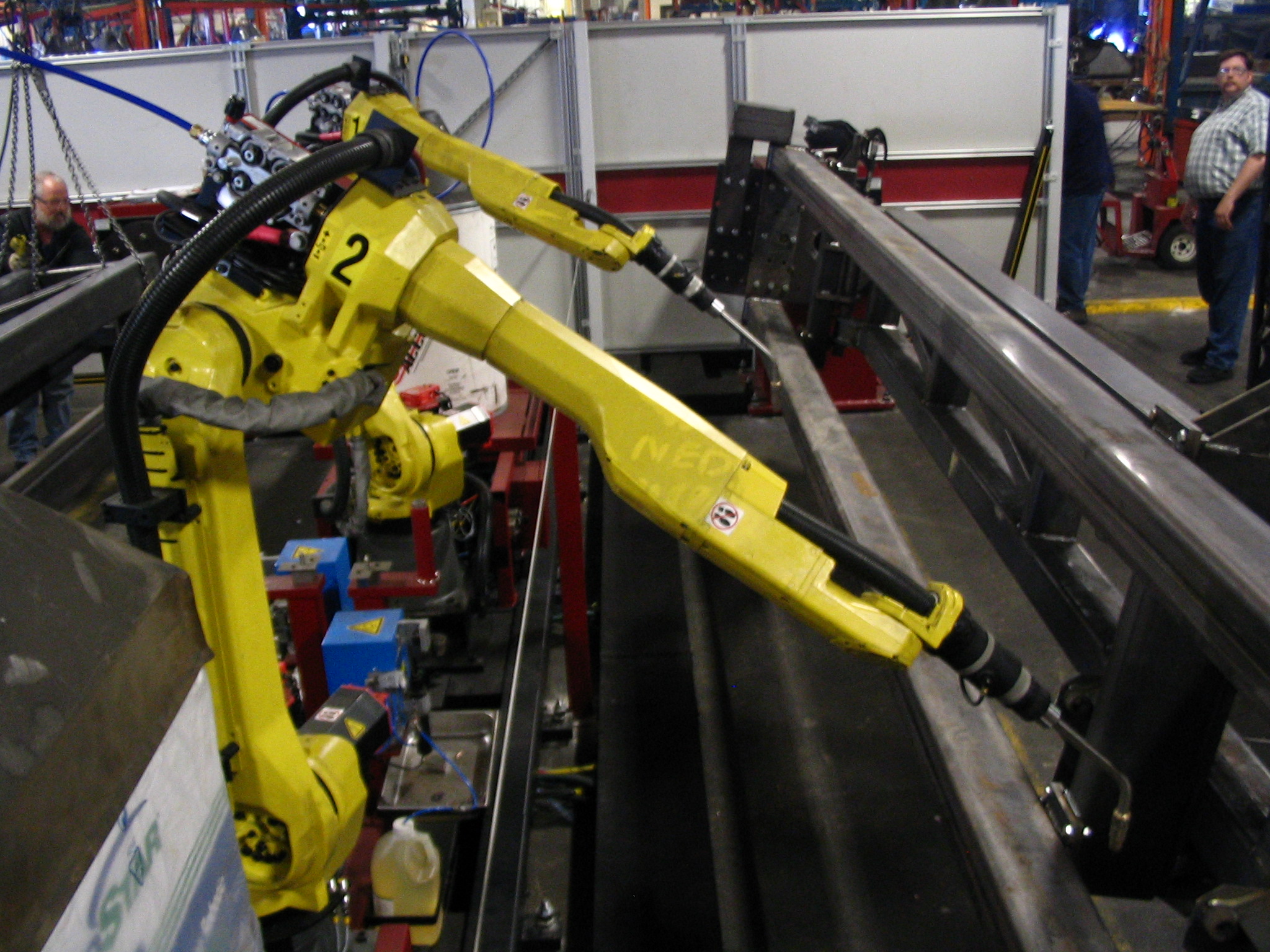
Kyocera, Kobe Steel, and roughly twenty other Japanese manufacturers are forming a consortium that will develop AI to control robotic machine tools starting in October. The project, built on technology from startup Arum, is set to run for four years.
Contents
About twenty Japanese manufacturers are formalizing an alliance meant to speed up the rollout of artificial intelligence in factories. The consortium, which includes Kyocera and Kobe Steel, will launch a joint project in October to develop robots for machining metal and plastic, built on technology from Arum, a small startup based in Kanazawa.
What's being built
At the heart of the project is TTMC, an automated, AI-equipped machine tool that Arum trained on large datasets covering metal and resin machining. The system is designed to read technical drawings on its own, generate a machining process, and cut parts without an operator. TTMC currently handles small components, and the consortium's goal is to extend the machine's capabilities to medium and large parts with complex shapes, the kind used in construction machinery and semiconductor manufacturing equipment.
Nidec Machine Tool Corp and a company affiliated with trading house Sojitz Corp are also joining the consortium. Microsoft Japan will act as a supporting partner for Arum on infrastructure and software, though it is not a primary stakeholder in the project.
A small startup at the center of a big alliance
Arum, founded in 2006, employs just about 40 people, with annual revenue of 7.4 billion yen, roughly $46 million. That's a tiny company compared to the scale of the partners it's now working with, but its AI-driven machining technology has become the foundation around which major industrial players are building a shared standard.
That arrangement, in which international corporations rely on a small, specialized supplier's technology, fits a broader pattern in Japan's industrial AI strategy. Rather than each company building its own closed system, the country is betting on shared platforms that can run equipment from different manufacturers.
The bigger picture of Japan's AI race
The new consortium is the latest piece of Japan's push into so-called physical AI, systems that control machines in the real world rather than just generating text or images. Prime Minister Sanae Takaichi's government has announced an investment package worth about one trillion yen, spread over five years, to develop this branch of technology. Earlier this year, Japanese industrial giants including Fujitsu, Fanuc, Kawasaki Heavy Industries, and Yaskawa Electric announced their own alliance with Nvidia built around its Cosmos models.
The motivation behind this wave of partnerships is partly Japan's industrial labor shortage and partly a defense of market position. Japan controlled about 80 percent of the global industrial robot market in the 1990s; today its share has fallen to roughly 40 percent, and Chinese companies are increasingly making inroads in the humanoid robot segment.
The partnership stems from the limits of building an entire AI ecosystem in-house - Kenishiro Abe, senior managing director at Fanuc
The quote originally came from a separate, earlier announcement, Fanuc's May partnership with Google on physical AI, but it captures the logic now guiding Kyocera, Kobe Steel, and the rest of the new consortium's members. None of these companies wants to build a complete technology stack from scratch on its own.
What it means for Polish companies
For Polish industry, which is itself investing heavily in automation and AI, Japan's model of industry-wide consortia may signal the direction global competition is heading. Rather than isolated AI deployments at individual factories, more countries are betting on shared data standards and platforms spanning entire supply chains, which over time could raise the barrier to entry for smaller machine and component makers left outside such alliances.
The Kyocera, Kobe Steel, and Arum project remains at the announcement stage for now, and its first results won't be assessable until after the October launch and the following months of collaboration. The scale of investment from individual partners has not been disclosed, nor has the exact division of tasks among the consortium's member companies.