News
US Marine Corps to Deploy AI-Controlled Robotic Machine Gun Against Drones
The US Marine Corps has selected Allen Control Systems' Bullfrog system to counter cheap drones. The robotic weapon station built around an M240 machine gun detects, tracks, and targets threats autonomously, but a human still makes the decision to open fire.
Contents
The United States Marine Corps has selected Bullfrog, an AI-controlled robotic weapon station, for integration with the L-MADIS air defense platform. The decision was announced on July 15, 2026, and the system is meant to help counter the increasingly cheap and numerous drones used on the modern battlefield.
How Bullfrog Works
Bullfrog isn't a new weapon but a robotic mount that turns existing machine guns into autonomous targeting systems. In the variant chosen by the Marines, the base weapon is the 7.62mm M240 machine gun, but Allen Control Systems is also developing versions compatible with the heavy-caliber M2, the M230 cannon, and the M134 minigun.
The system uses computer vision and proprietary fire control software to detect, identify, and track targets with virtually no operator input. Instead of a soldier manually aiming at a fast-moving drone, the algorithm locks onto the target itself and presents it to the operator for firing approval.
Integration with L-MADIS
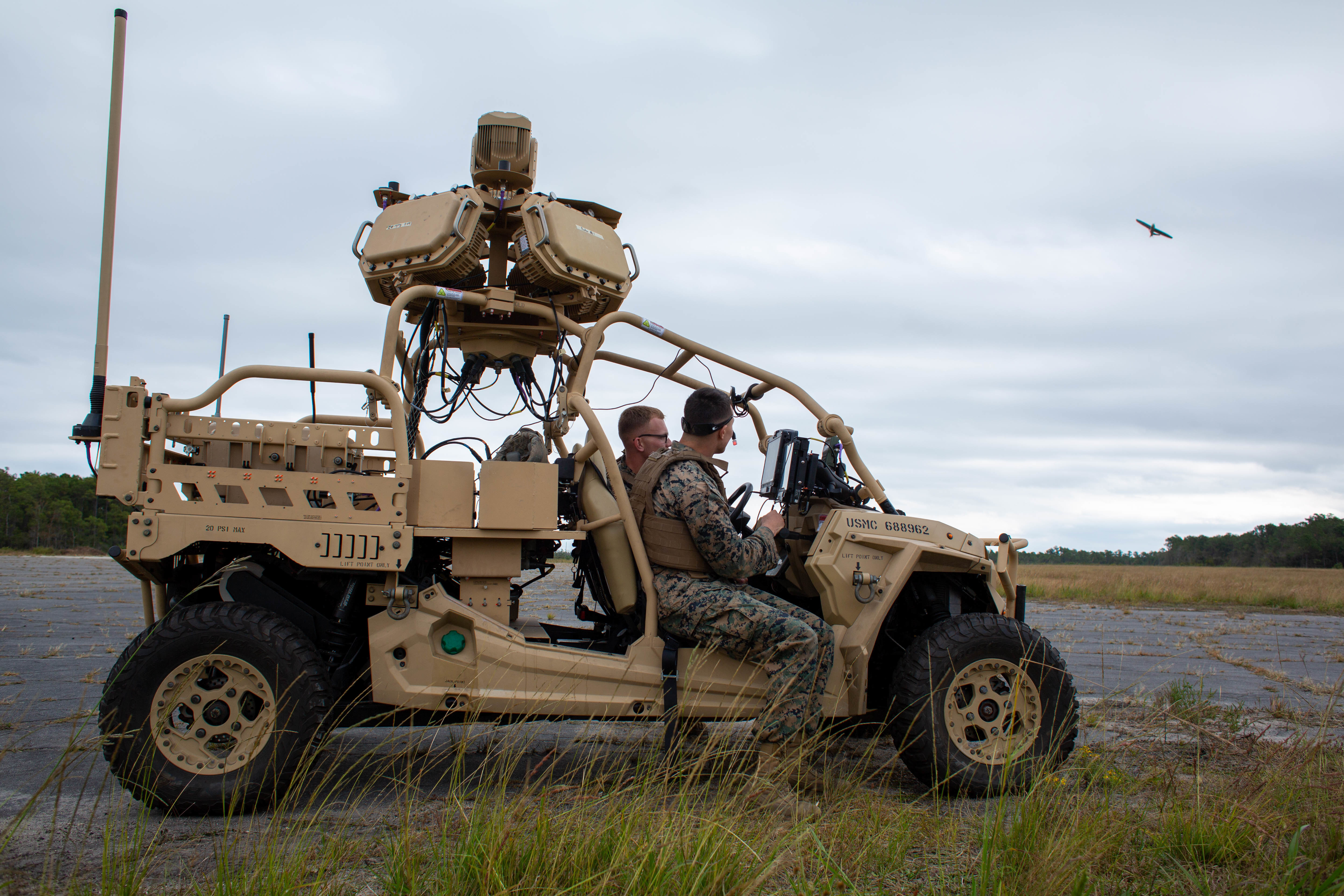
Bullfrog will be integrated into the Light Marine Air Defense Integrated System, or L-MADIS, the most mobile counter-drone platform currently used by the Marine Corps. L-MADIS is mounted on light tactical vehicles and has previously been used to jam drone signals; it will now also gain the ability to physically shoot down targets with machine-gun fire.
Bullfrog systems are already being deployed by the US Army and Navy, making the Marine Corps the third branch of the armed forces to adopt the technology. The company says its solution is a response to the mass use of cheap drones in conflicts in Ukraine and the Middle East, where units of ammunition costing a few hundred dollars can destroy military equipment worth far more.
Controversy over autonomy
Earlier reports suggested Bullfrog could also autonomously engage ground targets, raising concerns about fully automating the decision to use lethal force against people. Allen Control Systems has denied such capabilities, stressing that the system has built-in software safeguards.
Bullfrog has robust software safeguards against fully autonomously engaging designated targets, including combatants - Allen Control Systems representative
The company maintains that the final decision to fire always rests with the operator, and that the system only detects, tracks, and prepares a target for approval. Critics, however, note that the manufacturer's promotional materials show the algorithm switching from aerial to ground targets, raising questions about the limits of human oversight over AI-controlled weapons.
The economics of counter-drone defense
A key argument for deploying Bullfrog is the economic calculation. Traditional drone interception systems, such as missiles, cost tens of thousands of dollars per use, while a combat drone can cost just a few hundred dollars. Shooting it down with standard machine-gun ammunition costing around $10 reverses that unfavorable cost ratio.
This approach fits into a broader trend within the US military, which has spent several years seeking cheaper ways to defend against drone swarms rather than repeatedly using costly anti-aircraft missiles against equipment worth a fraction of their price. Similar solutions, such as the SMASH 2000L smart sight from Israeli company Smart Shooter, have already reached Marine units deployed to the Middle East.
For Polish readers, the topic carries significance beyond military technology alone. Similar solutions are also being tested by the Polish military in the context of protecting the eastern border, and the growing availability of cheap combat drones means counter-drone defense is becoming a concern for an increasingly wide range of NATO armies, including Poland.