News
FCC Approves SpaceX Starmind Constellation of Up to 1 Million Orbital Data Center Satellites
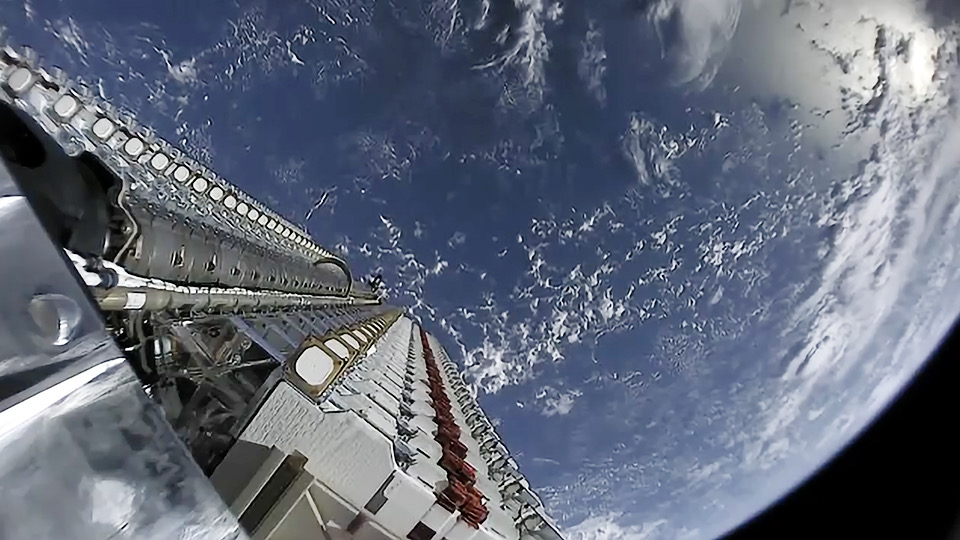
The US Federal Communications Commission has approved SpaceX's plan for AI data centers in orbit, in a constellation of up to one million satellites authorized through 2040. Amazon, Viasat and astronomers objected, and Elon Musk has promised a first launch in the fourth quarter of 2027.
Contents
The US Federal Communications Commission (FCC) has agreed to let SpaceX launch up to one million satellites that would form data centers in orbit. FCC Chairman Brendan Carr announced the decision on Wednesday, and the constellation is called Starmind.
What was approved
According to AFP, cited by France 24, the approval was published as a document on the FCC's website. It allows SpaceX to build data centers in space, with an authorization period running to 2040. The approval sets a ceiling on the number of satellites, not a commitment to launch all of them.
Starmind satellites are meant to communicate with the existing Starlink network, which will relay data to Earth. According to France 24, a satellite in a sun-synchronous orbit could capture solar energy around the clock, with eight times the efficiency of its ground-based equivalent. These are design assumptions, not measured results.
Timeline and hardware
In August, Elon Musk promised a first launch into orbit in the fourth quarter of 2027 and a ramp-up in 2028. Nvidia is to supply the chips for operating in space, specifically its latest Vera Rubin processors.
France 24 notes that not all technical challenges have been resolved. These include the processors' ability to withstand intense radiation, extreme temperatures, space debris and micrometeorite impacts.
Opposition and criticism
According to CNBC, petitions to deny the plan were filed by Kuiper, Amazon's satellite unit, Viasat and the American Astronomical Society; Amazon's petition dates from March. Amazon called the project a "lofty ambition rather than a real plan" and argued that the buildout would take SpaceX "centuries," adding that the company provided scant details. Carr responded that Amazon should focus on its own delays in deploying satellites, and Amazon declined to comment.
The FCC said it dismissed comments on matters over which the commission has no authority, including environmental concerns and concerns about the impact on optical astronomy. Jan Hasselman of Earthjustice criticized the agency for issuing the decision in a holiday week and without an environmental review, which he said the National Environmental Policy Act (NEPA) requires.
Much appreciated. This will be a great asset to America and the world. - Elon Musk, SpaceX (quoted by CNBC)
The race for orbital data centers
Orbital data center projects are multiplying. Google is working on Project Suncatcher, and Blue Origin has filed an FCC application for Project Sunrise, under which, according to CNBC, it wants to launch up to 51,600 satellites. According to France 24, startups including Starcloud are also competing for this market, and Starcloud operated a GPU aboard a satellite in late 2025.
SpaceX's advantage, AFP reports, is its rockets, which have already completed hundreds of missions. None of the sources reviewed, however, indicates that the company has announced customers for computing power from orbit, or that the economics of such data centers have been confirmed.
What comes next
The approval is only a regulatory step. Whether Starmind is built at the announced scale will depend on testing of the hardware in space, the cost of launching payloads, and any further disputes over environmental impact and astronomical observations.