News
Nokia and Nvidia Launch First Commercial AI-RAN Platform, Ericsson Already Testing a Rival
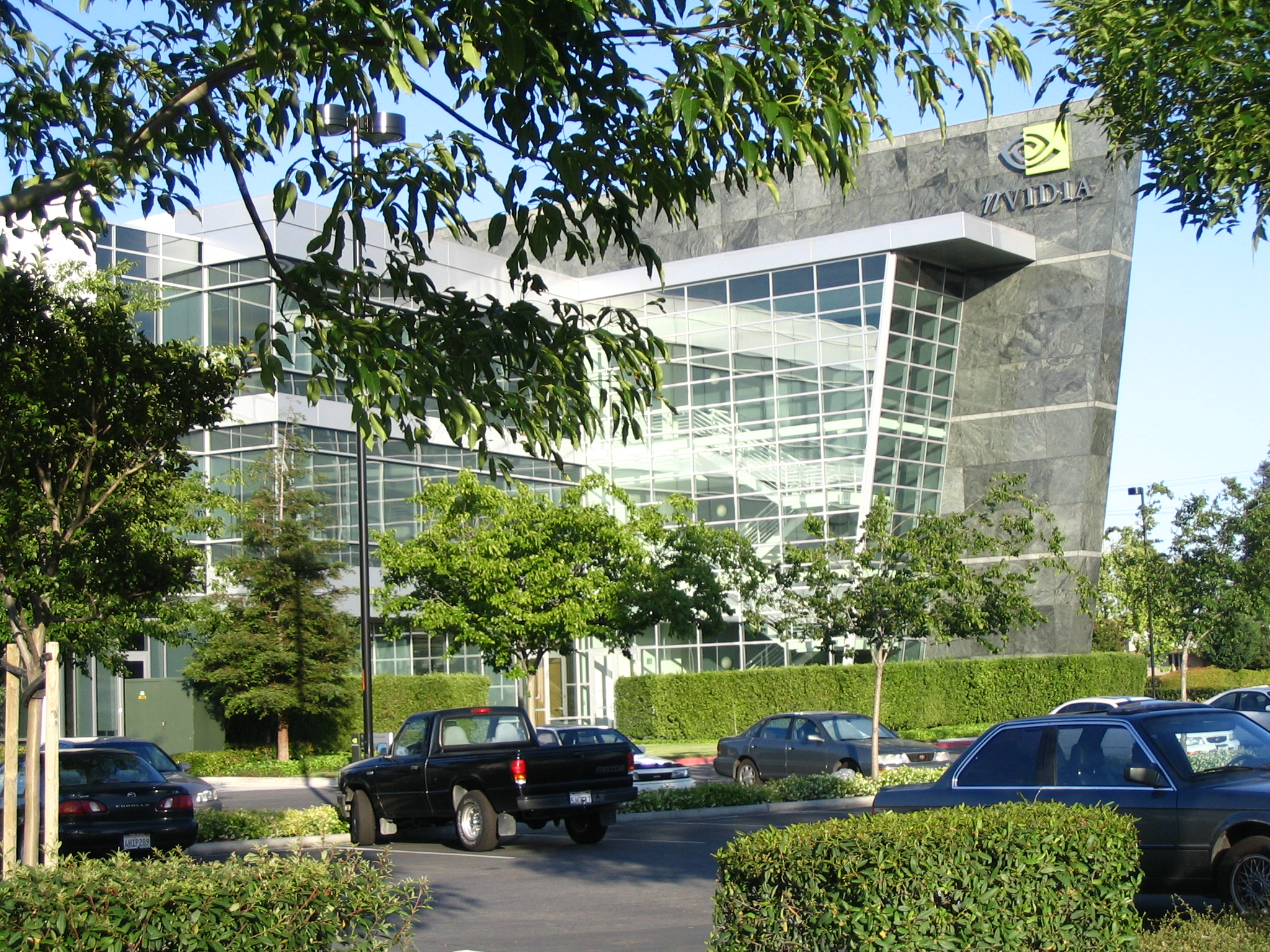
Nokia and Nvidia have announced a commercial, GPU-based AI-RAN platform aimed at doubling mobile network capacity by 2028. Rival Ericsson launched a competing GPU-free solution five weeks earlier, reopening the debate over whether AI in base stations needs graphics processors at all.
Contents
Nokia and Nvidia unveiled on July 15, 2026 what both companies call the first commercial, natively AI radio access network platform. The AI-RAN platform combines Nokia's anyRAN software with Nvidia's Aerial computing architecture, and is meant to let mobile operators handle growing data traffic without buying new spectrum or building additional towers.
The platform comes in three deployment variants: a GPU expansion card fitted into existing AirScale base stations, a standalone AI-RAN node supporting 4G, 5G and 6G, and a cloud-based solution running on standard servers supplied by ecosystem partners. All three options are meant to remain compliant with Open RAN standards, allowing equipment from different vendors to be combined in a single network.
A Subscription Model Instead of Hardware Swaps
Nokia is shifting from a hardware-sales model to a software subscription model. Instead of replacing base stations every few years, operators would pay for continuous AI algorithm updates that boost the performance of equipment already installed. That marks a break from the traditional infrastructure refresh cycle, in which higher throughput required physically replacing radio units.
Nokia CEO Justin Hotard called it the biggest innovation in radio communications in decades. In the official announcement, he stressed that for operators this means higher performance, better returns on investment and faster rollout of new services.
AI-RAN is the biggest innovation in radio communications in decades. For operators, that means higher performance, better returns and faster delivery of new services. - Justin Hotard, CEO of Nokia
Telecom is entering the AI era, the radio access network is becoming the next AI infrastructure. Together with Nokia, we're bringing CUDA and AI into the baseband layer, turning RAN into a planet-scale AI computer. - Jensen Huang, CEO of Nvidia
A Dispute Over Whether GPUs Are Even Necessary
Nokia's entire Layer 1, the functions that place the heaviest load on computing resources, is ultimately meant to run on Nvidia's CUDA platform and graphics cards. That ties Nokia's radio roadmap to a single computing hardware supplier for years to come. Rival Ericsson went in the opposite direction, designing its AI functions to be silicon-independent in order to avoid that kind of dependence on a single chipmaker.
Ericsson commercially launched its own AI-in-RAN solution five weeks before Nokia, without graphics cards and without new hardware, and says it already has more than 15 live deployments with operators. The dispute between the two companies centers on a fundamental question: can spectral efficiency gains be achieved without adding GPU compute power directly to the base station, or is it enough to move AI workloads to the network core, where latency differs by only a few milliseconds.
A $200 Billion Market
Omdia analysts estimate the cumulative value of the AI-RAN market will exceed $200 billion by 2030. That is the stake for which Nvidia chose to invest $1 billion directly in Nokia, becoming a shareholder with a stake of roughly 2.9-3 percent. For Nvidia, it is another step in expanding beyond AI data centers into telecom infrastructure, which has so far made little use of graphics cards.
For mobile operators, the promise is simple: doubling the capacity of existing spectrum without buying new frequencies, a process that in many countries is costly and takes years. If the stated targets for 2027 and 2028 hold up, it would mean a real shift in the economics of building 5G-Advanced and future 6G networks.
What It Means for the European Telecom Market
Nokia is also positioning the platform as part of rebuilding the telecom industry in the United States, where the company has a strong presence following its acquisition of Alcatel-Lucent. At the same time, the Finnish technology giant is entering into direct technological dependence on an American chipmaker, which some industry commentators point to as a strategic risk given earlier trade disputes over the export of advanced AI chips.
For Polish operators building networks on Nokia or Ericsson equipment, the choice of AI-RAN supplier will have consequences beyond radio performance alone, tying them to long-term dependence on a specific computing architecture. The first pilots of the Nokia-Nvidia platform are set to begin in late 2026, with commercial rollouts in 2027 expected to show which approach, with or without GPUs, works best on live networks.