News
Seagate Preps 50-Terabyte Hard Drives as AI Demand Surges
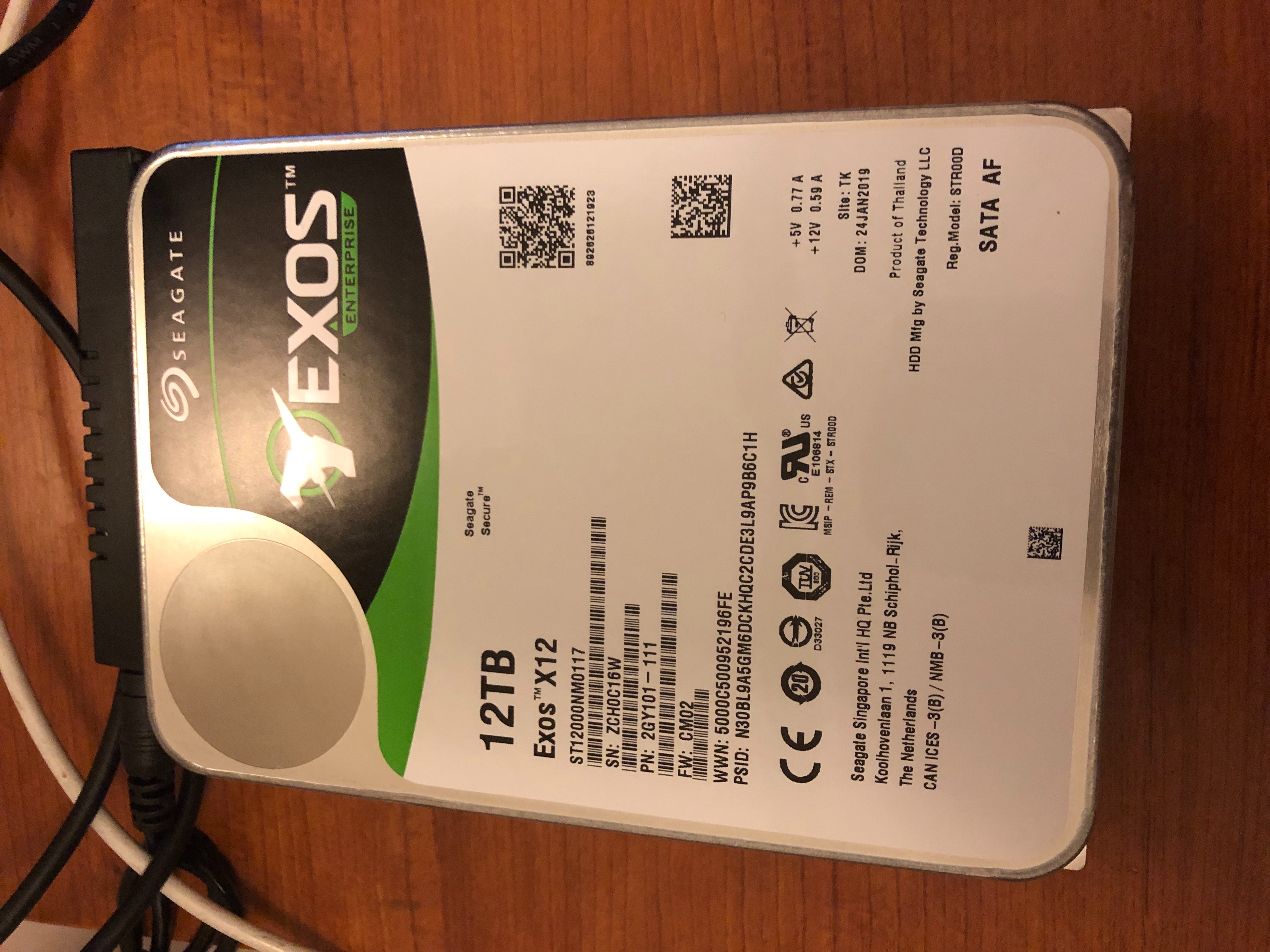
Seagate has announced HAMR hard drives exceeding 50TB in capacity, with customer qualification expected in late 2027, while data center operators have already locked up nearly all of the company's nearline production through 2028.
Contents
Seagate has revealed details of its plan to bring hard drives exceeding 50 terabytes in capacity to market, with customer qualification set to begin in late 2027. The move reflects an AI-driven boom in data storage demand, the company acknowledges that nearly all of its nearline drive production is already contracted for 2028.
What Seagate announced
Details of the new drive generation emerged alongside the company's fourth-quarter fiscal 2026 financial results. Seagate closed the full fiscal year with $12.2 billion in revenue, up 34 percent year over year. The most recent quarter alone brought in $3.6 billion, and management expects around $4.1 billion in the current quarter.
The centerpiece of the presentation, however, wasn't the financial results but the technology roadmap. The current flagship Mozaic 4+ platform, built on HAMR (Heat-Assisted Magnetic Recording) technology, already enables drives with up to 44TB of capacity. By the end of 2026, Mozaic 4+ based models are expected to account for half of the HAMR exabytes Seagate ships to select customers.
Platter by platter to 50 terabytes
The next step is the Mozaic 5+ platform, Seagate's third generation of HAMR technology. It's expected to cross the 5TB threshold per magnetic platter. Since Seagate's flagship enterprise-class drives are built with ten platters, that translates into a drive exceeding 50TB of capacity in a single enclosure.
The rollout timeline spans well over a year. Qualification with OEM customers and data center operators is set to begin in late 2027, following internal testing and validation procedures described by Seagate CFO Gianluca Romano. Actual commercial shipping of the drives is expected to start in the first half of 2028. That means the average home computer user won't find these drives on store shelves, they'll go almost exclusively into the server rooms of hyperscalers and large cloud operators.
AI locks up production two years out
The scale of contracted commitments is what sets the current cycle apart from previous waves of storage demand. Seagate CEO Dave Mosley said on the earnings call that the vast majority of the company's nearline drive exabytes are already allocated under agreements running through calendar year 2028, with some customers looking to extend their planning horizon even further, to 2029 and beyond.
Based on the long-term supply agreements in place today, the vast majority of our nearline exabytes are now allocated into calendar 2028 - Dave Mosley, CEO of Seagate Technology
About 90 percent of all the capacity exabytes Seagate currently ships to customers go to data centers rather than the traditional consumer or small-business segment. That's a reversal from just a few years ago, when hard drives were widely seen as a declining technology being pushed aside by faster, pricier SSDs.
Why HDDs instead of SSDs
The reason AI data center operators aren't abandoning platter-based drives for solid-state storage is economic. Infrastructure for training and serving AI models requires a tiered storage system: fast SSDs and RAM handle data that needs instant access, while traditional HDDs take on massive archives, the long tail of training data, and operations tied to KV cache (key-value cache) for language models. Dollar for dollar, a platter-based drive offers a far lower cost per terabyte of storage than flash memory, which at exabyte scale is decisive for cloud providers' economics.
The same dynamic has driven shortages and price hikes in the DRAM and NAND memory segments in recent months. Hard drives have become the latest link in a supply chain where demand generated by AI investment outstrips suppliers' production capacity.
What this means for the market
For Polish companies and system integrators, the direct impact of this announcement is limited, since the 50TB drives will go exclusively to the largest data center operators rather than retail channels or even typical corporate server rooms. The indirect effect, though, will be felt more broadly: lengthening lead times for nearline capacity orders and rising prices for enterprise-class drives could feed through into the cost of cloud services, including those Polish companies use to host their own AI infrastructure.
Seagate's announcement also fits into a broader trend in which data storage hardware makers, alongside Samsung and SK hynix in the memory segment, are posting record financial results on the back of hyperscaler investment in AI infrastructure, while retail customers and smaller companies feel the effects in the form of higher prices and longer delivery times.